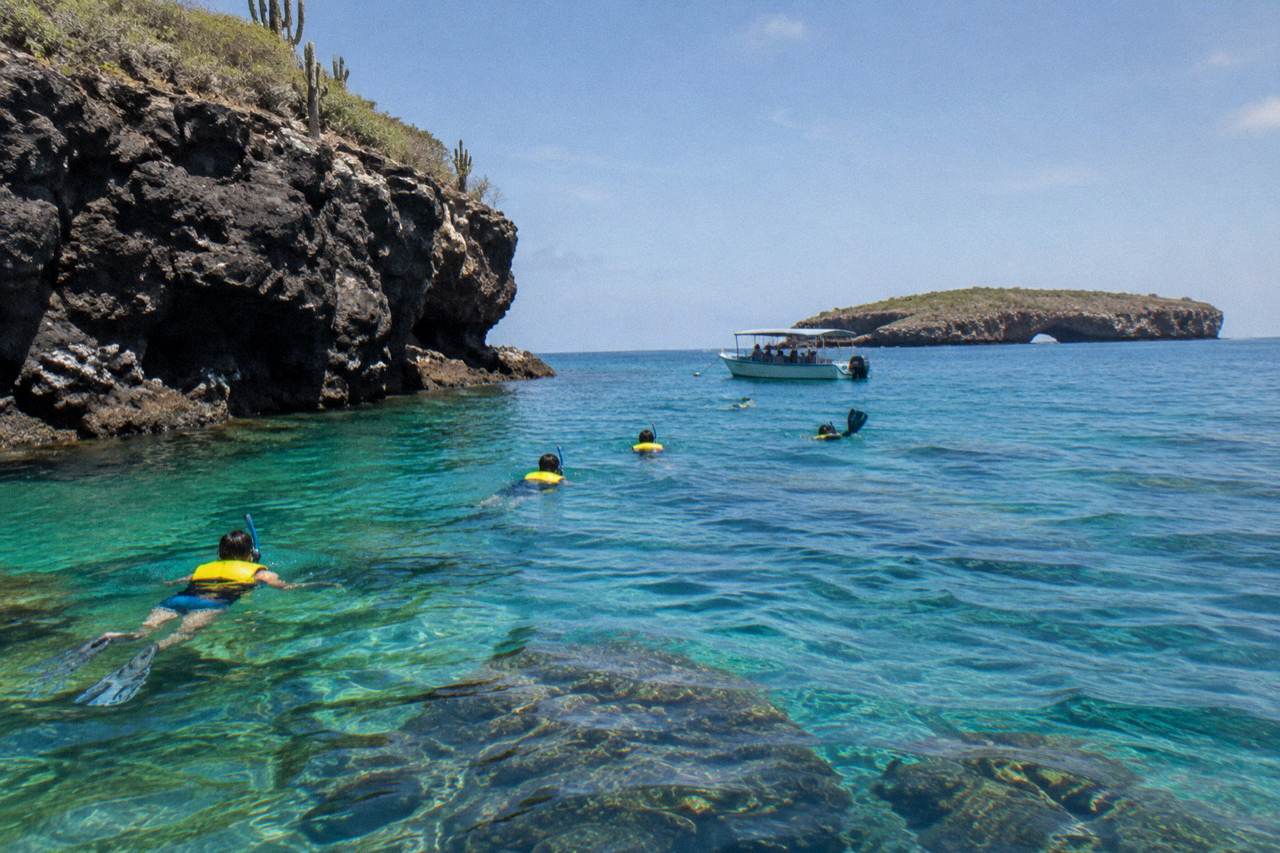
How Deep Is The Water Around The Marietas Islands?
No official depth figure exists for the waters around the Marietas Islands. Here is what CONANP, the listings and the park rules actually say about depth, swimming ability and staying safe in the water.
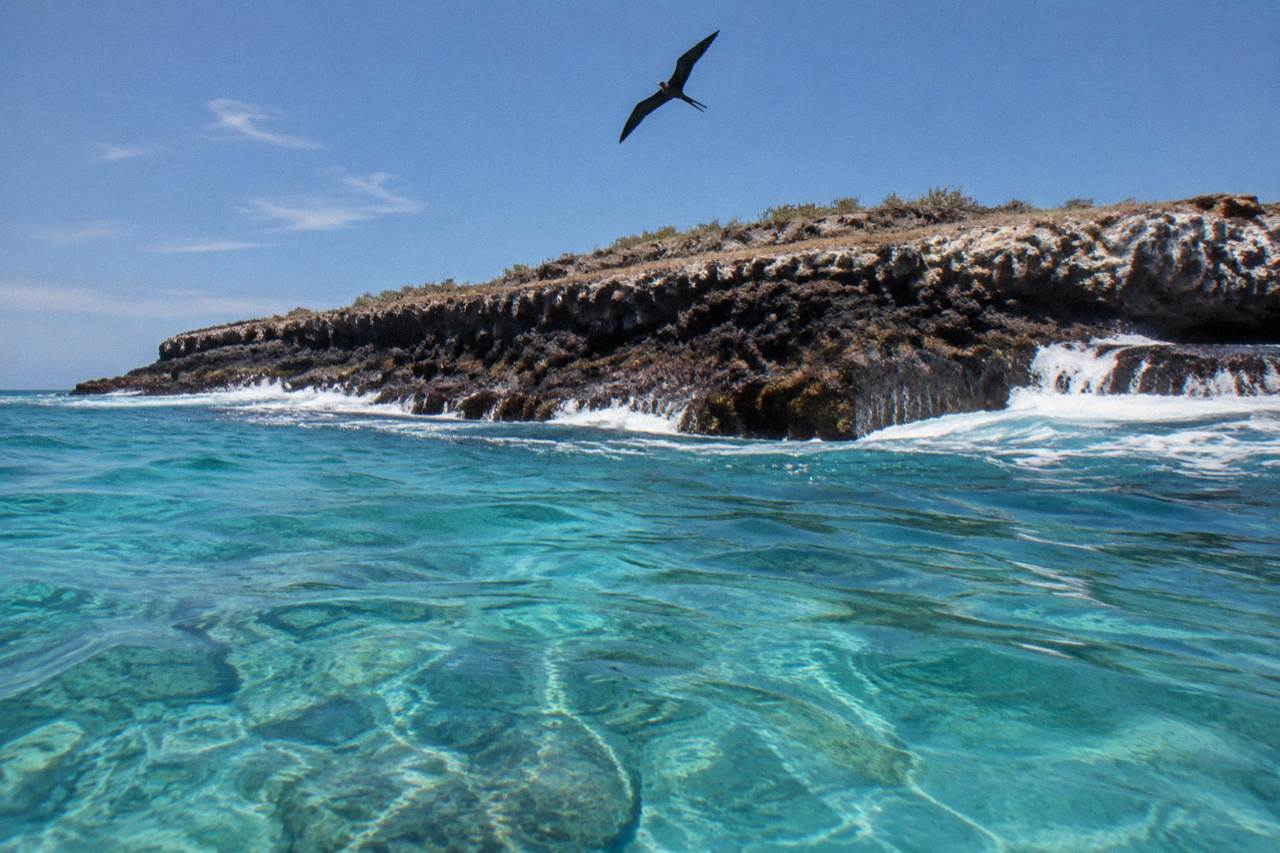
No official source publishes a depth figure for the water around the Marietas Islands. Not the CONANP park page, not the federal reopening notice, not any tour listing prints a number in meters or feet for the reefs, the bays or the swim into Hidden Beach. Treat any quoted figure as a guess. If you're more concerned with safety than depth, the Puerto Vallarta safety guide for boat-trip travelers walks through the park rules, on-water precautions and how to check your government's current advisory before you go.
That gap is worth explaining properly, because the question behind the question is usually about safety. A reader asking about depth is generally a hesitant swimmer, or booking for one, and wants to know whether they will be out of their depth, literally. The good news is that the park's own rules answer that worry better than any depth chart would, and the listings spell out swim requirements tour by tour.
The CONANP rules make life jackets mandatory for anyone in the water inside the park, which is the single fact that matters most to a nervous swimmer. Reef-friendly sunscreen applied half an hour before entering, no alcohol, no single-use plastics and a paid conservation wristband complete the picture. One option is the Eco Explorer Vallarta snorkel tour from Marina Vallarta, from $99 per person, 4.8 from 1,033 reviews, that lists life vests, snorkel gear, permits and a guide in its inclusions, exactly the package a depth-worried reader should be comparing against.
The Only Measured Numbers Are Swim Distances
No depth figure is published for these waters. The CONANP park page lists rules, fees, hours and wildlife, but prints no depths for the reefs, coves or channels. No tour on this site states one either. The only measured distances published are the swim-in passages individual listings describe, roughly 60 meters for one tour and about 250 meters from the boat for another.
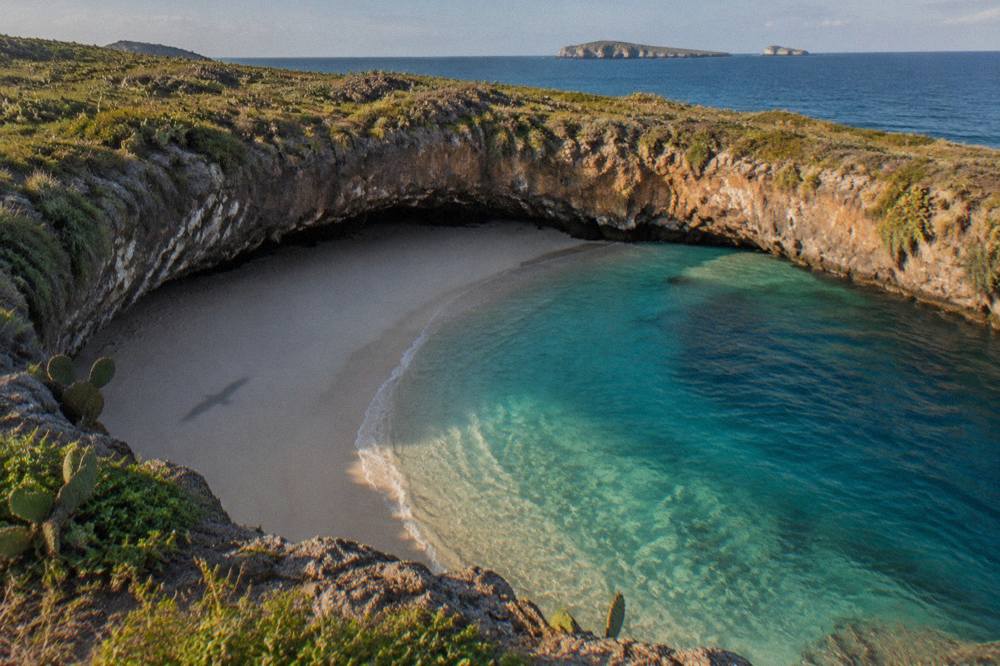
The official CONANP page for the park contains hours, fees, exemptions, distances from departure ports, eight visitor rules and a wildlife list. It contains no bathymetry. The same goes for the federal reopening notice from 2016 that set the Hidden Beach access conditions, which talks about groups, tides, helmets and time limits, never about how deep anything is.
What the official page does say, and what a nervous swimmer should actually plan around, is that access to the park is by boat only, with authorized providers, and that a life jacket is mandatory in the water. The park's own recommendations add that footwear is not allowed for water or beach activities and that light clothing and swimwear are the right kit. Those rules apply whatever the depth happens to be on the day.
So the practical answer is structural rather than numerical. Snorkeling happens from boats over reefs; the crossing between the islands and the mainland passes over open bay water; the Hidden Beach entrance is a short swim through a rock passage that listings describe in meters only for their own product. The closest figures available are the two swim distances, and both belong to specific tours rather than to the sea in general.
Why No Official Depth Figure Exists For The Islands
Because depth is simply not what the park's governing documents measure. CONANP regulates access, group sizes, tides, fees and conduct, and the 2016 reopening notice for Playa del Amor sets swim conditions in terms of supervision and equipment rather than meters. Tour listings follow suit, describing swim distances and ability needs instead of publishing soundings.
The official CONANP page for Islas Marietas National Park is the primary source for almost everything factual on this site. It records the park hours, Tuesday to Sunday 8:00 to 18:00, the MXN 125 per person per day entry fee sold as the conservation wristband, the discount and exemption rules, and the eight visitor rules. Depths appear nowhere on it. The page also notes that in the rainy season some days have poor sea conditions, which is the park's own way of saying the water behaves differently day to day.
The 2016 federal reopening notice is the other primary text, and it is instructive to see what it regulates instead of depth. According to the CONANP reopening release for Playa del Amor, the rules operators still describe today were set then: groups of at most 15, supervised, entering at low tide, with 30 minutes per group counted from leaving the boat, entry and exit only along a buoy-marked lane, helmets and flotation vests compulsory, and no fins, mask or snorkel at the beach entrance, with at most 116 visitors a day at the site. Every one of those rules manages people, not water measurements.
| Source | What it measures | Any depth figure? |
|---|---|---|
| CONANP official park page | Hours, fee, rules, distances from ports, wildlife | None |
| 2016 CONANP reopening notice | Group size, tide timing, equipment, daily visitor count | None |
| Tour listings (30) | Swim distances for their own passage, ability requirements | Only per-listing swim lengths |
| Monthly climate tables | Sea temperature, rainfall, rain days | None |
The distances CONANP does publish are horizontal, not vertical: Punta de Mita sits 9 km from the islands, Puerto Vallarta 34 km. Those numbers tell you how long you will be on a boat, not how deep the water is when you get off it. Combining them with per-listing swim requirements is the best planning picture available anywhere.
The weakness of the depth question is also its answer. Conditions around a volcanic archipelago with reefs, channels and a crater beach vary by spot and by tide, which is precisely why the park regulates equipment and supervision instead of posting a number. A reader who shows up with a life jacket, reef-safe sunscreen and an accurate sense of their own swimming is prepared by the park's own standard.
How Deep Do You Need To Swim Into Hidden Beach?
The listings that describe the swim-in passage give distances, not depths. One sightseeing tour states a swim of about 60 meters through the rocky passage to Playa Escondida; one Puerto Vallarta tour states about 250 meters from the boat. Both require confident swimming, and the park's 2016 rules require helmets and flotation vests, with no fins, mask or snorkel at the entrance.
Hidden Beach, the crater beach also called Playa del Amor and Playa Escondida, is reached by swimming through a natural rock passage, and that passage is the one place where individual listings volunteer measurements. The sightseeing tour from Puerto Mágico states participants must be able to swim approximately 60 meters to enter. The Ecotours Vallarta snorkeling trip from Puerto Vallarta states visitors must be comfortable swimming about 250 meters from the boat through a rock tunnel and climbing a ladder. Those are two different products describing two different approaches, and neither belongs to the sea in general.
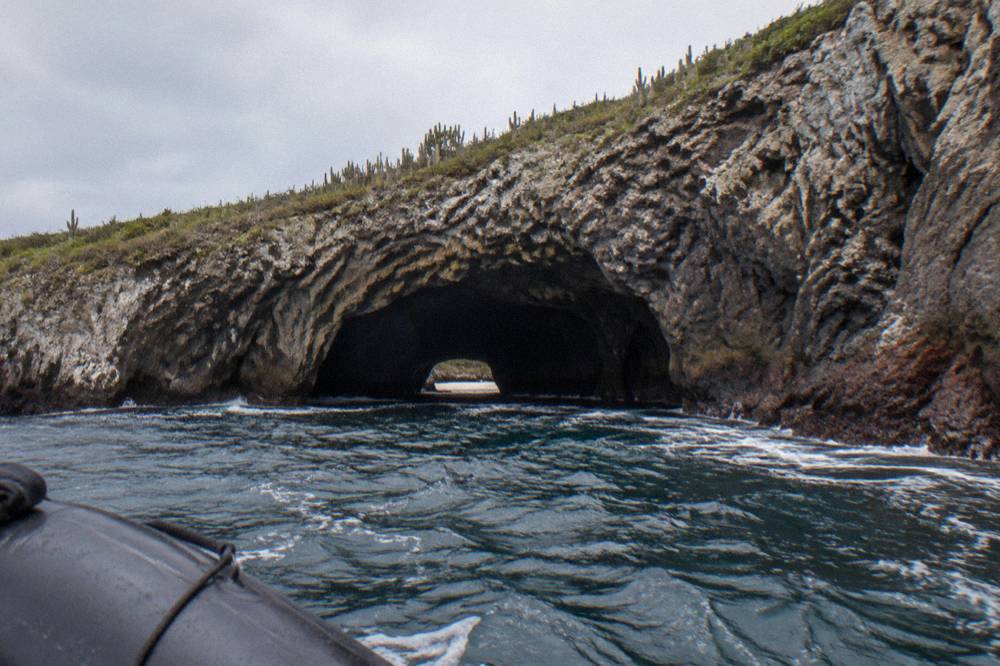
Entry also depends on conditions, and tours say so. The Ecotours Vallarta "Naturalist Guide, Snorkel, Box Lunch" tour, from $133 per person and 4.7 from 192 reviews, states plainly that operators cannot confirm entrance ahead of time and do their best on every visit. Its notes add that only for Hidden Beach the age limit is 10 to 65, the beach visit is about 10 minutes, and helmet plus vest are mandatory. That 10-minute figure is that listing's own rule, not a park-wide number; the 2016 CONANP rules allow 30 minutes per group from leaving the boat.
For readers weighing whether the beach is worth the swim at all, the site's dedicated page on whether Hidden Beach is worth it works through the trade-offs, and the guide to Hidden Beach rules, closure days and visitor limits collects the closure schedule, the beach being closed Monday and Tuesday while the park is closed Monday.
If depth anxiety is really swim anxiety, the featured Eco Explorer Vallarta tour handles it sensibly: its Hidden Beach landing is an optional paid extra rather than part of the ticket, so a hesitant swimmer can take the boat ride, the snorkeling and the guide and simply skip the tunnel.
What The Rules Require In The Water, Regardless Of Depth
CONANP's visitor rules make a life jacket mandatory for anyone in the water, ban alcohol in the park, require reef-friendly sunscreen applied 30 minutes before swimming, and forbid single-use plastics and littering. Footwear is not allowed for water activities. These rules apply everywhere in the park, whatever the depth happens to be.
This is the section that replaces a depth chart. The park's eight rules are short enough to list in spirit: follow guides and rangers, wear a life jacket in the water, no alcohol, no littering, no removing or introducing animals, no single-use plastics, reef-friendly sunscreen applied at least 30 minutes before entering the water, and payment of the rights fee. None of them is conditional on how deep the water is, because none of them needs to be.
These tours reflect this in their inclusions. The featured Eco Explorer tour lists the CONANP bracelet and official park permits as included, along with life vests and snorkel gear. The Grimar Adventures collective boat from Punta de Mita, from $67 per person and 4.9 from 32 reviews, lists a lifejacket and snorkeling equipment among its inclusions and caps the group at 8 travelers. The Grimar Hidden Beach entry tour, from $157 and 4.8 from 117 reviews, also lists a lifejacket and adds a waterproof container for phones, a small detail that tells you the swim is real.
| Tour | From price | Group max | Swim-relevant inclusions stated by the listing |
|---|---|---|---|
| Optional Hidden Beach, Snacks Included | $99 per person | 16 | Life vest, snorkel gear, CONANP bracelet, permits, guide |
| Collective Boat, 2 Hours 30 Minutes | $67 per person | 8 | Lifejacket, snorkel equipment, non-alcoholic drinks |
| Grimar Hidden Beach Entry, 3 Hours | $157 per person | 8 | Lifejacket, snorkel equipment, covered boat |
| Naturalist Guide, Snorkel, Box Lunch | $133 per person | 10 | Helmet and vest mandatory at beach, box lunch, guide |
| Snorkeling From Puerto Vallarta, 5 Hours | $136 per person | not stated | Life jacket mandatory, up to 3 hours in the park |
Age and fitness limits vary by listing and are worth reading per product rather than assuming a park-wide rule. One operator allows the tour from age 6 to 70 but Hidden Beach only from 10 to 65. Another excludes kids under 8 entirely. A third caps Hidden Beach access between 12 and 65. The only wheelchair-accessible tour on this site is the Punta de Mita "Hidden Beach, All Fees Included" tour. None of these numbers is a depth number, but all of them shape who should book what.
For non-swimmers the answer is that the park is a water destination. One listing states outright that to access Playa Escondida and snorkel you must know how to swim. Others are boat-and-float experiences where the life jacket and the boat do most of the work; the family-focused guide on the Marietas with kids and non-swimmers sorts the tours by exactly that test.
Which Tour Format Suits A Hesitant Swimmer Best?
Small boats with guides in the water suit nervous swimmers better than big catamarans. The featured Eco Explorer tour caps at 16 travelers with a guide; Grimar's Punta de Mita boats cap at 8; the Ecotours Vallarta panga trip allows up to 3 hours in the park with a mandatory life jacket. Large catamarans, up to 100 travelers on one listing, offer supervision but less individual attention.
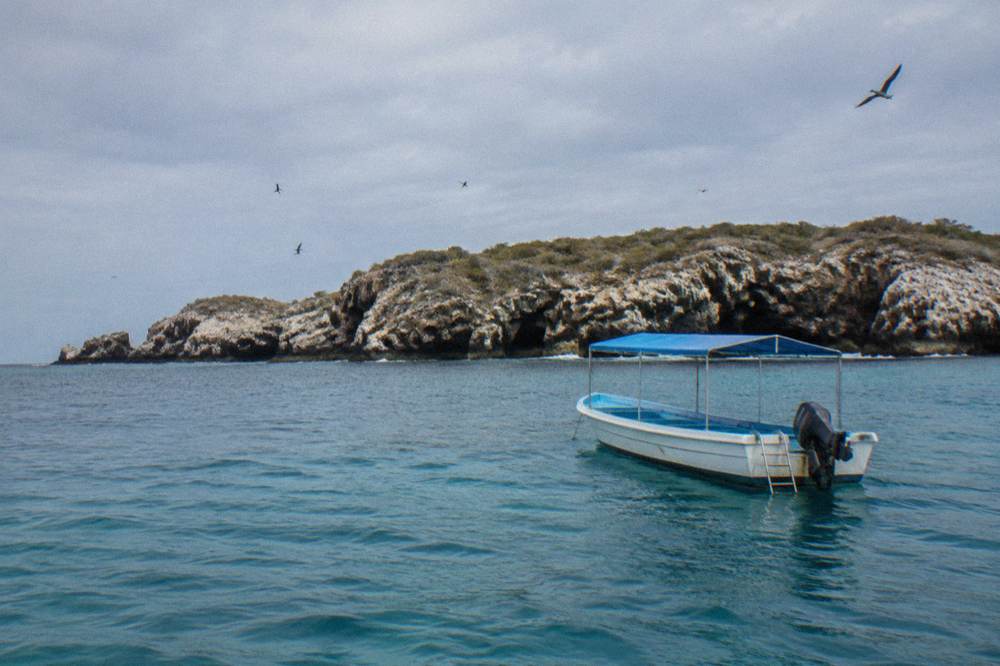
Format matters more than depth, and the tours here show it across a wide spread. At the small end, the Punta de Mita operators run covered pangas and private boats with 8 travelers maximum. In the middle, the featured Eco Explorer tour and the Ecotours Vallarta naturalist trips sit at 16 and 10 respectively. At the large end, catamarans carry dozens: the Chica Locca all-inclusive listing caps at 66 travelers, one Monkey Adventures México boat at 30, the Vallarta Adventures BBQ trip at 100.
What changes with size is attention. The Ecotours Vallarta "Naturalist Guide, Snorkel, Box Lunch" listing is led by a marine biologist or naturalist, runs on a 30-foot super panga with toilets on board, and caps at 10 guests. Its sibling listing, "Snorkeling From Puerto Vallarta, 5 Hours", from $136 per person and 4.9 from 18 reviews, includes travel insurance, a mandatory life jacket and up to three hours in the national park, and its notes state visitors must be comfortable swimming about 250 meters and climbing a ladder.
The Punta de Mita side offers shorter commitments, which is its own comfort factor. Grimar's collective boat runs 2 hours 30 minutes total, from $67 per person, the lowest firm price among these tours, with a lifejacket, snorkel gear and non-alcoholic drinks included. Shark's Tours' Hidden Beach listing, from $157 per person and 4.8 from 161 reviews, includes a life jacket, non-alcoholic beverages, snorkel gear and a container to carry phones to the beaches, with a maximum of 8 travelers. Short boat time, small group, vest on: for many hesitant swimmers that is a better first trip than a full-day catamaran.
Large-boat days are not ruled out. The Chica Locca "All Inclusive, 6 Hours" listing, from $130 per person and 4.8 from 771 reviews, includes an open bar, food with vegetarian, vegan and gluten-free options, and water equipment from kayaks to floating mats, capped at 66 travelers. Note the disambiguation trap: its sister Chica Locca listing at the same $130 from-price and 59 reviews lists fajitas, guacamole and a different water-toys spread; the two are separate products. Floating mats and supervision-heavy crews suit confident floaters who would rather not swim distances at all.
| Format | Example listing | Travelers max | Best fit for a nervous swimmer |
|---|---|---|---|
| Small panga, naturalist guide | Naturalist Guide, Snorkel, Box Lunch | 10 | Closest supervision, biologist-led |
| Collective small boat | Collective Boat, 2 Hours 30 Minutes | 8 | Shortest day, lowest price |
| Mid-size snorkel tour | Optional Hidden Beach, Snacks Included | 16 | Guide plus optional beach skip |
| Full-day catamaran | All Inclusive, 6 Hours | 66 | Floating mat over swimming |
The common thread is the park rule itself: a life jacket is mandatory in the water on every one of these boats. The site's broader comparison of small-group versus large-boat tours extends the same logic across all 30 products.
Does The Water Feel Different Through The Year?
Sea temperature on record ranges from 23.9 C in February and March to 30.3 C in August, so the water never feels cold by most standards. Depth does not change with season in any sourced way, but sea conditions do: CONANP itself notes some rainy-season days have poor conditions, and tours can be cancelled for sea states.
The monthly climate table is the only seasonal data available, and it measures temperature and rain, not depth. February and March sit at 23.9 C, the coolest of the year; July through September hold near 29.6 to 30.3 C. Rain tells the sharper story: February averages 12 mm over roughly one rain day, while September averages 429 mm over about twenty. The hurricane-season months, June to November with higher probability August to October, are when tours most often face weather calls.
For a hesitant swimmer that translates simply. The dry season, December to April, pairs the fewest rain days and, per the listings, the whale season on the crossing, with the official federal window running 8 December 2025 to 23 March 2026 for the season just past. Humpbacks are described by listings as a seasonal possibility from the boat, never promised. Nothing about winter flatness or summer swell may be stated as fact; what can be said is the park's own wording that rainy-season days can have poor conditions, and that weather cancellations happen.
Guests report that water clarity varies day to day, sometimes excellent over the reefs, sometimes murky after wind or swell, which is consistent with a park that regulates equipment rather than promising conditions. Every tour here carries a cancellation line; the common one is a full refund when cancelled at least 24 hours before start. The practical takeaway: book the dry months if you want the odds on your side, wear the vest, and treat the day's conditions as the real variable, not a depth number nobody publishes.
Common Questions About Water Depth At The Marietas Islands
Do I Need To Be A Strong Swimmer For A Marietas Islands Boat Tour?
It depends on the tour. One listing states you must know how to swim to enter Playa Escondida; the Ecotours Vallarta trip asks for comfort swimming about 250 meters and using a ladder. Boat-based sightseeing and floating formats are gentler, and CONANP makes life jackets mandatory in the water everywhere in the park.
Is A Life Jacket Required Even If The Water Looks Shallow?
Yes. The CONANP visitor rules require a life jacket for anyone in the water inside the park, with no exception for shallow-looking spots. Tours here include lifejackets or vests in their inclusions, and the 2016 Hidden Beach reopening rules operators still describe make helmets and vests compulsory for the beach entrance.
How Long Is The Swim Into Hidden Beach?
Distances belong to individual listings. The sightseeing tour states about 60 meters through the rocky passage; one Puerto Vallarta tour states about 250 meters from the boat. The 2016 CONANP rules allow 30 minutes per group from leaving the boat, entered at low tide along a buoy-marked lane with no fins, mask or snorkel at the entrance.
Can The Water Conditions Cancel A Tour?
Yes, tours can be cancelled for sea conditions. CONANP notes that rainy-season days can have poor sea conditions, and guests report tide and swell sometimes preventing the Hidden Beach swim, with tours redirecting to snorkeling. Cancellation terms are per listing, most commonly a full refund when cancelled at least 24 hours before the start time.
Which Tour Is Best If I Am Nervous About Deep Water?
Small boats with guides suit hesitant swimmers: the Ecotours Vallarta naturalist panga caps at 10 guests, Grimar's collective boat at 8, and the Eco Explorer tour at 16 with a guide and vest included. Its Hidden Beach landing is an optional paid extra, so the beach swim can be skipped entirely.