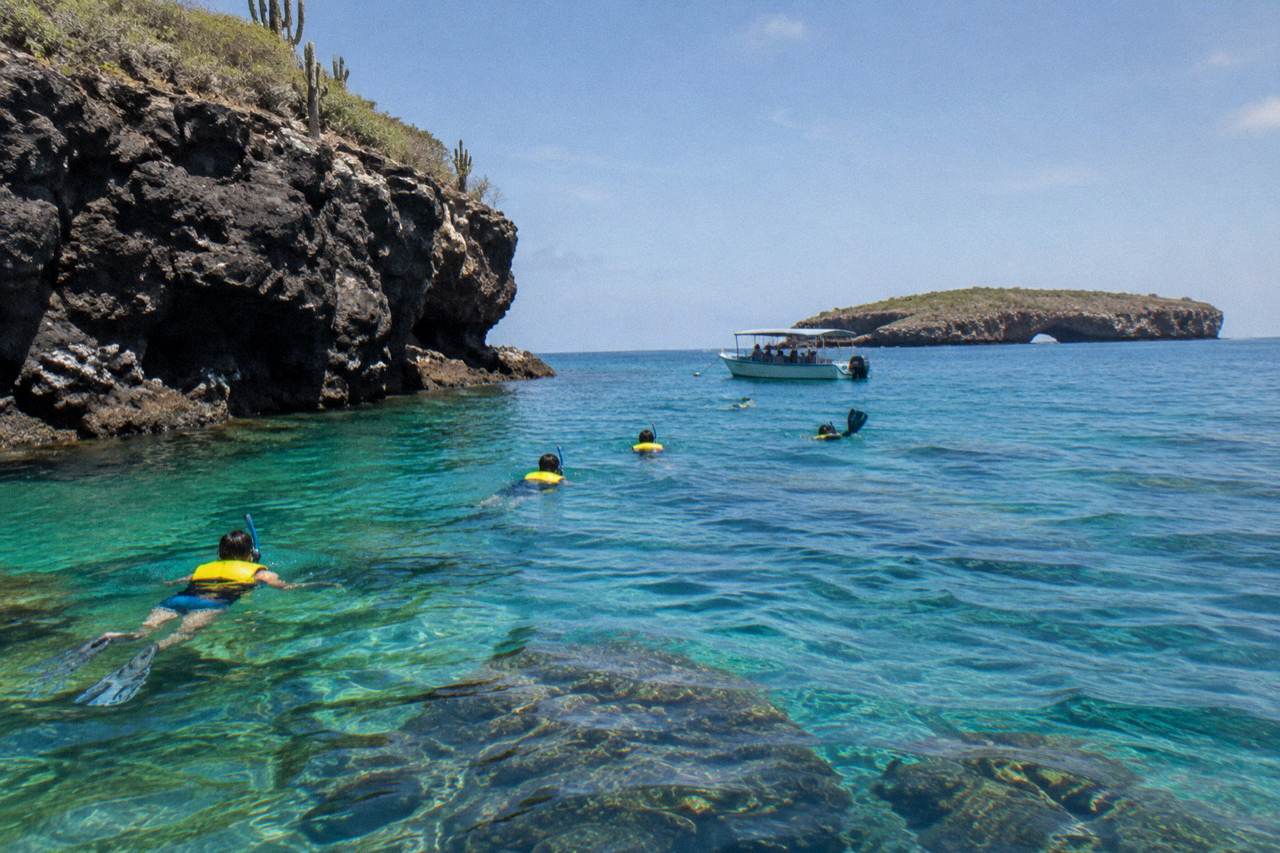
Is Puerto Vallarta Safe For Tourists Right Now?
A calm, fact-based answer for boat-trip travelers: official Marietas Islands park rules, on-water safety, tour safety features and how to check your government's current advisory.
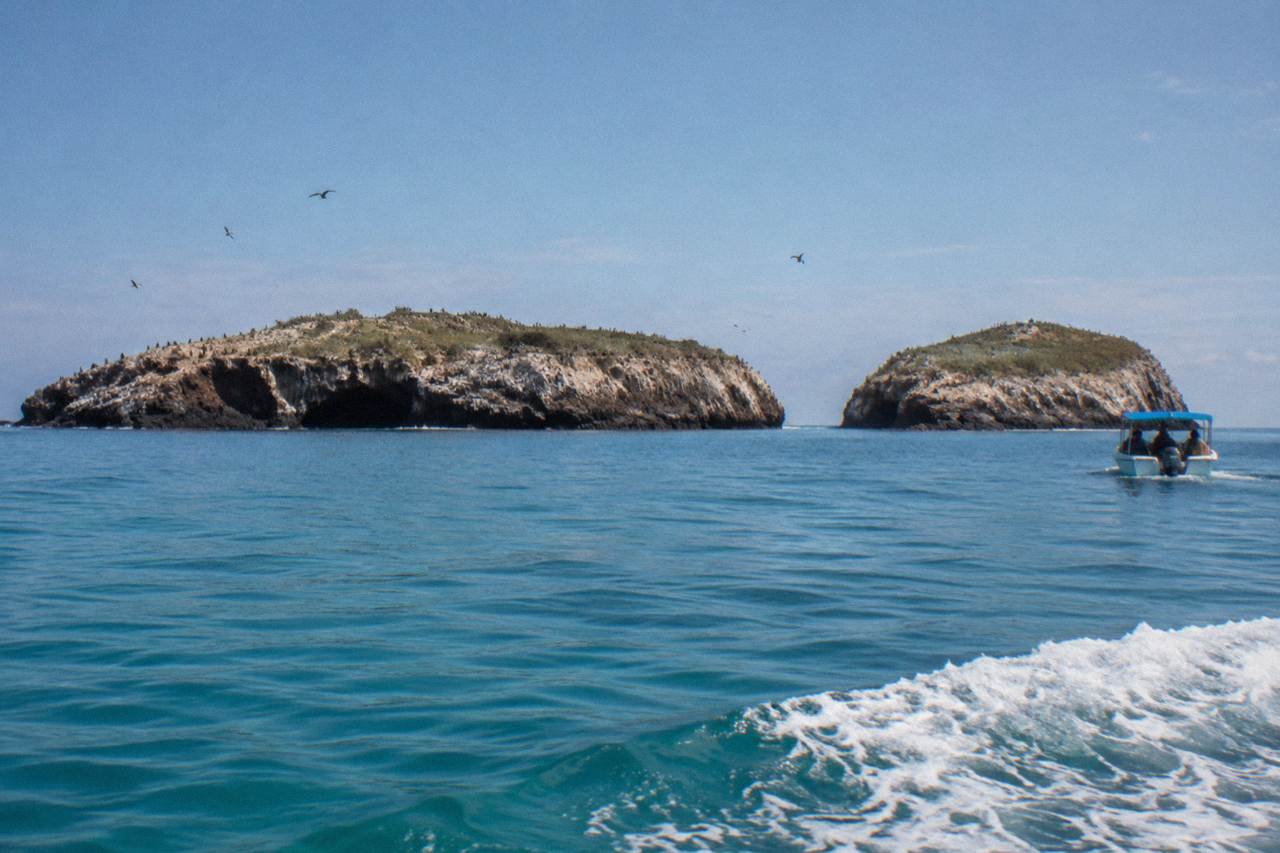
The mechanics of a safe day on the water there are unusually well documented. The park that governs the islands, run by CONANP, publishes its visitor rules, its hours and its entry fee, and every authorized operator in Banderas Bay works inside that framework. For a traveler asking whether a Marietas boat trip is a safe thing to book, the answer sits in three places: the official park rules, the safety details each listing states, and your own government's current travel advisory. What follows lays out the parts that are actually printed in official sources, from mandatory life jackets to reef-friendly sunscreen timing, and connects them to the specific tours on this site. If you're also weighing how confident a swimmer you need to be, the guide to water depth and swimming conditions around the islands lays out what the official sources actually print.
What Determines Safety On A Marietas Trip?
The practical answer: check your government's current advisory, then book an authorized Marietas operator. Check the current US State Department advisory for Mexico, which rates Jalisco, the state that holds Puerto Vallarta, and Nayarit, home to Punta de Mita and Nuevo Vallarta, separately. Advisories change, so read the current page for your own government before booking.
A Marietas boat day is run by authorized operators inside a national park with published rules, so the on-water part comes down to park rules, sea conditions and the operator you pick, all checkable before you book. The rest of this article covers those. Once your operator is chosen, the guide to free days in Puerto Vallarta around your Marietas trip covers how to fill the rest of your stay with the Malecon, Cuale Island and a pay-what-you-want walking tour.
The Islas Marietas are a national park, and that changes the safety conversation in a helpful way. Parks have rules. The official CONANP page for the islands lists eight visitor rules, set hours, a daily entry fee sold as a conservation wristband, and one clear access principle: you reach the islands by boat, with authorized private tourism providers of Banderas Bay. That single principle does a lot of safety work before you ever step on a pier, because it means the operator holding your ticket has been through an authorization process. The park's official page states all of this plainly.
For travelers whose worry is general rather than specific, the practical move is the same one experienced boat-trip planners make: pick the tour format that matches your comfort on the water, read the listing's own safety notes, and let the park's supervision do the rest. A small-boat snorkel tour from Marina Vallarta, a large catamaran from the Puerto Mágico terminal and a private charter from Punta de Mita all operate under the same park rules, but they feel very different on the water. If your concern is the crossing itself rather than the destination, the guide to whether the boat ride is rough covers that question directly, and the hurricane season guide covers the months when sea conditions matter most.
What Are The Official Safety Rules Inside The Marietas Islands Park?
The park's eight official rules are: follow guides and rangers, wear a life jacket in the water, no alcohol, no littering, no removing or introducing animals, no single-use plastics, apply reef-friendly sunscreen at least 30 minutes before entering the water, and pay the rights fee. The park is open Tuesday to Sunday, 8:00 to 18:00, with Playa del Amor open Wednesday to Sunday, 8:00 to 17:00. CONANP also recommends light beach clothing and swimwear, and does not allow footwear for water or beach activities. These are not suggestions from tour companies; they are the conditions of entry to a federally protected area.
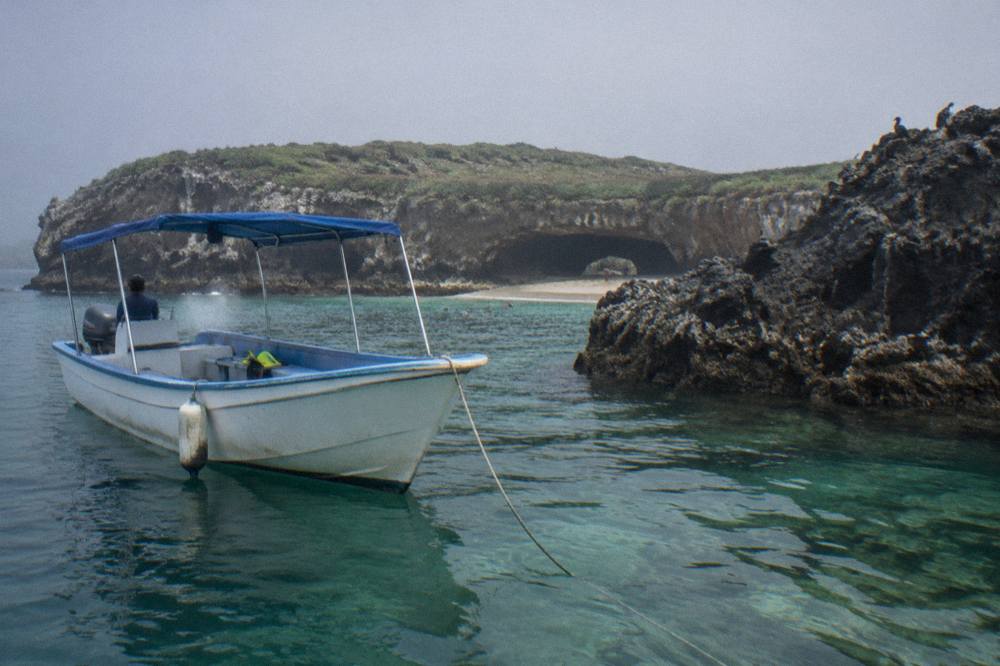
Two of the eight rules deserve emphasis for safety-minded readers. The life jacket rule is mandatory for everyone in the water, not just weak swimmers, and every tour here that mentions flotation gear states it is provided. The alcohol rule means the open bars that many catamaran listings advertise operate on the boat, not in the park; several listings state this explicitly in their inclusions, such as the Chica Locca catamaran day and the sailing trip from Paradise Village pier, both of which serve drinks aboard.
| Official park rule | What it means on the day |
|---|---|
| Follow guides and rangers | Stay with your group; rangers direct movement on the islands |
| Life jacket mandatory in the water | Everyone, on every tour, no exceptions |
| No alcohol | Drinks stay on the boat, never at the beach or in the water |
| No littering | Nothing left on the islands or thrown from the boat |
| No removing or introducing animals | Look, do not touch or collect marine life |
| No single-use plastics | Bring a reusable bottle; several listings encourage exactly this |
| Reef-friendly sunscreen 30 minutes before entering | Apply before you leave the boat, not in the water |
| Pay the rights fee | MXN 125 per person per day, sold as the conservation wristband |
The wristband question trips up a lot of first-time visitors, so it is worth getting right. The fee is a federal rights payment, MXN 125 per person per day, with exemptions for children under 12, older adults, pensioners, retirees and people with disabilities, a 75 percent discount for students and teachers with credentials, and a 50 percent discount for Mexican nationals and foreign residents with documents. Foreign tourists pay the full amount. Whether your tour ticket already covers it is a per-listing fact: the featured Eco Explorer Vallarta snorkel tour lists the CONANP bracelet and park permits as included, while several catamaran listings list a conservation bracelet as a separate cash item at check-in. The park fee and wristband guide breaks down which tours include what.
This is also where a worried traveler's instinct to book a guided tour, rather than arranging anything independently, matches the official framework exactly. The park's own wording is that access is by boat with authorized providers, and a listing like the Marina Vallarta snorkel tour states that its permits, its CONANP bracelet and a qualified guide are all part of the ticket from $99 per person, rated 4.8 from 1,033 reviews. You are not buying reassurance as an add-on; the supervision is the structure.
Is The Boat Ride To The Marietas Islands Safe?
The park makes life jackets mandatory in the water, and listings add, in several cases, helmets, supervised swimming and a guide licensed for the islands. The distances involved are short on the bay's scale, from 9 km out of Punta de Mita to 34 km from Puerto Vallarta, and tours can be cancelled for sea conditions, which is the system working as intended. The distances are official: CONANP lists Punta de Mita at 9 km from the islands, La Cruz de Huanacaxtle at 11.84 nautical miles, Sayulita at 12.68 and Puerto Vallarta at 34 km.
Boat size is the main comfort decision hiding inside the safety question. A large catamaran like the Altus Tours day trip, from $99 per person with up to 75 travelers, handles open water one way; a covered panga like Grimar Adventures' boats from Punta de Mita, carrying at most 8, handles it another. Neither is inherently safer on paper, but a nervous swimmer or a family with kids often prefers the smaller vessel's closeness to the water and the crew, while travelers who want rails, seating and bathrooms prefer the catamaran. Both formats run under the same park rules once they arrive.
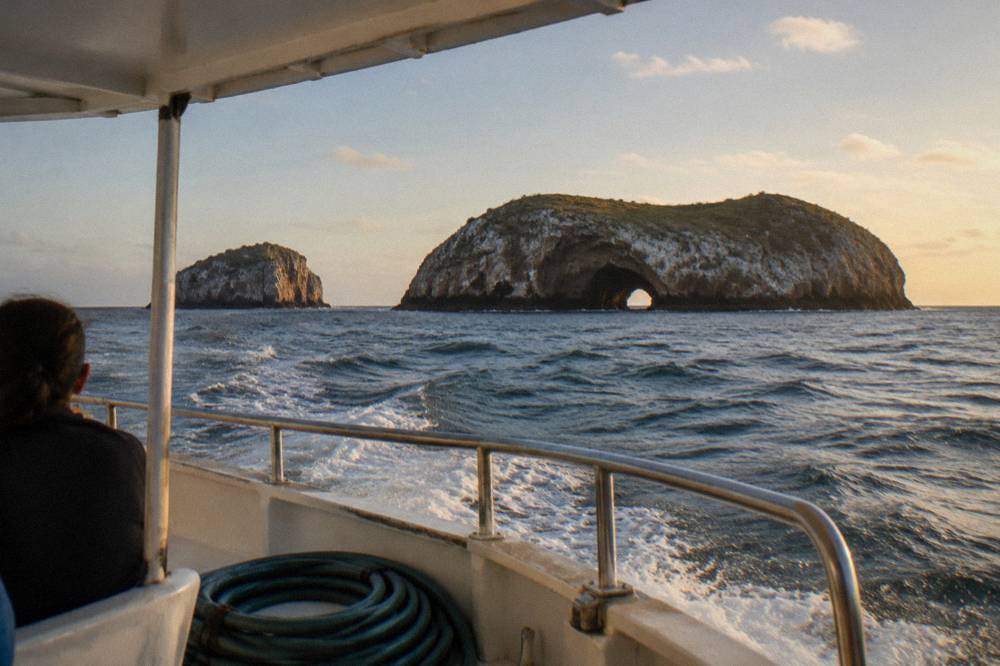
The individual listing notes are a better safety source than any general claim, because they state each operator's restrictions in their own words. Pregnant travelers are excluded or not recommended on most listings, back and heart conditions appear repeatedly, and several small-boat tours from Punta de Mita cap groups at 8. The Ecotours Vallarta naturalist tour states a maximum of 10 travelers and a marine-biologist-led tour; the Eco Explorer Vallarta snorkel tour states a maximum of 16. Those caps are operator choices, printed per listing, and they tell you a lot about the experience before you book it.
| Tour | From | Group cap stated by listing | Safety-relevant listing notes |
|---|---|---|---|
| Optional Hidden Beach, Snacks Included (Eco Explorer Vallarta) | $99 per person | 16 | Life vest and guide included; snorkel tour for ages 6 to 70 |
| Naturalist Guide, Snorkel, Box Lunch (Ecotours Vallarta) | $133 per person | 10 | Helmet and life jacket mandatory at Hidden Beach; marine biologist guide |
| Collective Boat, 2 Hours 30 Minutes (Grimar Adventures) | $67 per person | 8 | Lifejacket and snorkel gear included; waterproof phone container |
| Catamaran Day, 8 Hours, Meal (Altus Tours) | $99 per person | 75 | Snorkel gear with life jacket included; not recommended for back problems or pregnancy |
| Private Boat, Local Guide, 3 Hours (Marieta Tours) | $369 per group | Your group only | Personal bilingual guide; park taxes included |
One tour here is explicitly marked wheelchair accessible: the Punta de Mita "Hidden Beach, All Fees Included" tour from Marieta Sport Fishing, from $156 per person, 4.6 from 11 reviews. Most others state they are not wheelchair accessible. That single fact matters more to some travelers than anything else, and it is exactly the kind of detail that only the listing itself can confirm.
What About Swimming, Snorkeling And Hidden Beach Safety?
Hidden Beach, the crater beach also called Playa del Amor, is reached by swimming through a rock passage, and the rules around that swim are strict: under the reopening rules CONANP set in 2016, which operators still describe, helmets and flotation vests are compulsory, no fins, mask or snorkel are worn at the entrance, groups are limited to 15 supervised swimmers at low tide, and the beach allows at most 116 visitors a day. CONANP has published no newer figures for those caps, and nothing indicates they changed. The current CONANP page confirms the beach's Wednesday to Sunday hours and the fee without restating the numbers.
The swim itself is the single most safety-managed moment of any Marietas day, and listings describe it plainly. The sightseeing tour from Puerto Mágico states a swim of about 60 meters to enter Playa Escondida and requires that you know how to swim; one Puerto Vallarta listing states about 250 meters from the boat, and states visitors must be comfortable swimming that distance and climbing a ladder. Ages and fitness limits are per operator: one listing says 10 to 65 for the beach, another says 12 minimum, another allows no children under 8 on the tour at all. These are operator rules, printed per listing, not park-wide age limits, so read the listing for the tour you are actually booking.
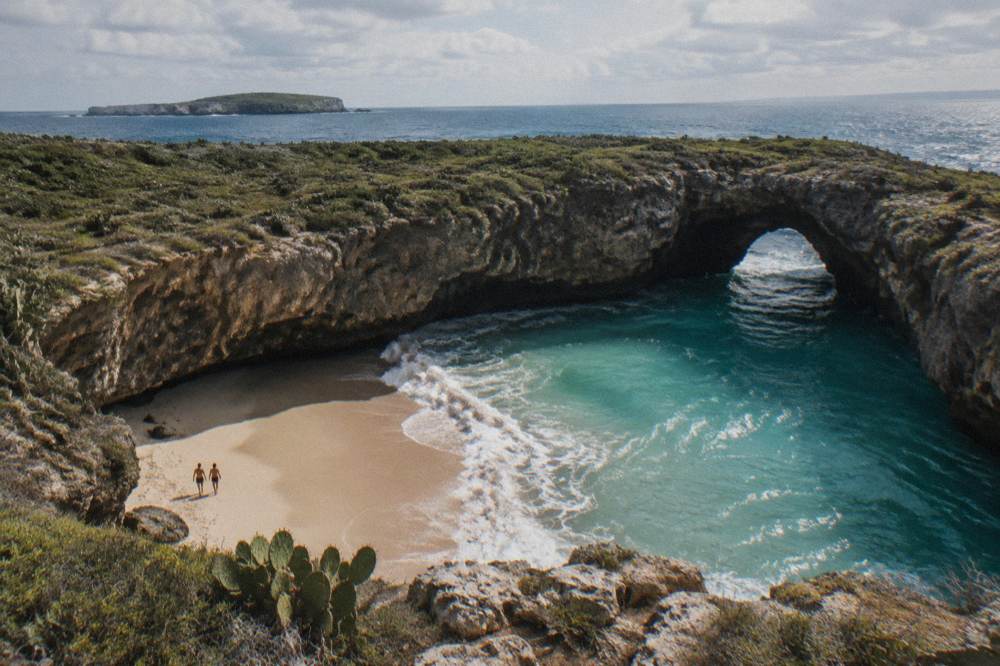
Guests report that access depends on tide and sea state, and that tours redirect to snorkeling when the passage is not workable. That is not a defect in the system; it is the system. The 2016 reopening rules, which operators still describe, require entry at low tide along a buoy-marked lane, and a listing-stated note from the private safari operator says a tour start may wait about an hour for the tide to fall. If Hidden Beach is your priority, the Hidden Beach rules and closure days guide and the can you swim to Hidden Beach post cover the mechanics in detail, and the swimming with kids and non-swimmers guide covers who should skip the tunnel.
For travelers who want the crater-beach experience with the fewest variables, the small-group operators from Punta de Mita make that their whole product. Shark's Tours runs a 3-hour Hidden Beach trip, from $157 per person, 4.8 from 161 reviews, capped at 8 travelers, that lists entrance to the beach, life jackets, non-alcoholic beverages and a waterproof container for your phone among the inclusions.
From the Puerto Vallarta side, the same job is done by catamarans and pangas that carry far more people, and on many of them the Hidden Beach landing is an optional paid extra or not part of the itinerary. The featured Eco Explorer Vallarta tour lists its Hidden Beach landing as an optional extra with a cash entrance fee; the Vallarta Adventures BBQ trip from $79 per person states outright that it does not include a visit to Hidden Beach. Neither fact makes those tours less safe; it makes them different products, and knowing which is which is most of the booking decision.
Which Side Of The Bay Should You Depart From For The Easiest Day?
Punta de Mita is the closest departure point to the islands at 9 km per CONANP, with La Cruz de Huanacaxtle at 11.84 nautical miles, Sayulita at 12.68, Nuevo Nayarit at 15.96 and Puerto Vallarta at 34 km. No tour departs from La Cruz, Bucerias or Sayulita; the departures are Marina Vallarta, the Puerto Mágico terminal, Los Peines pier, Paradise Village pier in Nuevo Vallarta, and the Punta de Mita and Corral del Risco piers. Choosing your base is therefore choosing your boat ride length, and comfort on the water is a legitimate safety input for many travelers.
The practical read: if a long open-water crossing is your main worry, base yourself in or near Punta de Mita and take one of the short small-boat trips. Grimar Adventures' collective boat, from $67 per person and rated 4.9 from 32 reviews, runs 2 hours 30 minutes total. If you want the full-day, all-inclusive format with food, open bar and water toys, those overwhelmingly depart from Puerto Vallarta and Nuevo Vallarta piers, and the crossing is simply part of the day. The Punta de Mita and La Cruz guide and the Puerto Vallarta departures guide lay out every listing by pier.
No tour here states that hotel pickup is offered, and several state it is excluded, so plan to reach the listed meeting point yourself. Each listing names its meeting point precisely, from the Marina Vallarta slip next to the fishing center to the cooperative pier in front of the small marina at Punta de Mita. Arriving at a named pier, checking in with a named operator and boarding a permitted boat is the routine, and it is a routine that leaves little room for improvisation, which is precisely what an anxious traveler wants.
How Do The Seasons Affect Safety And Cancellations?
Seasons matter a lot. From 8 December 2025 to 23 March 2026, whales and boats share the bay under SEMARNAT federal rules, with whale activity restricted within 1.5 km of the islands, while rain and sea conditions peak June to October; September averages 429 mm of rain over 20 rain days versus 4 mm and 1 rain day in March, tours can be cancelled for sea conditions, and refund terms are whatever each listing states. CONANP itself recommends the park year-round and notes that rainy-season days can bring poor sea conditions.
| Month | Sea temperature (C) | Rain (mm) | Rain days | Season |
|---|---|---|---|---|
| December | 25.2 | 21 | 2 | Dry season |
| February | 23.9 | 12 | 1 | Dry season |
| March | 23.9 | 4 | 1 | Dry season |
| July | 29.6 | 362 | 20 | Wet and hurricane season |
| September | 30.2 | 429 | 20 | Wet and hurricane season |
| November | 27.7 | 24 | 2 | Dry season |
The safety translation of that table is simple. In the dry months the bay is at its most welcoming for nervous swimmers: warm water, minimal rain, and humpbacks described by listings as a seasonal possibility on the crossing. In the wet months the sea stays at its warmest, near 30 C, but rain days multiply and tours can be cancelled for sea conditions. Most tours offer a full refund if you cancel at least 24 hours before the experience's start time, which means a weather scrub costs you the day, not the fare, under the terms each listing states. Never rely on a summary like this one for the final word; the cancellation line on the live listing is the contract.
Wildlife safety notes worth having: CONANP lists blue-footed and brown boobies, frigatebirds, Heermann's gulls, king angelfish, giant mantas, spotted eagle rays and humpbacks as park wildlife, all described as sightings that are possible, never scheduled. Swimming with whales is prohibited, and no tour here offers it; listings describe whales as something you may see from the boat in season. The whale watching combo guide covers the seasonal side without promising a single spout.
How Do You Pick A Reputable Marietas Boat Operator?
Use three checks: the listing must name an authorized operator working the park, it must state its safety equipment and group limits in its own notes, and it must state its cancellation terms. Here every listing does all three, and the differences between them, boat size, duration, price from $67 per person to $168 per person or from $369 per group, are comfort choices rather than safety tiers. The park's authorized-provider rule means the floor is already high; your job is matching the format to your group, not hunting for a safe needle in an unsafe haystack.
Read the listing notes with your actual party in mind. Traveling with a child under 8? The Ecotours Vallarta naturalist tour states kids under 8 are not allowed, while other listings allow infants on laps. Pregnant traveler in the group? Most listings exclude or do not recommend pregnancy, and the Eco Explorer Vallarta listing states pregnant travelers are not allowed on its tours. Non-swimmer? The sightseeing listing states you must know how to swim to enter Playa Escondida, and every tour still offers boat-based scenery and bird watching. These are printed, per-listing facts, and they are the difference between a good day and a refund request.
Price is a poor proxy for safety here. The cheapest firm-priced trip, the Grimar collective boat from $67 per person, carries at most 8 travelers with a lifejacket for each; the most expensive per-person tour, from $168 out of Nuevo Vallarta, is a 6.5-hour Hidden Beach trip rated 4.6 from 81 reviews. What you pay for is duration, food, bar and boat style, not a safer hull. If budget is the constraint, the cost comparison guide prices every firm tour.
For a family that wants the water toys without the Hidden Beach swim, the Chica Locca six-hour boat day from $130 per person, rated 4.8 from 59 reviews, lists unlimited snorkel, kayak and paddleboard use plus a fajita lunch, and its listing does not mention Hidden Beach.
Whichever you choose, the pre-departure checklist from official sources is short: apply reef-friendly sunscreen 30 minutes before the water, bring a reusable bottle since single-use plastics are banned in the park, wear swimwear and skip the footwear for water activities, and carry cash for any fee your listing states is not included. Bring ID if anyone in your group is near an operator's stated age boundary for Hidden Beach, because listings state ID is checked.
If the answer to "is it safe" matters because someone in your party is nervous, book the smallest boat that fits your budget and read its listing notes aloud together. The system that greets you at the islands, rangers, rules, mandatory flotation, authorized boats only, is genuinely strict, and knowing exactly what it asks of you removes most of the open-ended worry. The card below is a sensible place to start: a collective boat that carries at most 8 travelers.
Common Questions About Puerto Vallarta Safety For Marietas Boat Trips
Do I Need To Be A Strong Swimmer For A Marietas Islands Tour?
For snorkeling you need to be comfortable in the water with a life jacket, which is mandatory for everyone. For Hidden Beach, listings state you must be able to swim: one states about 60 meters through the rock passage, another about 250 meters from the boat. Non-swimmers can still enjoy the boat ride, bird watching and scenery.
Is The Hidden Beach Swim Dangerous?
It is managed rather than left to chance: under the reopening rules CONANP set in 2016, which operators still describe, helmets and flotation vests are compulsory, fins and snorkels are not worn at the entrance, entry is at low tide along a buoy-marked lane in supervised groups of at most 15, and at most 116 visitors a day enter. Access still depends on tide and sea state, and tours redirect to snorkeling when it is not workable.
Is Alcohol Allowed In The Marietas Islands Park?
No. The park's official rules prohibit alcohol, and several listings state that open bars operate only aboard the boat, some only after leaving the national park. Swimming is always sober and always with a life jacket.
Can Tours Be Cancelled For Weather, And Do I Get My Money Back?
Yes, tours can be cancelled for sea conditions. Most of these tours state a full refund if you cancel at least 24 hours before the experience's start time, but the cancellation line on the live listing you book is the binding term, so read it before paying.
Is It Safe For Kids?
It depends on the tour and the listing's own notes. Some listings state infants sit on laps, others set a minimum age of 8, 10 or 12, and Hidden Beach access typically carries an operator-set age range such as 10 to 65 with ID checked. The swimming-with-kids guide on this site matches each tour to family situations.