Punta de Mita: Staying Near The Boats To The Marietas
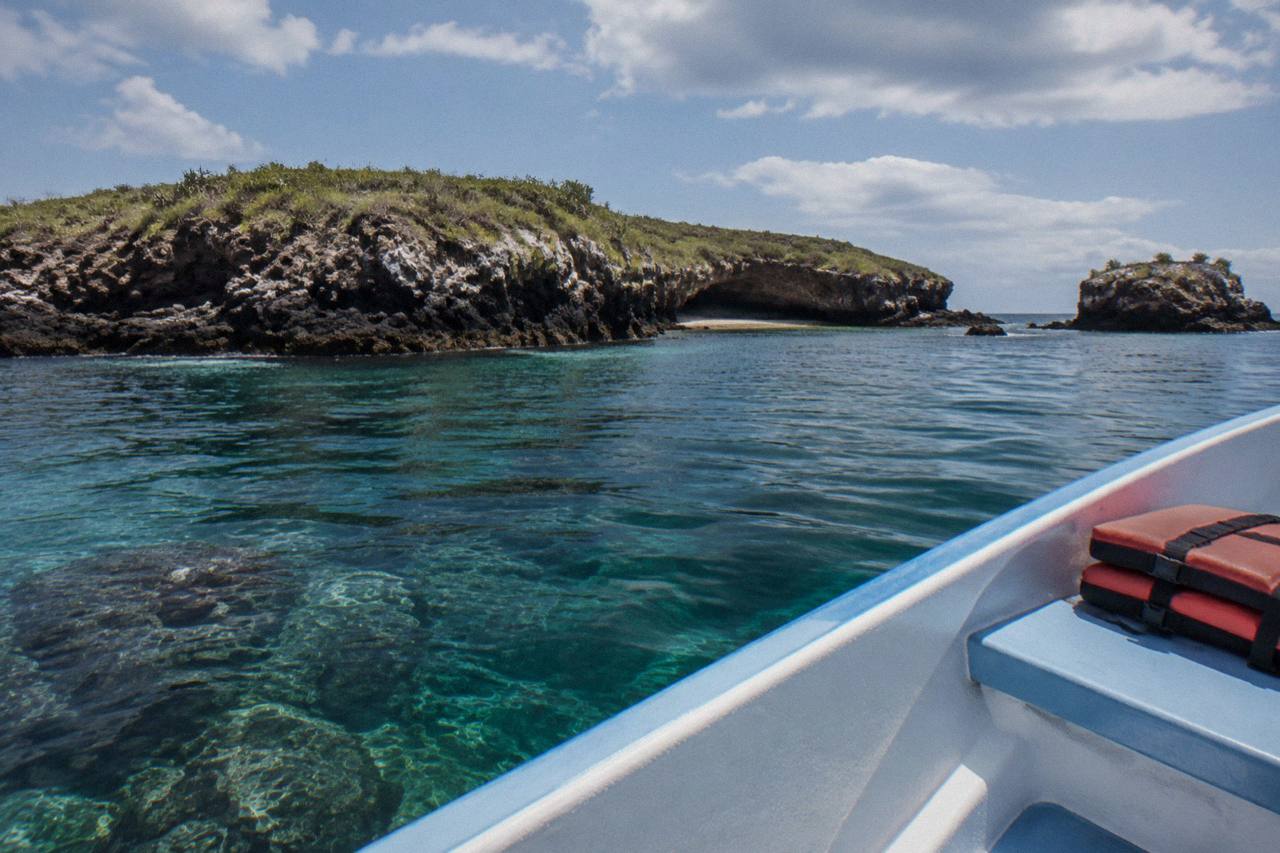
Punta de Mita sits on the northern tip of Banderas Bay, 9 km from the Marietas Islands. That distance, measured by the park service itself, is the single biggest reason travelers base themselves here.
Short answer
Yes, if your main goal is the Marietas Islands. Punta de Mita lies 9 km from the islands, the shortest crossing of any departure point on the bay, and the town's piers host the collective boat from $67, the Hidden Beach landing trips, and private panga charters. Expect a quiet, spread-out peninsula with a small town core rather than a resort strip.
Punta de Mita is the last town on the northern tip of Banderas Bay, where the bay's curve ends and the open Pacific begins. The park service lists the distance from here to the Marietas Islands as 9 km, or 4.85 nautical miles, the shortest of any departure point it names. Every other base on the bay is farther: La Cruz de Huanacaxtle at 11.84 nautical miles, Sayulita at 12.68, Nuevo Nayarit at 15.96, and Puerto Vallarta at 34 km, or 18 nautical miles. For a traveler whose whole trip is built around the islands, those numbers are the argument for Punta de Mita in one line.
The town itself is smaller and quieter than the Puerto Vallarta hotel zone. A low peninsula, a point wrapped by beaches on three sides, a compact town core near the pier at El Anclote, and residential stretches spreading out toward the developed cape. There is no Malecon-style boardwalk and no high-rise row. What there is, more than anywhere else on the bay, is proximity to the boats. The Marietas Islands are the area's headline protected area; this page stays on Punta de Mita and what basing here actually means.
Is Punta de Mita Worth Visiting?
Yes, for two kinds of traveler: the one whose priority is the shortest possible run to the Marietas Islands, and the one who wants a quiet, walkable town with beaches on three sides. It is 9 km from the islands, the closest departure point named by the park service, and its piers carry collective boats, Hidden Beach trips and private charters. It is not a base for nightlife or budget stays.
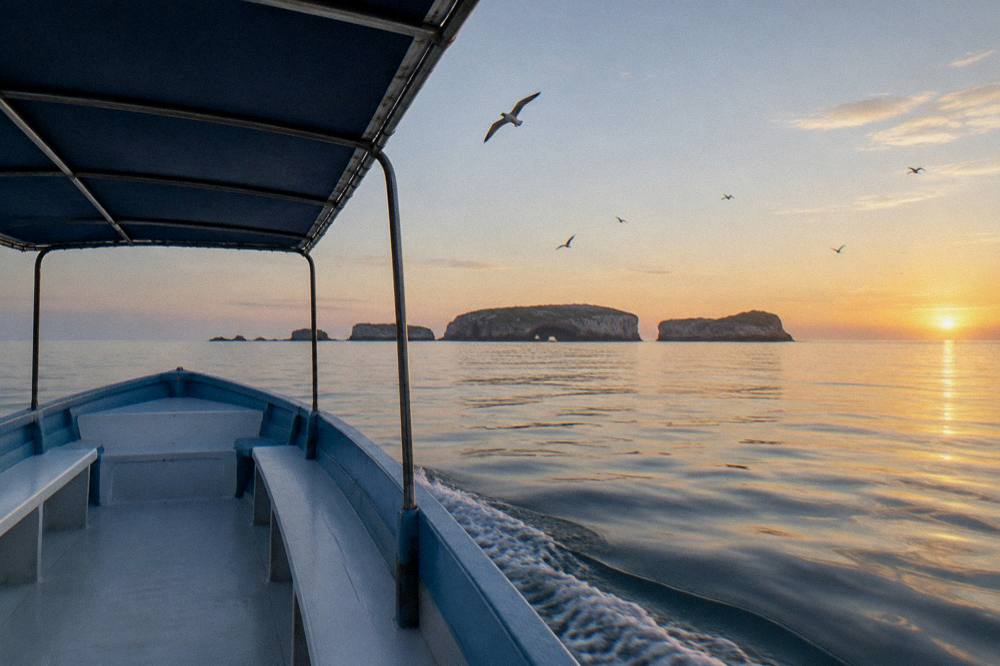
The answer depends on what the trip is for. If the Marietas Islands are the point, Punta de Mita wins on geography, and the difference is not cosmetic. The crossing from here is a fraction of the distance from Puerto Vallarta, which matters on a small panga and matters even more on a morning when the swell is up. Several of the small-group operators here, including Shark's Tours and Grimar Adventures Punta Mita, run their trips from the pier and cooperative docks here precisely because of that.
If the trip is broader, a first visit to the region mixing town life, dining and several different boat days, Puerto Vallarta carries more infrastructure and more departure options, and the guides on tours from Puerto Vallarta and on Puerto Vallarta boat trips compared cover that side. Punta de Mita is a base, not a destination with a long list of sights. The beaches are good, the point is pretty at sunset, and the boats leave from walking distance of the town core.
What the town does not offer is variety of scale. There is a handful of streets, a stretch of beach restaurants near El Anclote, and otherwise a spread-out peninsula where most places are a drive, not a walk. Travelers who imagine a compact village like Sayulita will find Punta de Mita more dispersed. The trade is that almost nothing between you and the islands but open water.
Why Is Punta de Mita The Closest Port For The Marietas Islands?
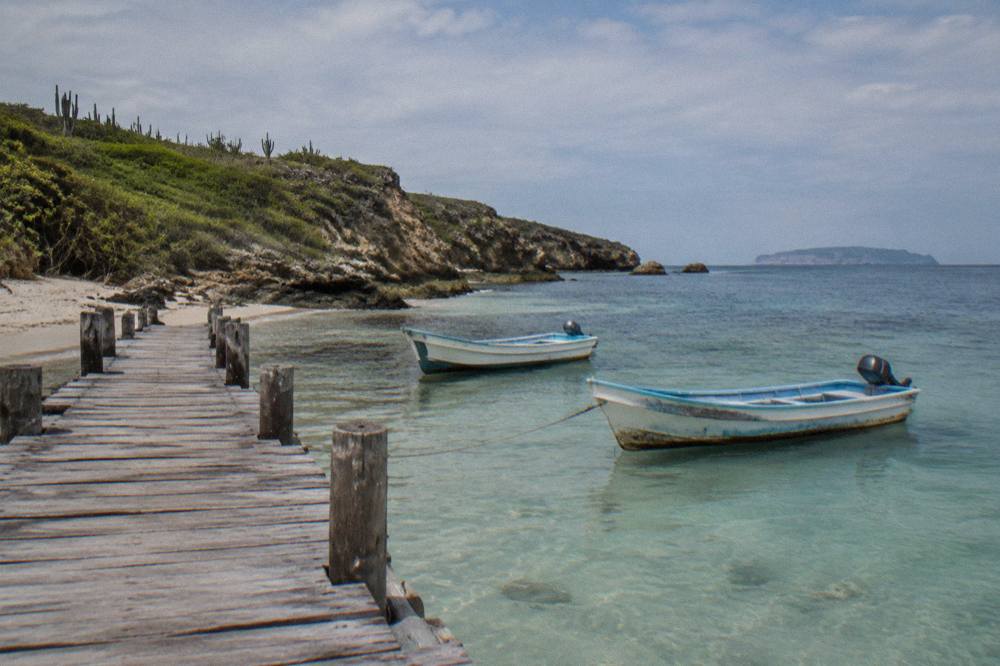
Because of simple geography: the town sits on the north tip of Banderas Bay, and the Marietas Islands sit just off that tip, 9 km away. The park service's official distances put every other base farther, with Puerto Vallarta at 34 km. The result is that the islands' small-boat operators cluster on Punta de Mita's piers.
The numbers come from the park service itself, and they are worth seeing side by side. These are straight-line distances to the islands, not travel times; boat speed, sea state and route all change the real time on the water.
| Departure point | Distance to the Marietas Islands | Tours depart here |
|---|---|---|
| Punta de Mita | 9 km / 4.85 nmi | Yes, several small-group tours |
| La Cruz de Huanacaxtle | 11.84 nmi | No tour departs here |
| Sayulita | 12.68 nmi | No tour departs here |
| Nuevo Nayarit (Nuevo Vallarta) | 15.96 nmi | Yes, sailing and catamaran trips |
| Puerto Vallarta | 34 km / 18 nmi | Yes, the largest selection |
That table explains the shape of the local fleet. From Punta de Mita, the tours on this site include the collective snorkel boat from Grimar Adventures Punta Mita, from $67 per person for 2 hours 30 minutes, and the Hidden Beach landing tours from the same operator and from Shark's Tours, from $157 and from $157 per person respectively for 3-hour trips. These are small-boat products, 8 travelers at most, the kind of trip that suits a short crossing and a flexible schedule around the tide. From Puerto Vallarta, by contrast, the options lean toward full-day catamarans, from $87 for the 9-hour all-inclusive cruise to $119 for the 8-hour reef snorkeling tour, because the longer crossing only makes sense bundled into a bigger day.
There is a second, less obvious advantage. The Hidden Beach landing inside the crater depends on tide and sea state, and a short crossing gives an operator more chances in a morning to time the tunnel. The listings for the Punta de Mita boats describe exactly that: the private safari from Oceanus Lifetime notes its start can be pushed back about an hour when the tide is high, to wait for the water to drop before swimming the passage. Being 9 km away makes that kind of adjustment practical in a way a 34 km crossing does not.
For choosing among these trips, the three Punta de Mita boats below are a good shortlist: the Hidden Beach landing tour from Shark's Tours, the collective snorkel trip, and Grimar's Hidden Beach entrance tour.
Which Boats To The Marietas Islands Leave From Punta de Mita?
Ten tours on this site depart from Punta de Mita or neighboring Corral del Risco, among them the collective snorkel boat from $67, two 3-hour Hidden Beach landing tours, both from $157, a private 3-hour Hidden Beach trip, and a private snorkeling safari from $369 per group. All are small-boat trips of 8 to 10 travelers or private pangas.
The cluster is genuinely distinct from what leaves Puerto Vallarta. These are small-group trips in their purest form: covered pangas and fast boats, short durations, and a focus on the islands rather than a full day of entertainment. The collective trip from Grimar Adventures, from $67 per person for 2 hours 30 minutes with a maximum of 8 travelers, includes snorkeling gear, life jackets, non-alcoholic drinks and a waterproof container for your phone; the Hidden Beach landing is listed as an extra fee on top. The landing itself is never promised: it depends on tide, sea state and the park's daily rules, and a listing that sells the landing as part of the ticket is still selling a tide-dependent stop, not a certain one.
The two 3-hour landing tours bracket it. Grimar's Hidden Beach entrance tour, from $157 per person with up to 8 travelers, lists the entrance to the beach as included, along with covered boat transport, snorkeling gear and drinks, with a minimum age of 10 and a maximum of 64 stated in its notes. Shark's Tours' version, from $157 per person, also lists the landing as included and carries at most 8 travelers. For travelers who want the boat to themselves, the private end of the cluster runs from Shark's Tours' private Playa Escondida trip, 3 hours, price on the listing, to the private safari from Oceanus Lifetime, which lists a shrimp ceviche lunch, a beer tasting, a beginner surf class in its inclusions and names the landing in its title, and from Marieta Tours a private 3-hour snorkeling safari with a local bilingual guide from $369 per group for up to 6 people. The full private category, including the Marina Vallarta options, is covered in the guide to private charters to the islands.
The related tour for this page sits in the middle of that cluster: the 3-hour Shark's Tours landing trip, 4.8 from 161 reviews, the deepest review pool of any Punta de Mita boat.
What Are The Beaches Like Around Punta de Mita?
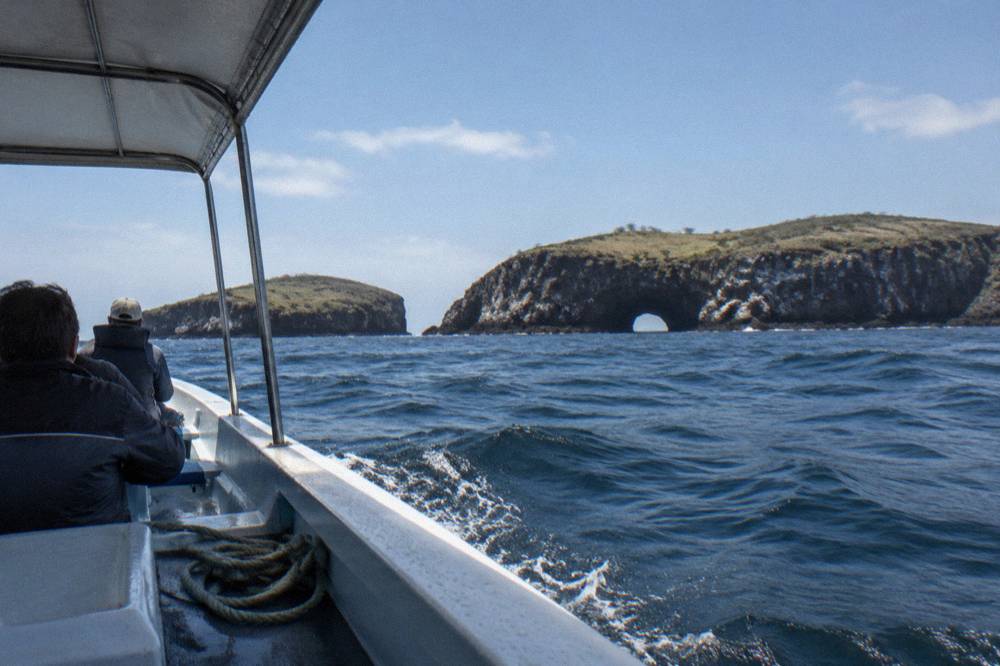
The peninsula is wrapped by beaches on three sides: the calm, swimmable town beaches inside the bay near El Anclote, the long open-bay stretch of Playa Punta de Mita, and surf-facing sand toward the Pacific side. Inside the bay the water is generally calmer; on the ocean side it is a different shore with different energy.
The town beaches near the pier are the practical ones. They face south into the bay, they sit next to the boat docks, and they are where the day starts and ends for most visitors: the walk from a rental to the pier is flat and short. Snorkeling from shore here is modest; the serious underwater time happens at the islands, which is what the guide to snorkeling at the Marietas covers in detail. The bay's other well-known boat-day beaches, Yelapa on the south shore and Majahuitas in its cove, are reachable by tours from Puerto Vallarta piers, not from Punta de Mita.
The open-bay stretch running along the peninsula is longer and less sheltered, with a mix of beach clubs and empty sand. Toward the point and the Pacific side, the character changes again to surf-facing breaks; the region as a whole is known for its surf, and the private safari listing from Oceanus Lifetime includes a beginner surf class in its inclusions, a hint of how normal surfing is in the water here. The short summary is a calm town shore, a long bay beach, and a wilder ocean side, all within a few kilometers of each other.
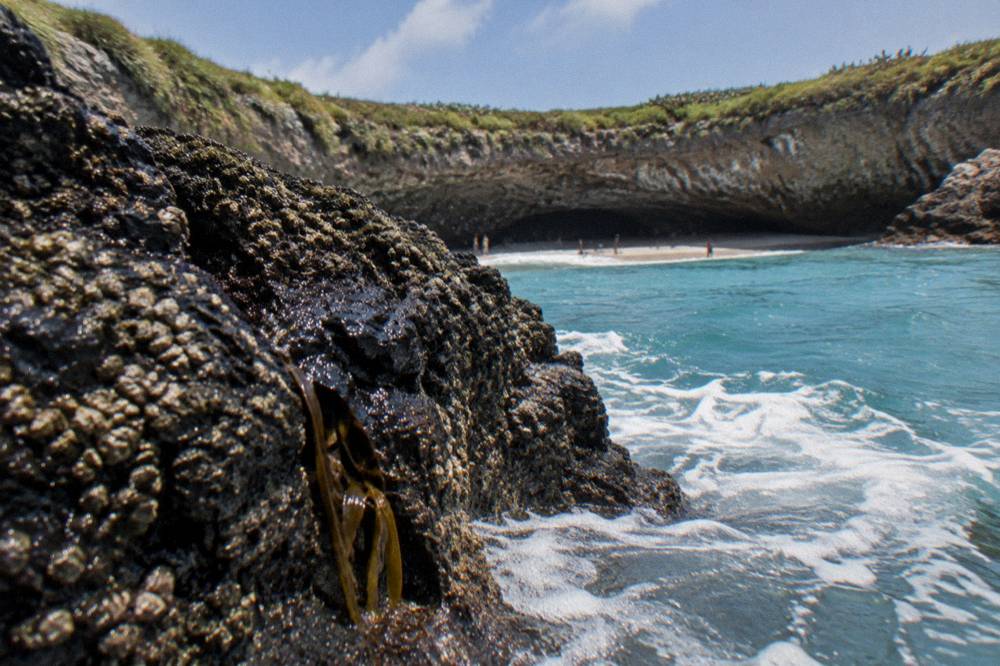
One naming point that trips people up: the famous Hidden Beach, the crater beach at the Marietas Islands, is sometimes called Playa del Amor, and there is a beach of that name on another coast of Mexico. Nothing at Punta de Mita is that beach. It exists only at the islands, inside the park, reached by boat and, when conditions allow, by swimming through the rock passage.
Where Do You Stay And Eat In Punta de Mita Without A Car?
**In the town core around El Anclote and the pier, where the streets are flat and walkable and the beach restaurants cluster. The peninsula outside that core is spread out, and much of it is a drive or a long hot walk. **
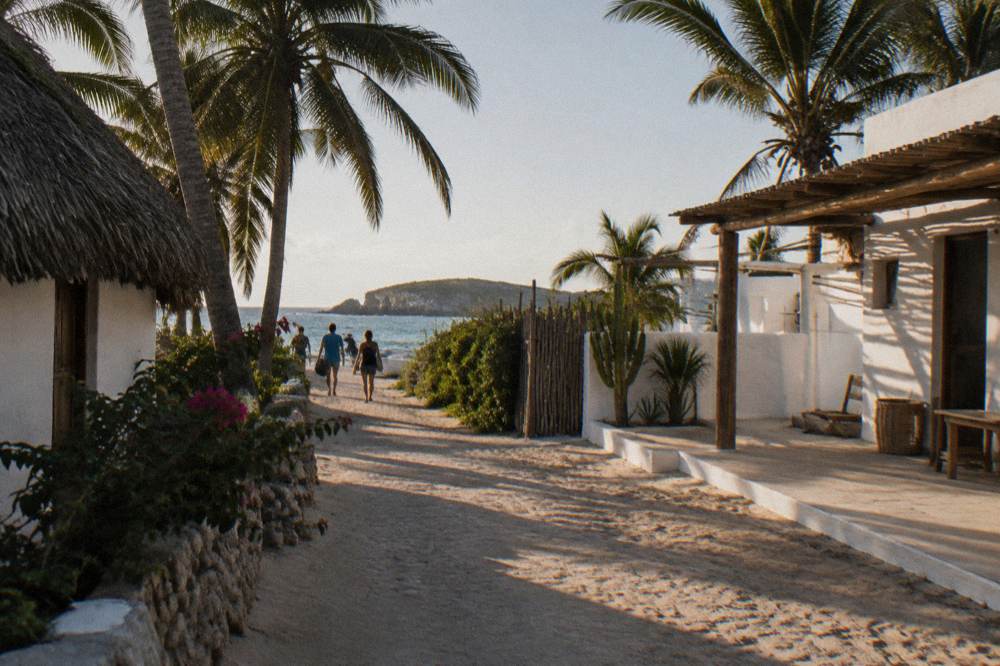
Punta de Mita is two places. The core near the pier is compact: the cooperative dock where several boats leave, a fishing fleet, beach restaurants along the sand, and a grid of streets behind it. Outside that core the peninsula spreads into residential and resort development where distances stop being walkable. A traveler staying near the pier can roll out of bed and be at the boat; a traveler staying out on the cape needs a taxi or a rental for the morning departure. No tour here offers hotel pickup, a fact worth checking against each tour's listing, so the distance from bed to dock is a real cost of the wrong base.
Eating follows the same map. Two practical notes from the listings. First, departure logistics are on you: the Shark's Tours trips leave from the Punta de Mita tourism cooperative in front of the small marina, and Grimar's office is on Las Pangas, one block before the pier; both addresses are walkable from the town core. Second, the collective and landing trips run 2.5 to 3.5 hours, so a pier-side stay leaves most of the day free.
What Rules And Fees Apply When You Boat To The Marietas Islands?
The park charges MXN 125 per person per day as a federal entry fee, sold as a conservation wristband, with discounts for students, teachers, Mexican nationals and foreign residents, and exemptions for children under 12 and others. The park is open Tuesday to Sunday, and the Hidden Beach site is open Wednesday to Sunday, so it is closed Monday and Tuesday.
Those hours matter more here than anywhere else on the bay, because a traveler based in Punta de Mita is often planning around a short, repeatable crossing and may be tempted to squeeze the islands onto a Monday or Tuesday of a long weekend. It cannot be done: those are the beach's closed days, and Monday the whole park is closed. The park's own page states the days plainly, and no tour on this site sells a Monday or Tuesday Hidden Beach landing.
Whether the MXN 125 is inside your ticket is a per-tour fact, and the tours are genuinely split. The collective and landing trips from Punta de Mita mostly do not state it either way. Two of the shark's and Grimar listings show "Admission Ticket Included" in their itineraries; the sightseeing trip from Puerto Vallarta lists a separate MXN 220 conservation wristband; the catamaran listings variously list dock fees and conservation bracelets in pesos as not included. The only way to know is the listing in front of you. The guide to the park fee and wristband breaks down every variant.
| Tour from Punta de Mita | From price | Duration | Landing at Hidden Beach | Max group |
|---|---|---|---|---|
| Collective Boat, 2 Hours 30 Minutes (Grimar Adventures) | $67 per person | 2 hours 30 minutes | Extra fee, not included | 8 |
| Grimar Hidden Beach Entry, 3 Hours (Grimar Adventures) | $157 per person | 3 hours | Included in ticket | 8 |
| Shark's Hidden Beach, 3 Hours (Shark's Tours) | $157 per person | 3 hours | Included in ticket | 8 |
| Private, 3 Hours, Hidden Beach (Shark's Tours) | On the listing | 3 hours | Not stated | Private |
| Private Safari, Meal Included (Oceanus Lifetime) | On the listing | Not stated | Listed by title | Private |
The eight visitor rules apply on the water and the sand alike: follow guides and rangers, wear a life jacket in the water, no alcohol in the park, no littering, no removing or introducing animals, no single-use plastics, reef-friendly sunscreen applied at least 30 minutes before entering the water, and pay the rights fee. Footwear is not allowed for water or beach activities, a rule one Punta de Mita listing repeats. The landing rules at the crater beach itself, the helmets and vests, the time limits and the daily cap, are the reopening conditions the park service set in 2016, which operators still describe; the details are in the guide to Hidden Beach rules and closure days.
When Is The Best Season To Base Yourself In Punta de Mita?
December to April, the dry season, which is also when the sea is at its coolest. The official whale-watching season ran 8 December 2025 to 23 March 2026; no notice for the following season has been published, so treat those dates as last season's, not a promise.
The dry months bring the least rain by a wide margin: February and March average 12 and 4 mm of rain respectively, against September's 429 mm. Sea temperature slides from about 25.2 C in December to 23.9 C in February and back up through spring, reaching about 30 C in August. The wet and hurricane season runs June to November, with the higher hurricane probability from August to October; the park service itself notes that in the rainy season some days have poor sea conditions, and tours can be cancelled for sea conditions. There is no month-by-month verdict on swell, visibility or Hidden Beach access odds: those vary day to day, and any confident monthly ranking would be invented.
| Month | Sea temperature | Rain (mm) | Rain days | Season |
|---|---|---|---|---|
| December | 25.2 C | 21 | 2 | Dry |
| January | 24.5 C | 37 | 2 | Dry |
| February | 23.9 C | 12 | 1 | Dry |
| March | 23.9 C | 4 | 1 | Dry |
| April | 24.9 C | 4 | 1 | Dry |
| July | 29.6 C | 362 | 20 | Wet and hurricane |
| September | 30.2 C | 429 | 20 | Wet and hurricane |
Whales are the seasonal wildcard. The listings describe humpbacks as a possibility on the crossing, in season; the Chica Locca listing says December to April, others December to March, and the federal whale-watching notice restricts whale-watching activity within 1.5 km of the islands. No tour on this site is a dedicated whale-watching product, and swimming with whales is prohibited. The season question, including the full month table, is covered in the guide to the best time to visit the islands.
For a Punta de Mita stay specifically, the practical read is this: the dry months give you the best odds that a short crossing runs as planned and the best chance the crater landing is reachable at low tide, at the cost of the coolest water and the busiest boats. May is still dry and warm, and November sits at the tail of the wet and hurricane season. The peak wet months are a genuine gamble on any given day, and this is the one season where the town's 9 km advantage earns its keep: a short crossing is easier to reschedule around than a full-day catamaran from Puerto Vallarta.
How Does Punta de Mita Compare To Other Bases For A Marietas Trip?
Punta de Mita wins on distance and small-boat character; Puerto Vallarta wins on selection and full-day formats; Nuevo Vallarta sits between them with pier departures; Sayulita, for all its charm, sends you to someone else's port, because no tour boat leaves from there.
The comparison is really a choice of format. From Punta de Mita you are choosing among 2.5 to 3.5-hour small-boat trips and private pangas, priced from $67 per person at the collective end to $369 per group for a private safari with a local guide. From Puerto Vallarta you are choosing among catamarans and sailing trips of 3.5 to 9 hours, from $79 to $130 per person at the all-inclusive end, with the biggest review pools: the BBQ lunch trip from Vallarta Adventures carries 1,150 reviews and the Marina Vallarta snorkel tour from Eco Explorer Vallarta carries 1,033. From Nuevo Vallarta the sailing trip from GoPralia, from $99 per person, leaves the Paradise Village pier.
| Base | Tour boats | Format | Firm price range |
|---|---|---|---|
| Punta de Mita | 10 | Small boats, short trips, private pangas | $67 to $157 per person; $369 per group |
| Puerto Vallarta | Many | Catamarans, sailing, snorkel boats, full days | $79 to $136 per person |
| Nuevo Vallarta | 2 | Sailing and catamaran days | From $99 per person |
| Sayulita | 0 | None; travel to another port | Not applicable |
It is a likable town and a common base, but the guides on the northern-bay towns state it plainly: no tour boat leaves from there, and the 12.68 nautical miles of distance have to be covered by road first. The same is true of Bucerias and La Cruz. The traveler who wants surf-town evenings and island mornings can have both, but the mornings start with a drive.
For families and non-swimmers the calculus shifts again, and the guide to the islands with kids works through the age limits, which vary listing by listing: Grimar states 10 to 64 for its landing trip, the catamarans carry infants on laps. The general pattern is that the Punta de Mita small boats have the strictest limits, because the crater landing is a swim, and the big Puerto Vallarta boats the loosest.
Weighing it all, the case for Punta de Mita is narrow but real: it is the town the boats leave from. If the islands are the center of the trip, base here, book a morning landing tour, and keep a collective snorkel trip or a private safari as the backup day. If the islands are one item on a longer list, sleep where the list lives, and make the crossing from there.
Common Questions About Punta de Mita
How Far Is Punta de Mita From The Marietas Islands?
9 km, or 4.85 nautical miles, according to the park service's official distance list. That is the shortest of any departure point on Banderas Bay; Puerto Vallarta is 34 km from the islands.
Do Any Marietas Boat Trips Leave From Sayulita Or La Cruz?
No. No tour on this site departs from Sayulita, La Cruz de Huanacaxtle or Bucerias. Travelers based there travel by road to Punta de Mita, Nuevo Vallarta or Puerto Vallarta to board.
Can You Enter The Hidden Beach From A Punta de Mita Tour?
Several Punta de Mita tours list the Hidden Beach landing in their tickets, including Grimar's entrance tour from $157 and Shark's Tours' landing trip from $157 per person. Entry still depends on tide, sea state and the park's daily rules; no operator can promise it in advance.
Is The Park Fee Included In Punta de Mita Tour Prices?
It varies by listing. The park charges MXN 125 per person per day as a conservation wristband, with discounts and exemptions for several groups. Some tours include park fees, others list them separately; check the specific listing before booking.
When Is The Hidden Beach Closed?
Every Monday and Tuesday. The Hidden Beach site is open Wednesday to Sunday, 8:00 to 17:00, and the park as a whole is closed Monday. Plan any crater-landing trip between Wednesday and Sunday.