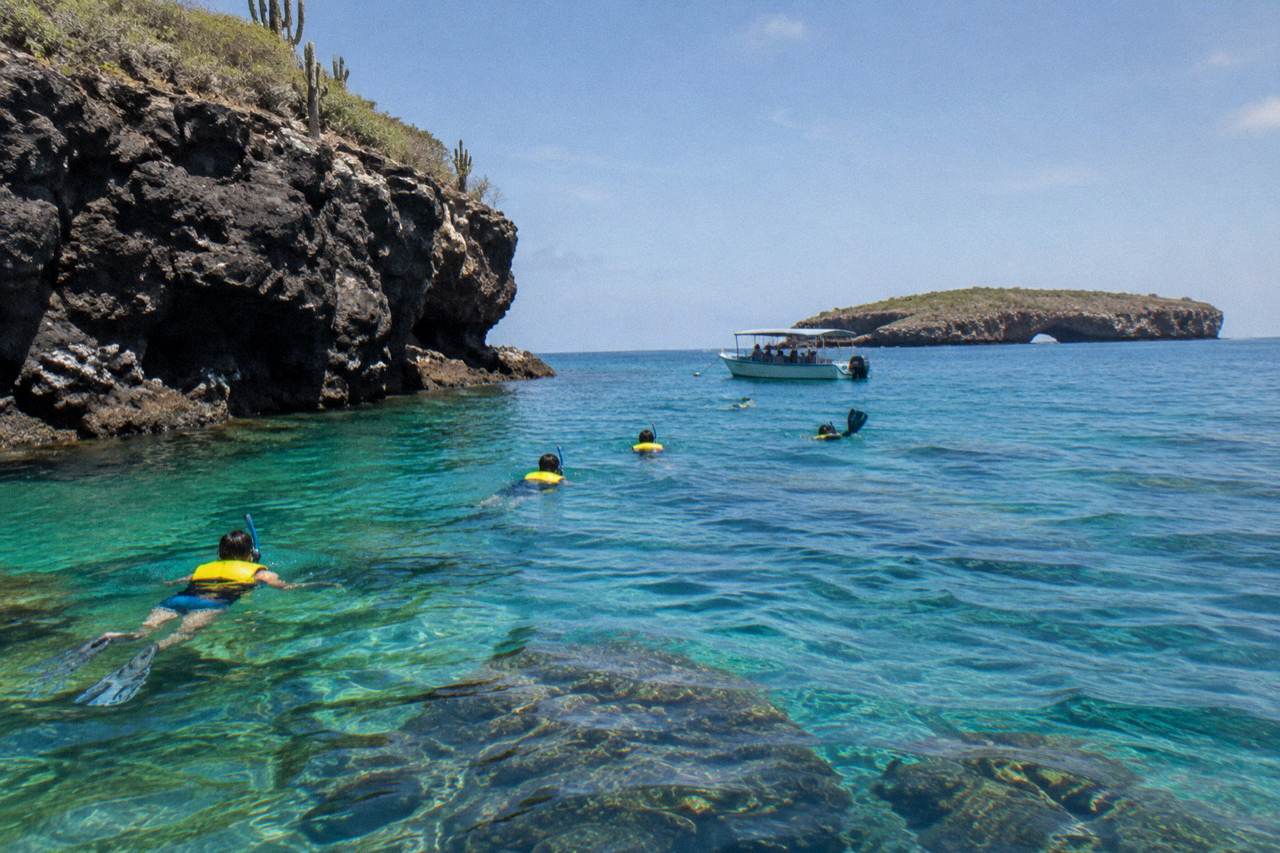
Best Time To Visit The Marietas Islands: Month By Month
The park is open all year, but the months are not equal: sea temperature swings from 23.9 to 30.3 degrees, rain runs from 4 mm to 429 mm a month, and humpbacks are only in the bay from December to March.
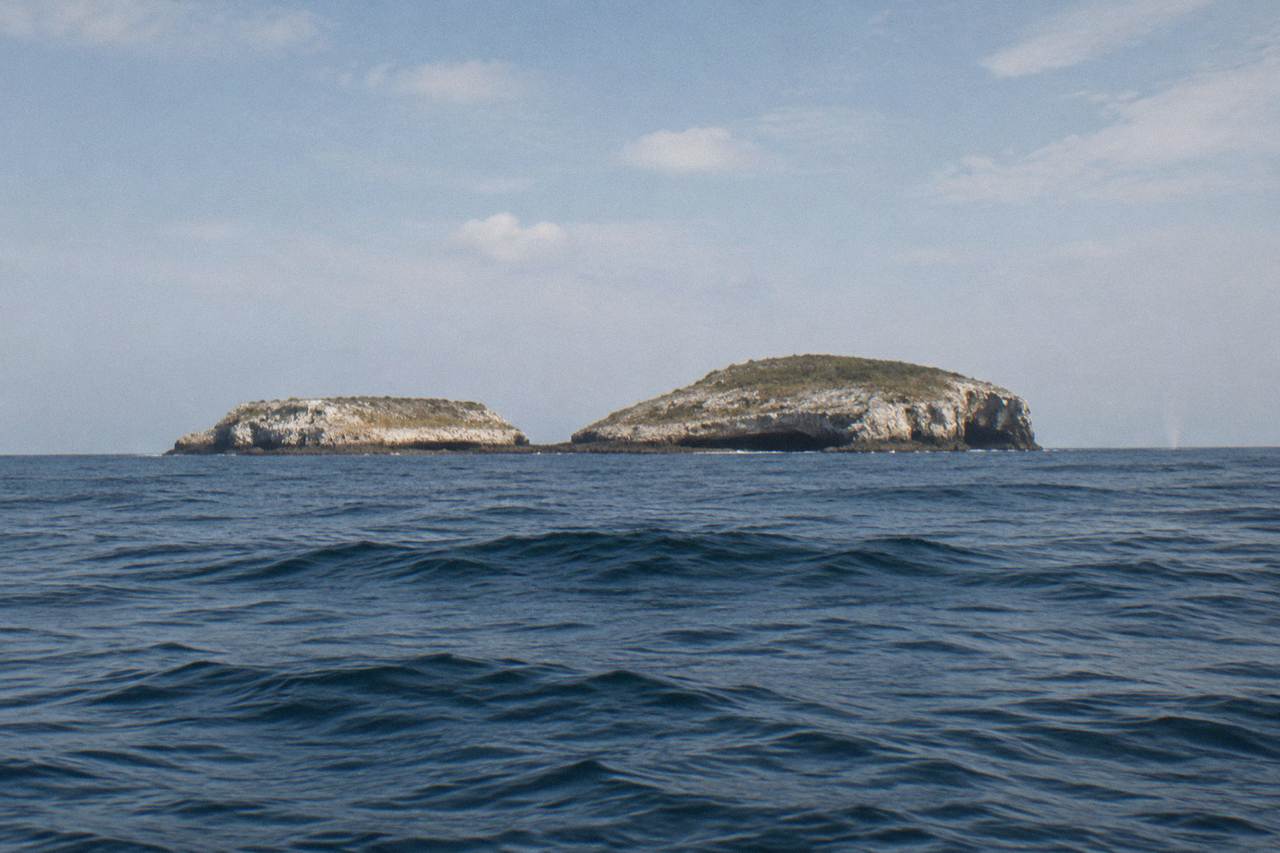
Short answer
The dry season, December to April, is the window most visitors pick: 4 to 37 mm of rain a month, sea temperatures of 23.9 to 25.2 degrees, and humpbacks in the bay from 8 December 2025 to 23 March 2026. The park itself is open Tuesday to Sunday all year, and tours run in every month, though rainy-season days can bring poor sea conditions.
Picking a month for the Marietas Islands is mostly a choice between three seasons: the dry months from December to April, the short, warm tail of the dry season in May, and the wet stretch from June to October when rain, and the chance of hurricanes, shapes the calendar. The numbers behind that choice are concrete. Sea temperature measured at the islands ranges from 23.9 degrees in February and March to 30.3 degrees in August. Monthly rainfall runs from 4 mm in March and April to 429 mm in September. Humpback whales are in Banderas Bay only within the official season window, which ran from 8 December 2025 to 23 March 2026 for the season just ended; no notice for the following season has been published yet. The park itself never closes for a season. CONANP, the National Commission of Protected Natural Areas, which administers the islands, recommends visiting all year and notes only that in the rainy season some days have poor sea conditions.
A reader fixing travel dates is really picking the month to book, because the tour that suits a February whale-season crossing is not always the tour that suits a July afternoon on the water.
What Is The Best Month To Visit The Marietas Islands?
For weather and wildlife together, the best months are January and February: rain is low at 37 mm and 12 mm respectively, the sea sits at 24.5 and 23.9 degrees, and humpbacks are at their peak in the bay under the official season rules. December through March all share those traits, with March and April the driest months on the table at 4 mm of rain each, though the whales have gone by April.
That is the short answer, and the table below carries the full picture. Sea temperature comes from seatemperature.org, rain figures from the CONAGUA and SMN 1981 to 2010 climate normals, and the whale column from the federal SEMARNAT notice that set the season at 8 December 2025 to 23 March 2026. One caution before the table: crowd level, swell and underwater visibility by month are not published anywhere official, so months cannot be ranked on those. Water clarity varies day to day with conditions, as guests on the snorkel trips regularly report, and no month guarantees clear water.
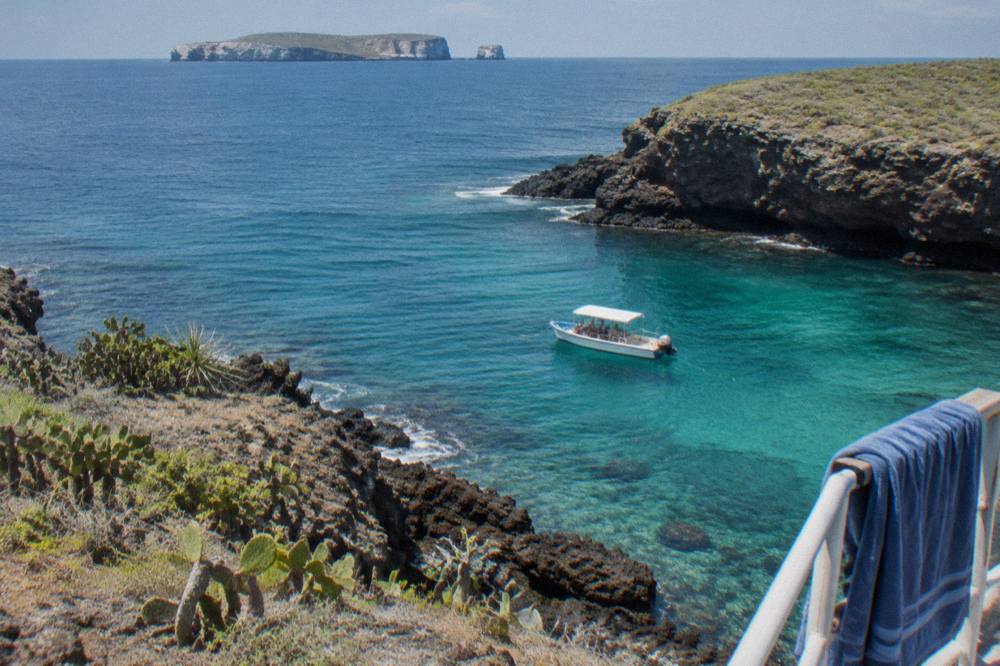
| Month | Sea temperature (C) | Rain (mm) | Rain days | Humpbacks in the bay | Season |
|---|---|---|---|---|---|
| December | 25.2 | 21 | 2 | Season starts | Dry season |
| January | 24.5 | 37 | 2 | Peak | Dry season |
| February | 23.9 | 12 | 1 | Peak | Dry season |
| March | 23.9 | 4 | 1 | Late season | Dry season |
| April | 24.9 | 4 | 1 | None in season | Dry season |
| May | 27.4 | 18 | 2 | None in season | Dry season |
| June | 28.4 | 227 | 15 | None in season | Wet and hurricane season |
| July | 29.6 | 362 | 20 | None in season | Wet and hurricane season |
| August | 30.3 | 380 | 21 | None in season | Wet and hurricane season |
| September | 30.2 | 429 | 20 | None in season | Wet and hurricane season |
| October | 29.6 | 125 | 9 | None in season | Wet and hurricane season |
| November | 27.7 | 24 | 2 | None in season | Dry season |
Read the table as three blocks. December through April is the dry season, with one or two rain days a month and the whale season inside it. May is still dry by the numbers, 18 mm over two days, but the sea has already warmed to 27.4 degrees. June through October is the wet and hurricane season, with rain days climbing from 15 in June to 21 in August. November snaps back quickly: 24 mm of rain, two rain days, and a sea still at 27.7 degrees, which makes it one of the quieter value months on the calendar.
The tours do not change price by month; what changes is what you get. The Marina Vallarta snorkel tour with the optional Hidden Beach landing, from $99 per person and rated 4.8 from 1,033 reviews, runs the same itinerary in July as in January. The full-day all-inclusive catamaran from Chica Locca Tours, from $130 per person with an open bar listed, is a different proposition in whale season, when humpbacks can be in the bay, than it is in September, when the crew is watching the sky.
When Are The Seas Most Reliable Around The Marietas Islands?
No ranking of the months by sea state, swell or visibility exists. What is sourced is narrower: the park authority notes the rainy season can bring days with poor sea conditions, and tours can be cancelled for sea conditions.
This is worth stating plainly because it is the question underneath most "best time" searches. The measured facts that point toward reliability are indirect. Rain, which clouds coastal water and comes with unsettled weather systems, falls on 20 or 21 days a month in July, August and September, against one or two days from December through April. Hurricane risk on this coast runs June to November, with the higher probability from August to October, which is a climate-source fact rather than a forecast. What a reader can do with reliability is manage it. Book tours with 24-hour free cancellation, which nearly all of these tours carry, so a rough-day cancellation costs nothing. Keep one flexible day in the itinerary so a tour moved for sea conditions still happens. And when a Hidden Beach landing matters most, know that entry depends on tide, sea state and park rules on the day, never on the month printed on a ticket; the tour rules and closure-days guide covers what entry actually involves.
CONANP's official distances: Punta de Mita sits 9 km from the islands, La Cruz de Huanacaxtle 11.84 nautical miles, Sayulita 12.68, Nuevo Nayarit 15.96, and Puerto Vallarta 34 km. A shorter crossing from the Punta de Mita side means less open water in the same conditions, which is why the small-boat trips based there, like the collective boat tour from Grimar Adventures Punta Mita from $67 per person for 2 hours 30 minutes, are the compact option when the forecast is uncertain.
If a short, close-in format appeals, the card below shows the collective boat.
Between the formats on this page the real trade is time and water. The collective boat is the shortest and cheapest firm-priced trip. The featured Eco Explorer Vallarta tour, departing Marina Vallarta a short hop from the airport, carries a 4.8 rating from 1,033 reviews, includes the CONANP bracelet and park permits in the ticket, and lists the Hidden Beach landing as an optional paid extra at MXN 600 per person in cash. The Chica Locca all-inclusive is the floating feast: premium food with vegetarian, vegan and gluten-free options listed, an open bar, waterslides, paddleboards, kayaks and water tubes, over six hours.
When Can You See Whales Near The Marietas Islands?
Humpbacks are in Banderas Bay only within the official federal season, which ran from 8 December 2025 to 23 March 2026; no notice for the following season has been published. Several Marietas listings describe whale sightings on the crossing as a seasonal possibility, December to April or December to March depending on the listing. If you're wondering how realistic a sighting actually is, our guide to whale sightings on a Marietas Islands tour explains what the season window means in practice.
There is no dedicated whale-watching product among these tours; what exists are Marietas boat trips on which humpbacks are described as a seasonal bonus from the deck. The Chica Locca snorkel and kayak listing says December to April; other listings say December to March. Both are listing statements, not sightings guaranteed. The federal whale-watching notice adds a rule that matters to where boats operate: whale-watching activity is restricted within 1.5 km of the islands themselves and along the coastal strip from Punta de Mita to the Ameca river mouth. Swimming with whales is prohibited.
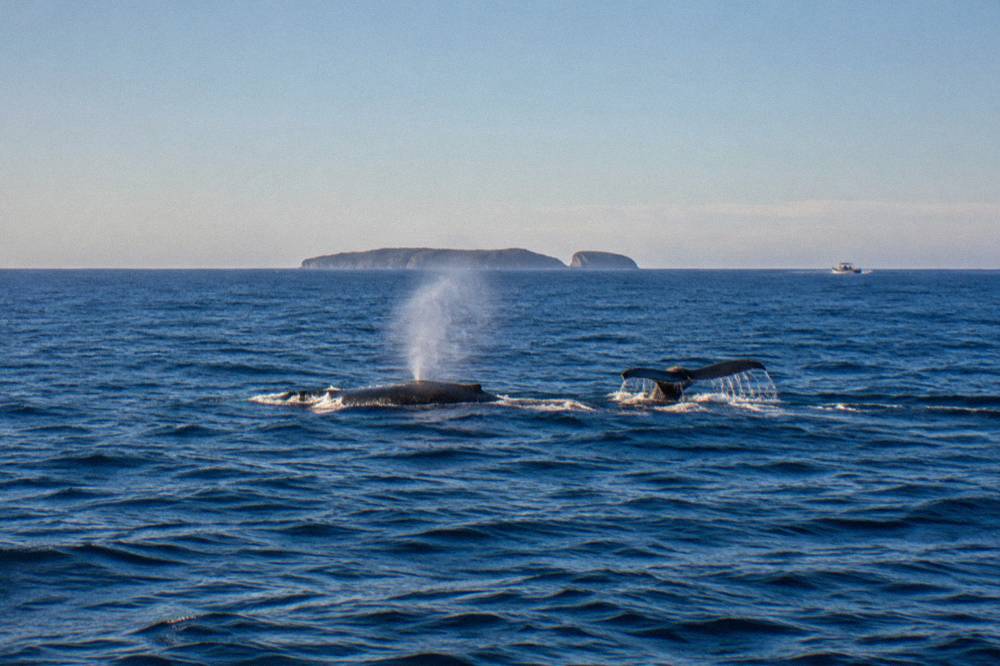
For a reader whose heart is set on a whale-season crossing, January and February are the months the table supports most strongly: peak season, one to two rain days, sea at 23.9 to 24.5 degrees. Book early for those dates. December works too, from the 8th onward once the season opens, and it carries the lowest early-season rain total, 21 mm across two days. March whales are late-season and the window closes on the 23rd, so treat March as a shoulder for whale hopes and a peak for everything else: 4 mm of rain and the year's driest measured conditions alongside April.
The rest of the marine calendar is not tied to a season. CONANP lists the park's resident wildlife, blue-footed and brown boobies, Heermann's gulls, frigatebirds, bridled terns, king angelfish, giant mantas and spotted eagle rays, as present in the park rather than scheduled by month. A secondary academic study put blue-footed booby breeding mostly in spring, peaking March to May, so spring months are when nesting activity is most plausible on the cliffs; that is a soft, single-study statement, not a calendar. The blue-footed boobies guide goes deeper for birders.
One booking note for whale-season planners: the featured Eco Explorer Vallarta snorkel tour caps its groups at 16 travelers, so reserve early if your dates are locked to the whale window. Another Puerto Vallarta departure is shown below.
What Is The Rainy Season Like In Puerto Vallarta And The Marietas Islands?
The rainy season on this coast runs June to October, overlapping the hurricane season; measured rain climbs from 227 mm over 15 days in June to a peak of 429 mm over 20 days in September, then drops sharply to 125 mm in October and 24 mm in November. The pattern is not daily drizzle but fewer, heavier events, which is why rain days peak at 21 in August, not in the wettest month.
June is the month the switch flips. May still reads as dry, 18 mm over two days, and then June carries 227 mm over 15 days. The sea, meanwhile, is at its warmest of the first half of the year, 28.4 degrees, and gets warmer still. For travelers who like bath-warm water and will trade weather certainty for it, June is the mildest wet-season month on the table: the rain total is roughly 40 percent lower than July's and the hurricane climatology puts June at the lower end of the risk curve. From there the totals rise each month, July at 362 mm, August at 380, September at 429.
| Season block | Months | Measured rain range | Rain days | What it means for booking |
|---|---|---|---|---|
| Dry, whales in the bay | Dec to Mar | 4 to 37 mm | 1 to 2 | Highest demand; book early, cancellation terms are standard 24 hours |
| Dry, no whale season | Apr to May | 4 to 18 mm | 1 to 2 | Warmest dry sea, 24.9 to 27.4 degrees; quieter boats |
| Early wet | Jun | 227 mm | 15 | Warm water, lower wet-season rain than peak months |
| Peak wet and hurricane | Jul to Oct | 125 to 429 mm | 9 to 21 | Highest chance of sea-condition cancellations; keep a flexible day |
| Early dry return | Nov | 24 mm | 2 | Sea still 27.7 degrees; a value month before whale season opens |
Rainy-season travel is not a verdict against the islands. CONANP explicitly recommends all-year visitation. What the wet months change is planning posture: the chance that a given day's departure is affected by sea conditions is real, tours can be cancelled for sea conditions, and the port authority can close navigation on a specific day. The right responses are a flexible itinerary, the 24-hour free cancellation nearly every listing carries, and a shorter crossing where possible. The hurricane-season guide handles the what-if in detail, including what the cancellation lines actually promise.
Two tours suit a wet-month booking particularly well. The Monkey Adventures México half-day tour with the Playa Nopalera stop, from $81 per person, compresses breakfast, lunch, an open bar, snorkeling and a floating mat into a shorter exposure window than the 8 and 9 hour catamarans, which matters when the forecast is changeable. And the sailing trip with GoPralia, from $99 per person for 7 hours and a maximum of 7 travelers aboard, is the small-boat option for anyone who would rather not be on a 75 passenger catamaran in unsettled weather. Neither listing states a Hidden Beach landing, so neither should be booked for that.
How Warm Is The Water At Hidden Beach And The Reefs By Month?
Water temperature at the islands runs from a low of 23.9 degrees in February and March to a high of 30.3 degrees in August, with the December-to-April dry season sitting between 23.9 and 25.2 degrees and the June-to-October wet season between 28.4 and 30.3 degrees. For most swimmers every month is comfortable without a wetsuit; the coolest months feel mild rather than cold.
Snorkeling is a permitted activity in the park year-round, and every tour here that lists snorkel gear runs it in every month. The temperature curve matters mostly for comfort on longer swims and for how long you stay in. February and March, at 23.9 degrees, are the months where an hour in the water starts to chill some swimmers; the tours with short snorkel stops suit those months fine. August and September, at 30.2 to 30.3 degrees, are genuinely warm, closer to a pool than a temperate sea, and the wet-season trade-off is weather rather than water.
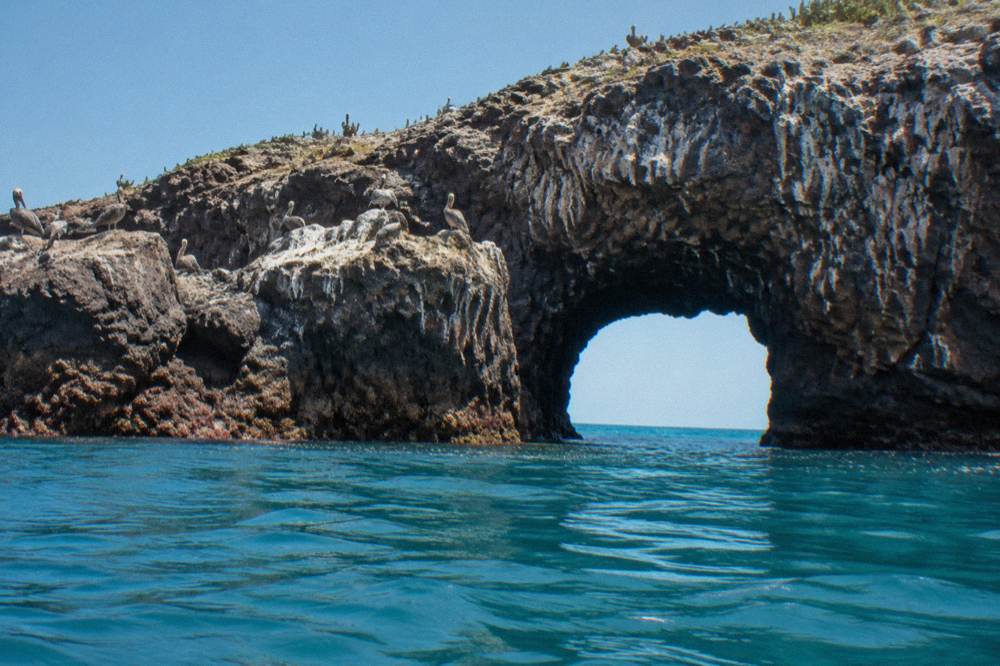
The reef experience itself is month-agnostic on paper. CONANP lists coral reefs and king angelfish among the park's features, and listings describe snorkeling around the islands and at the Playa Nopalera beach several of them visit. Guests report that water clarity varies day to day with conditions, some days exceptionally clear, some days murky, and no month-by-month visibility index exists in any sourced data. A promise of "best visibility in March" is a guess. Since clarity shifts with the weather, another fair question is what's under the surface, and our guide to water depth and swimming safety at the Marietas Islands covers what CONANP and the park rules actually say.
For the water-focused traveler, the strongest snorkel-dedicated products are the small-group trips. The Ecotours Vallarta snorkeling trip from Marina Vallarta, from $136 per person for 5 hours and rated 4.9 from 18 reviews, lists up to 3 hours inside the National Park. The Ecotours Vallarta naturalist tour, from $133 per person and rated 4.7 from 192 reviews, is led by a marine biologist or naturalist and caps groups at 10. Both make the water the point rather than the party, which suits cooler months when the boat deck is less inviting and the reef is the draw.
Does The Marietas Islands Park Close In Any Season?
No seasonal closure exists: the park is open Tuesday to Sunday, 8:00 to 18:00, every week of the year, and the Playa del Amor site is open Wednesday to Sunday, 8:00 to 17:00. What closes is days, not months, the park is closed Mondays and the Hidden Beach site is closed both Mondays and Tuesdays, so those two days are the only standing dates a trip planner must route around.
This is the detail that quietly breaks more itineraries than weather does. A traveler arriving on a Monday cruise-ship day or a Tuesday transfer day cannot visit the islands that day at all, in any season, because the official calendar says so. The current CONANP page states the hours and the MXN 125 per person per day entry fee, sold as the conservation wristband, with exemptions for children under 12, older adults, pensioners, people with disabilities, and discounts for students, teachers and Mexican nationals. Whether a tour ticket includes that fee is per-listing: the featured Eco Explorer Vallarta tour includes the CONANP bracelet and park permits, while many catamaran listings state the fee as not included.
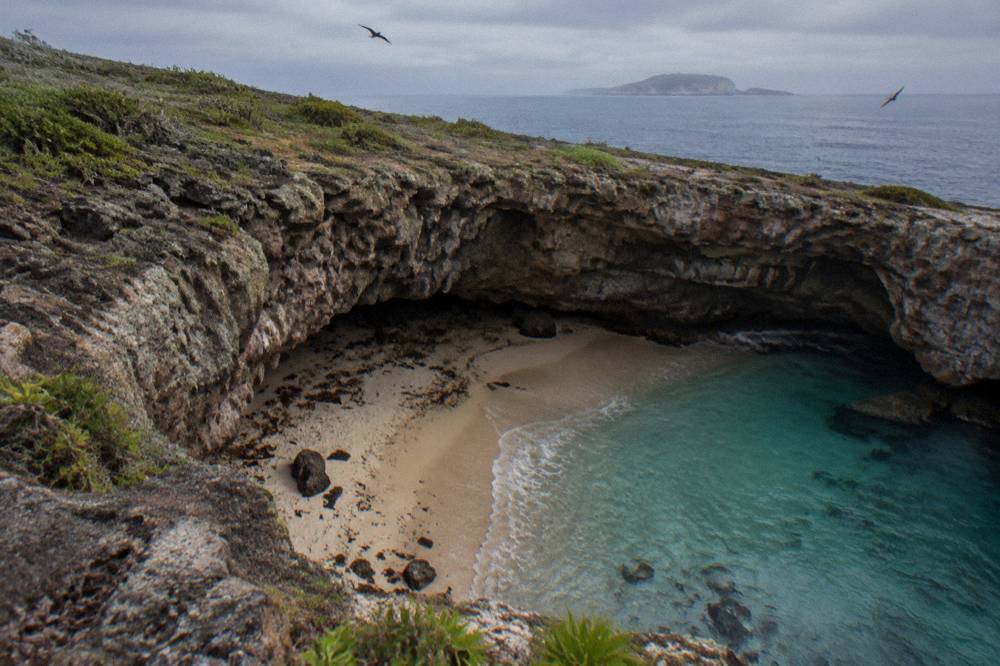
The Hidden Beach rules carry their own dated framing. The caps that circulate, groups of at most 15 supervised at low tide, 30 minutes per group from leaving the boat, helmets and flotation vests compulsory, no fins, mask or snorkel at the entrance, and at most 116 visitors a day at Playa del Amor, are the reopening rules CONANP set in 2016, which operators still describe. The federal page confirming today's Wednesday-to-Sunday beach hours and the fee is the official CONANP park page, and the 2016 reopening notice is on the federal government's own press archive.
Season interacts with this calendar in one practical way. In the wet season the closures barely matter, availability is wide, and the constraint is the forecast instead. The fee, the wristband mechanics and the exemptions are covered in full in the park fee guide.
Which Marietas Tour Fits Which Season?
Match the format to the month: in whale season, December to March, the longer crossings from Puerto Vallarta and Nuevo Vallarta pay off because the ride itself can carry sightings; in wet-season months, the short Punta de Mita trips minimize exposure to changing conditions; and in the dry, whale-free months of April, May and November, the all-inclusive full-day catamarans are the unhurried choice.
The tours span from 2 hours 20 minutes to 9 hours and from $67 to $168 per person, plus one private safari from $369 per group for up to 6 people. That spread is a seasonal toolkit. The table below pairs each format with the months where its trade-offs sit best.
| Format and example tour | Price basis | Duration | Best-fit months and why |
|---|---|---|---|
| Collective boat from Punta de Mita (Grimar Adventures) | from $67 per person | 2 hours 30 minutes | Any month; ideal in wet season for a short, close-in crossing |
| Snorkel tour with optional Hidden Beach landing (Eco Explorer Vallarta) | from $99 per person | duration not stated | Whale season, Dec to Mar; 16-traveler cap books out in peak weeks |
| Full-day all-inclusive catamaran (Chica Locca Tours) | from $130 per person | 6 hours | Apr, May, Nov; the leisure choice when weather is stable |
| BBQ lunch at Majahuitas combo (Vallarta Adventures) | from $79 per person | 7 hours | Dry season; most-reviewed listing at 1,150 reviews |
| Hidden Beach entry tours from Punta de Mita (Shark's, Grimar) | from $157 per person | 3 hours | Dry season and low-tide windows; entry still depends on tide and sea state |
| Snorkeling safari with a local guide (Marieta Tours) | from $369 per group | 3 hours | Any month; private boat for up to 6 with taxes included |
Two Punta de Mita products deserve their season note. Shark's Hidden Beach, 3 Hours, from $157 per person and rated 4.8 from 161 reviews, lists the beach landing and entrance as included, with snorkel gear, non-alcoholic drinks and a dry container for phones. The Grimar Hidden Beach Entry tour, from $157 per person and rated 4.8 from 117 reviews, is a near twin, covered boat, entrance listed as included, max 8 travelers. Neither can promise entry on the day: tide, sea state and the park's rules decide, and entry is never guaranteed. Dry season simply gives the tide-and-weather equation its best odds without ever settling it.
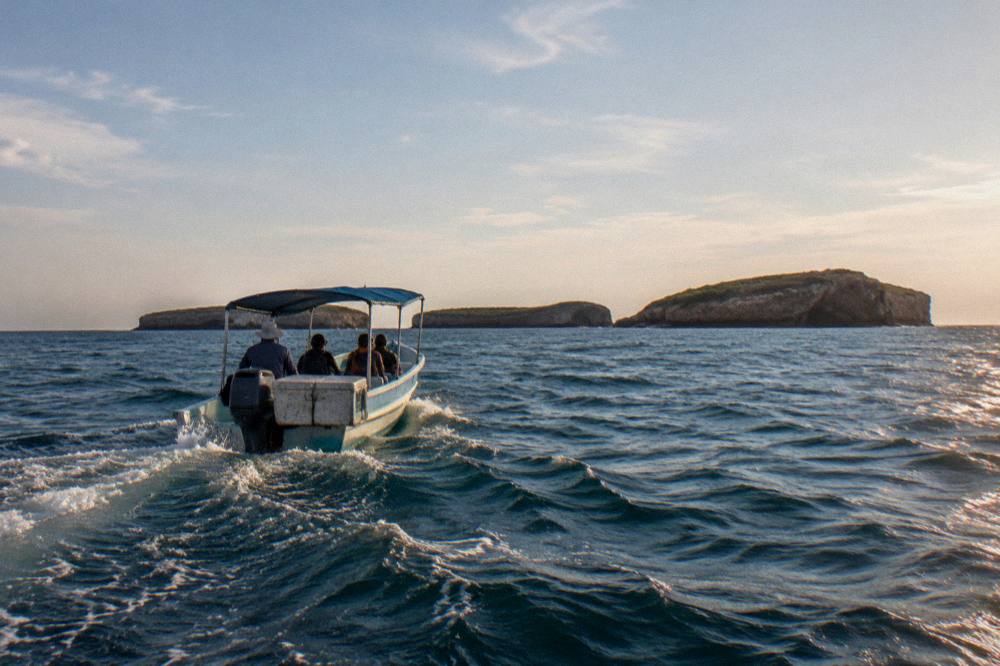
The featured Eco Explorer Vallarta snorkel tour, meanwhile, is the year-round workhorse, with its permits and conservation donation folded into the ticket and a review pool, 4.8 from 1,033 reviews, large enough to read as a pattern rather than luck. For readers comparing the two sides of the bay, the Punta de Mita departures guide and the Puerto Vallarta departures guide break down every meeting point.
Is Hurricane Season A Bad Time To Book From Punta de Mita Or Puerto Vallarta?
Hurricane risk on this coast runs June to November, with the higher probability from August to October, and the wettest months, August and September, sit inside that peak, so a wet-season booking carries a real but manageable chance of a sea-condition cancellation. It is not a bad time to book if the itinerary has flex and the cancellation terms are understood before paying.
Every listing states its own cancellation line, and nearly all of them read the same: a full refund if cancelled at least 24 hours before the experience's start time. That is the traveler's protection in every season, and it is the reason a July or September booking is a reasonable bet rather than a gamble. What no listing promises is the weather on the day, and one Vallarta Extreme listing states plainly that the experience requires good weather. Tours can be cancelled for sea conditions; refund terms are whatever that tour's cancellation line says, no more.
The booking playbook for wet months is short. Prefer the shorter crossings from Punta de Mita, where CONANP measures the islands at 9 km, over the 34 km run from Puerto Vallarta, not because the sea is guaranteed calmer, but because less time on open water means less exposure to whatever the day brings. Keep one spare day. Book products with the 24-hour cancellation rather than restrictive terms. And if a Hidden Beach landing is the whole point of the trip, the wet season is the wrong season for it regardless of luck, because the landing depends on tide and sea state on the day and the odds stack against unsettled patterns.
Pricewise, there are no seasonal rates, so a September collective-boat ticket is the same from $67 per person as a February one. The real wet-season discount is availability and crowd-free flexibility, offset by weather risk. Travelers who want warmth, warmest sea of the year at 30.3 degrees in August, empty boats and cheap quiet months at home should consider it with eyes open; travelers who want the full Marietas slate, whales, high odds of smooth operations and the driest measured months should hold out for December through April.
Common Questions About Visiting The Marietas Islands
Should You Skip The Marietas Islands During The Rainy Months?
No, but it changes the plan. Rain runs 227 mm in June up to 429 mm in September, hurricane probability is highest from August to October, and tours can be cancelled for sea conditions. With a flexible day in the itinerary and the standard 24-hour free cancellation nearly every listing carries, wet-season visits work, and the sea is at its warmest, 28.4 to 30.3 degrees.
Is The Water Cold At The Marietas Islands In Winter?
No. The coolest measured months are February and March at 23.9 degrees, mild rather than cold, and the sea warms steadily to 30.3 degrees by August. Most swimmers are comfortable without a wetsuit in every month of the year.
Which Tours Are Best In Hurricane Season?
The short Punta de Mita crossings suit uncertain weather best: the collective boat from Grimar Adventures from $67 per person for 2 hours 30 minutes, and the 3-hour Hidden Beach entry tours from Shark's Tours and Grimar, both from $157 per person. Book with the 24-hour cancellation and keep a spare day.