Blue-Footed Boobies Of The Marietas Islands: When And Where To See Them
Blue-footed boobies are on CONANP's official wildlife list for the Marietas Islands, and every authorized boat that visits the national park passes within sight of their cliffs.
Short answer
CONANP, the park authority, lists the blue-footed booby and the brown booby as resident Marietas Islands wildlife. Nesting on the islands happens mostly in spring, and the nesting cliffs are seen from the water on any authorized boat tour, so the choice of tour matters more than the season.
The blue-footed booby is the bird most travelers picture when they book a Marietas Islands boat trip, and the national park is one of the places the species actually holds on along the Mexican Pacific. CONANP, the federal commission that runs Parque Nacional Islas Marietas, lists the blue-footed booby and the brown booby by their scientific names, Sula nebouxii and Sula leucogaster, among the park's official wildlife, alongside Heermann's gull, the frigatebird, the bridled tern, the king angelfish, the humpback whale, the giant manta and the spotted eagle ray. What is established is where and how you see them. The park is two islands, Isla Redonda and Isla Larga, plus two islets and rocky shoals, and access is by boat only, through authorized private tourism providers of Banderas Bay. Boats approach the cliffs rather than landing, so the birds are a from-the-water sighting on essentially every itinerary, from the two and a half hour collective boat out of Punta de Mita to the nine hour all-inclusive catamaran cruise from Puerto Vallarta. This guide lays out what is actually known about the birds, when nesting happens, which listings describe bird watching in their own text, and how to pick the tour that gives you the longest, slowest pass by the nesting rocks. If you're still weighing where to base yourself, our Punta de Mita versus Puerto Vallarta comparison covers which tours leave from each town.
What Is A Blue-Footed Booby And Why Does It Live On The Marietas Islands?
The blue-footed booby is a large seabird in the gannet family, named for its pale blue feet, that nests on dry Pacific coasts and feeds by plunge-diving on fish from height, and the Marietas Islands suit it because the protected cliffs hold nesting ledges while the surrounding protected waters hold the fish it dives for. The rest of the picture comes from what the park itself publishes.
The islands sit inside a national park, which means the nesting habitat is legally shielded from development and foot traffic. Park rules ban removing or introducing animals, ban littering, ban single-use plastics, and require reef-friendly sunscreen applied at least 30 minutes before anyone enters the water, all of which protects the marine food web the birds depend on. Tour listings reinforce this in their own text: several state that drones are prohibited under federal regulations in an effort to protect the flight path of endemic birds, including the Vallarta Adventures Hidden Beach tour from Puerto Vallarta, the Open Bar, BBQ, Majahuitas Beach Club, and the full-day all-inclusive Chica Locca catamaran. If you're curious what else draws visitors to these protected islands, our guide to what the Marietas Islands are famous for covers Hidden Beach, the reef, and the boobies in one place.
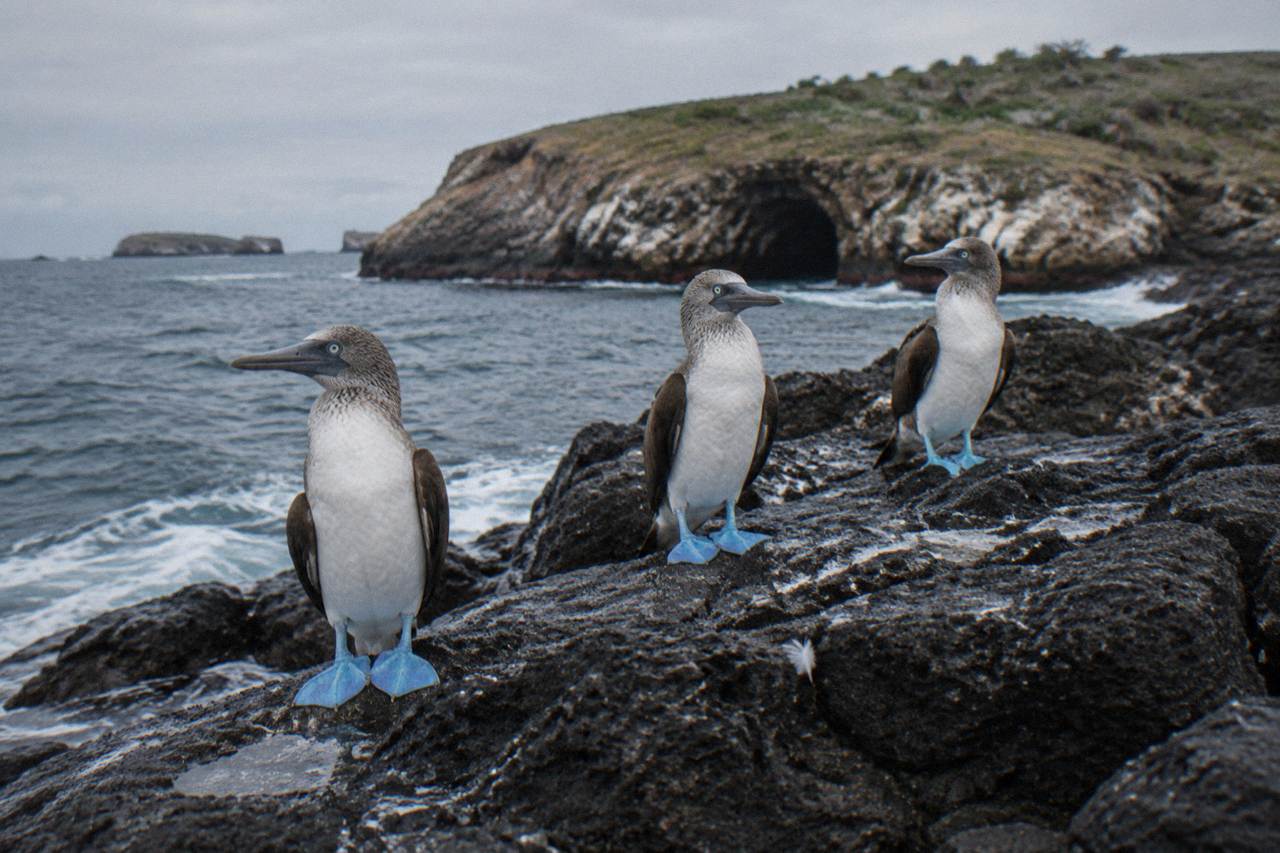
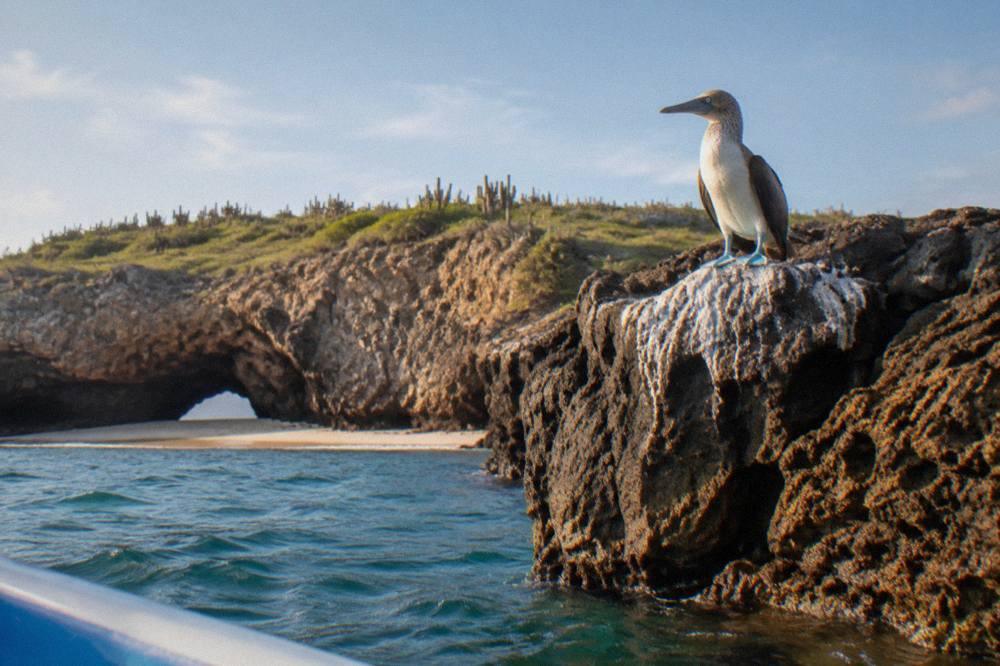
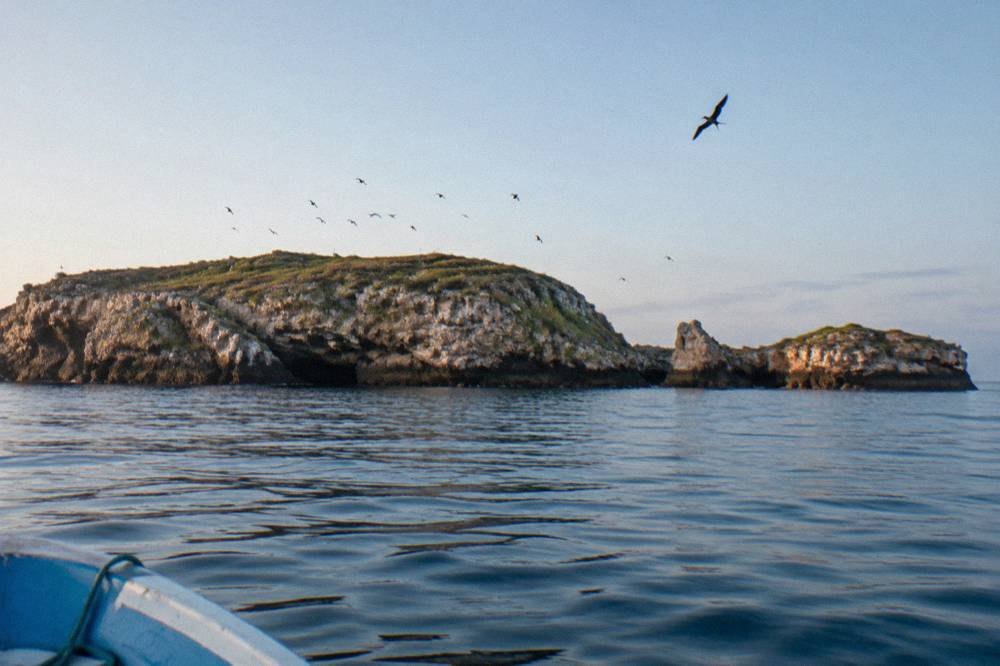
The birds themselves are unmistakable when you see them well. They are large, goose-sized, brown above and pale below, with a heavy pale bill and, the giveaway, bright blue legs and feet. In flight they patrol low over the water in small lines, and when they find a shoal of fish they fold and plunge, sometimes from a considerable height, reappearing at the surface with the catch. Frigatebirds, which CONANP also lists for the park, often shadow the boobies and steal their catch midair, a behavior you may notice from the deck of any of these boats. There is no feeding, calling or baiting of the birds on any tour; you watch from the rail as the boat passes the cliffs.
The Marietas colony is not described as the largest anywhere, nor is there any Galapagos comparison or a stated number of nesting pairs. If a blog post elsewhere claims a number, treat it as unsourced. What is solid is CONANP's own list: the species is here, it is official, and the boats pass the ledges.
Where Do Blue-Footed Boobies Nest Around The Marietas Islands?
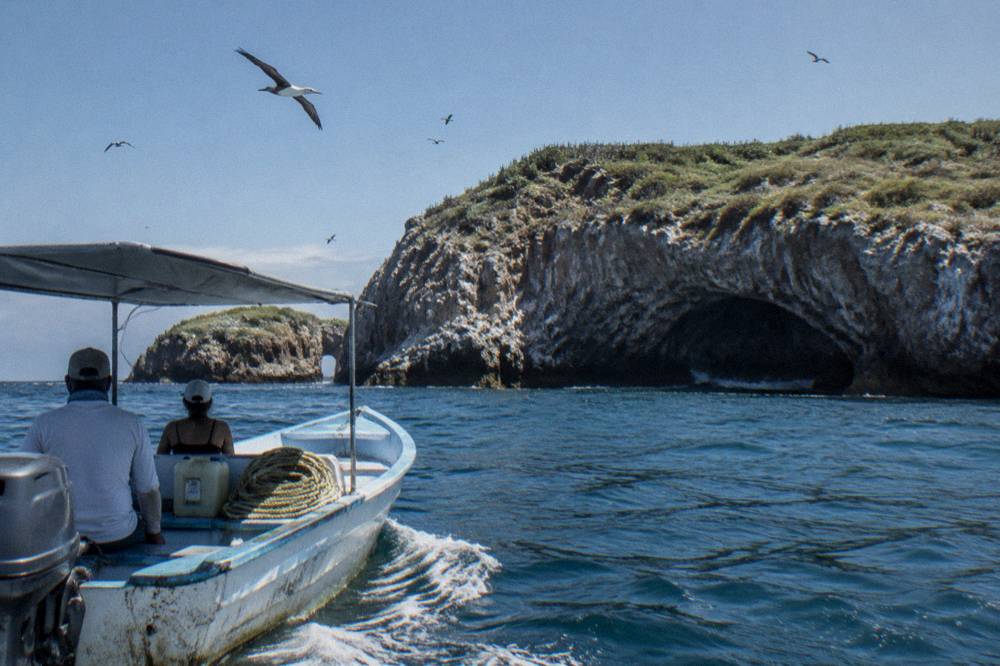
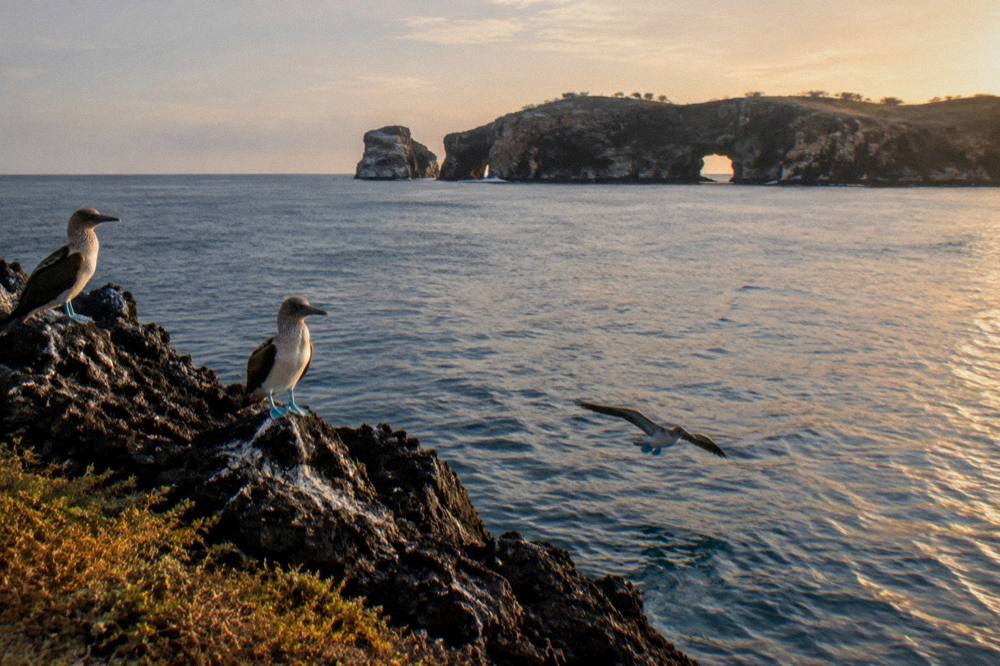
The boobies nest on the cliff ledges and rocky slopes of the two main islands, Isla Redonda and Isla Larga, and because landing on the islands is not part of any tour, the way to see the nesting rocks is from the deck of an authorized boat as it circles the archipelago. No tour lands guests on the nesting cliffs; the beach stops in itineraries are Playa del Amor, the crater beach also called Hidden Beach, and Playa Nopalera, a separate beach, not the nesting cliffs.
The shape of the trip matters for birding. Shorter Punta de Mita products, such as the Collective Boat, 2 Hours 30 Minutes tour from Grimar Adventures Punta Mita (from $67 per person, rated 4.9 from 32 reviews) spend their water time around the islands and at a beach stop, which keeps the cliffs in view for much of the outing. The longer Puerto Vallarta catamaran days, like the All Inclusive, 9 Hours cruise from Live & Travel Tours (from $87 per person, rated 3.6 from 76 reviews), combine the islands with reef snorkeling, a Playa la Nopalera visit, and the stone arches, so the bird cliffs are one scene among several rather than the whole show.
The crossing itself can be productive. CONANP's distances put the islands 9 km from Punta de Mita, 34 km from Puerto Vallarta, and 15.96 nautical miles from Nuevo Nayarit, and the boats cross open bay water where boobies, frigatebirds and, in winter, humpback whales are described by listings as seasonal possibilities. No crossing time is given for any departure point, so plan by total tour duration rather than by an assumed ride length; the ecotours listing from Puerto Vallarta, for instance, states up to 3 hours in the National Park as part of a 5 hour trip.
If the birds are the main reason you are booking, our comparison of small group and large boat formats explains the trade-off in full: small pangas and catamarans carry 6 to 16 passengers and sit lower in the water, which puts you nearer to eye level with the ledges, while the big catamarans carry up to 100 and give you a higher, steadier rail. Neither format gets closer to the cliffs than park rules allow.
Which Marietas Islands Boat Tours Get You Closest To The Nesting Rocks?
The tours whose listing text explicitly names bird watching are the guided safari from Punta de Mita with a local guide (from $369 per group, up to 6 people), the small-group safari from Campos & Moras, and the Playa del Amor guided snorkeling day from Puerto Vallarta Net; every other tour passes the same cliffs, just without naming bird watching in its listing. Here is how the bird-relevant options compare on the facts that are printed on their listings.
| Tour | Operator and departure | Price and rating | What the listing says about birds and water time |
|---|---|---|---|
| Private Boat, Local Guide, 3 Hours | Marieta Tours, Punta de Mita cooperative pier | from $369 per group, 4.8 from 4 reviews | Bird watching listed; up to 3 hours, private boat, bilingual guide, park taxes included |
| Small Group, 4 Hours, Meal | Campos & Moras, Ancora Punta Mita | check the listing for the current price, 5 from 2 reviews | Bird watching listed; Skull Reef snorkeling, marine geyser, Stone Bridge |
| Guided Snorkeling, 7.5 Hours, Meal | Puerto Vallarta Net, two meeting points | check the listing for the current price, no rating shown | Bird watching listed; about 45 minutes of snorkeling, seasonal whale watching |
| Optional Hidden Beach, Snacks Included | Eco Explorer Vallarta, Marina Vallarta | from $99 per person, 4.8 from 1,033 reviews | Scenic boat ride, max 16 travelers, CONANP bracelet and park permits included |
| Collective Boat, 2 Hours 30 Minutes | Grimar Adventures Punta Mita | from $67 per person, 4.9 from 32 reviews | Private boat, snorkel gear, max 8 travelers |
The Marina Vallarta snorkel tour from Eco Explorer Vallarta is a strong all-round choice for a bird-and-water day: it carries at most 16 travelers, includes the CONANP bracelet and the official park permits in the ticket, and its Hidden Beach landing is an optional paid extra, so the standard itinerary keeps you on and around the water where the birds are. It runs from $99 per person, rated 4.8 from 1,033 reviews, and you can check dates for Optional Hidden Beach, Snacks Included.
For a full day built around the whole archipelago, the Chica Locca Tours all-inclusive catamaran (from $130 per person, 4.8 from 771 reviews) lists premium all-inclusive food and beverage, waterslides, kayaks and paddleboards, and its notes state drones are prohibited to protect the flight path of endemic birds, a reminder of how seriously the park's bird protections are written into the trips themselves. The listing states a maximum of 66 travelers and requires you to choose your meeting place before booking. Cancellation is free up to 24 hours before departure, as the listing states.
Guests who want the smallest possible boat and a guide focused on the islands themselves tend toward the private safari options, covered in detail in our guide to private Marietas boat charters. The private snorkeling safari from Punta de Mita with a local guide is the only firm per-group price, from $369 for the boat, and its listing names bird watching, Playa Nopalera and hydrating drinks among the inclusions.
When Is The Best Time To See Blue-Footed Boobies At The Marietas Islands?
The birds are listed by CONANP as park wildlife without any stated off-season, and a secondary academic study of Isla Larga puts blue-footed booby breeding roughly February to July with a peak from March to May, so nesting activity is mostly a spring phenomenon, while sightings from boats are described year-round. We print that breeding window softly, exactly as the evidence allows: one 2013-era study of Isla Larga, no counts, no colony-size claims.
For planning, the season matters more for sea conditions and whales than for the birds. The month table below uses sea temperature and rainfall for Banderas Bay, and the official humpback window.
| Month | Sea temperature (C) | Rain (mm) | Rain days | Humpbacks in the bay | Season |
|---|---|---|---|---|---|
| December | 25.2 | 21 | 2 | Season starts | Dry season |
| January | 24.5 | 37 | 2 | Peak | Dry season |
| February | 23.9 | 12 | 1 | Peak | Dry season |
| March | 23.9 | 4 | 1 | Late season | Dry season |
| April | 24.9 | 4 | 1 | None in season | Dry season |
| May | 27.4 | 18 | 2 | None in season | Dry season |
| June | 28.4 | 227 | 15 | None in season | Wet and hurricane season |
| July | 29.6 | 362 | 20 | None in season | Wet and hurricane season |
| August | 30.3 | 380 | 21 | None in season | Wet and hurricane season |
| September | 30.2 | 429 | 20 | None in season | Wet and hurricane season |
| October | 29.6 | 125 | 9 | None in season | Wet and hurricane season |
| November | 27.7 | 24 | 2 | None in season | Dry season |
Two cautions go with that table. First, crowd level, swell and visibility by month are not sourced on this site, so we do not rate them; our best time to visit guide sticks to the same sourced figures. Second, the whale dates are last season's official SEMARNAT window; no 2026-27 notice has been published, so treat next winter's dates as unconfirmed until the federal whale-watching notice appears.
If nesting behavior is what you want to watch, spring is the planning target: courtship, eggs and chicks on the ledges, described by the study as peaking March to May. If you want birds plus whales plus the driest weather, late February and early March overlap everything except the very peak of nesting. Summer trips still pass the birds, but the park's own page notes the rainy season can bring days with poor sea conditions, and tours can be cancelled for sea conditions, with refunds governed by each listing's cancellation line.
What Other Birds And Wildlife Will You See Around The Marietas Islands?
The full wildlife list CONANP publishes for the park is the blue-footed booby, the brown booby, Heermann's gull, the frigatebird, the bridled tern, the king angelfish, the humpback whale, the giant manta, the spotted eagle ray and the coral reefs, all described as present rather than promised on any given day. The brown booby is the blue-foot's close relative and easy to confuse at a distance; its feet are not blue, and it nests on the same kind of ledges. Frigatebirds, with their scissor-shaped wings and habit of pirating food from other seabirds, are among the most conspicuous fliers over the islands. Heermann's gulls and bridled terns round out the seabird list, and king angelfish are the named reef fish, so a snorkel stop adds a different column of the same official list.
| Wildlife (CONANP official list) | Where you typically notice it | Which tour formats put you there |
|---|---|---|
| Blue-footed booby and brown booby | Cliff ledges of Isla Redonda and Isla Larga, seen from the boat | All tours; slowest passes on small-boat and private trips |
| Frigatebird | Soaring over the islands, chasing other birds | All tours, from the deck |
| Heermann's gull, bridled tern | Waterline and overhead near the shoals | All tours |
| King angelfish, coral reefs | Snorkel stops at the reefs and Playa Nopalera | Snorkel listings, including the featured Marina Vallarta tour |
| Humpback whale, giant manta, spotted eagle ray | Open water on the crossing, seasonal | Longer trips, described as seasonal by listings |
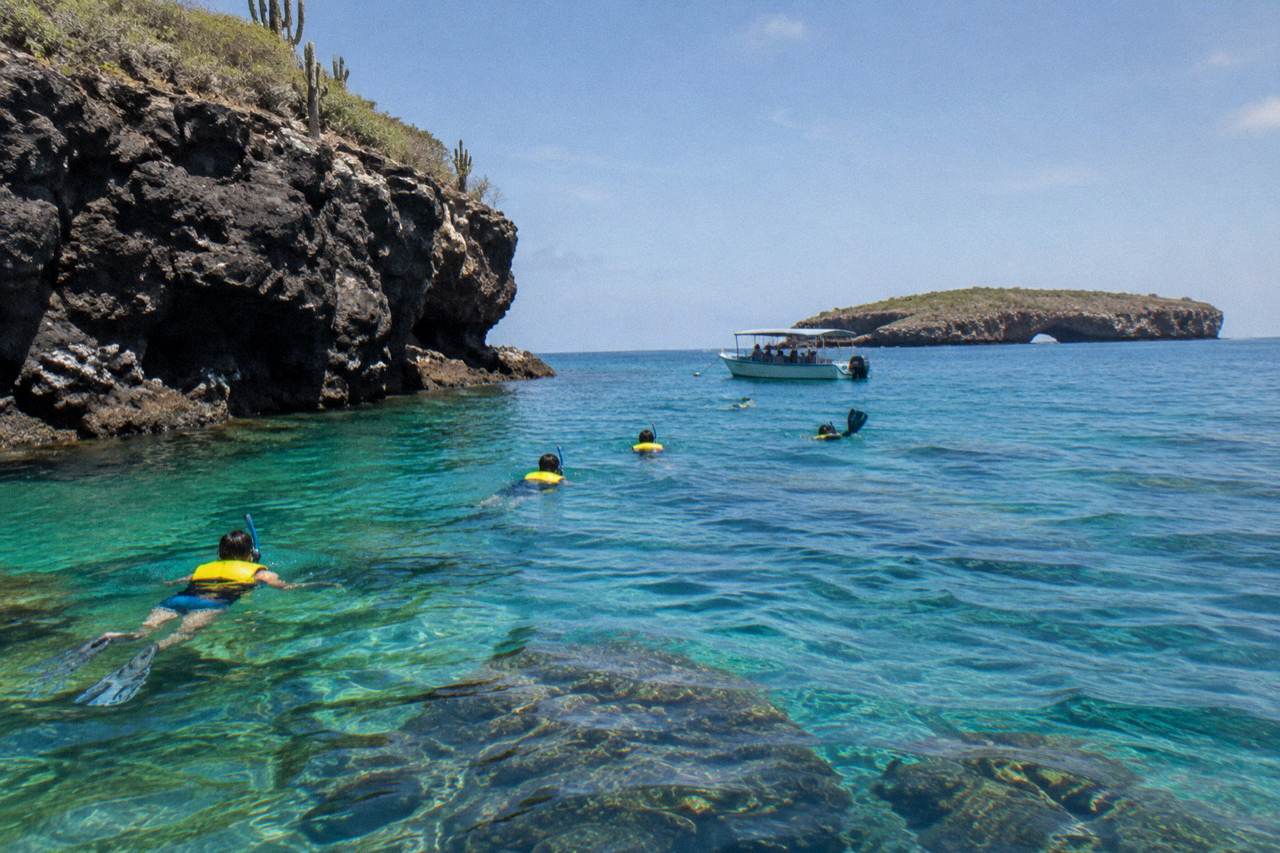
Snorkeling therefore matters even on a bird-focused day. The featured Eco Explorer Vallarta tour includes snorkeling gear and a guide as part of its ticket, and the Ecotours Vallarta naturalist tour is led by a marine biologist or naturalist, which suits travelers who want the reef life explained as well as the cliffs admired. Our Marietas snorkeling guide covers the in-water side in full, including the park's reef-friendly sunscreen rule.
How Rare Is A Blue-Footed Booby?
**** There is no population figure for the islands, no trend claim, and no support for the phrase "world's largest colony" that floats around travel articles; those numbers simply are not published.
The framing is geographic. The Marietas Islands give the birds a legally protected cliff inside a bay, and the park's rules, from the ban on removing animals to the drone prohibitions several listings repeat, exist partly to keep it that way. For a traveler from the United States or Canada, the birds are effectively a Mexico-and-further-south specialty you can see on a day trip from Puerto Vallarta or Punta de Mita without an expedition.
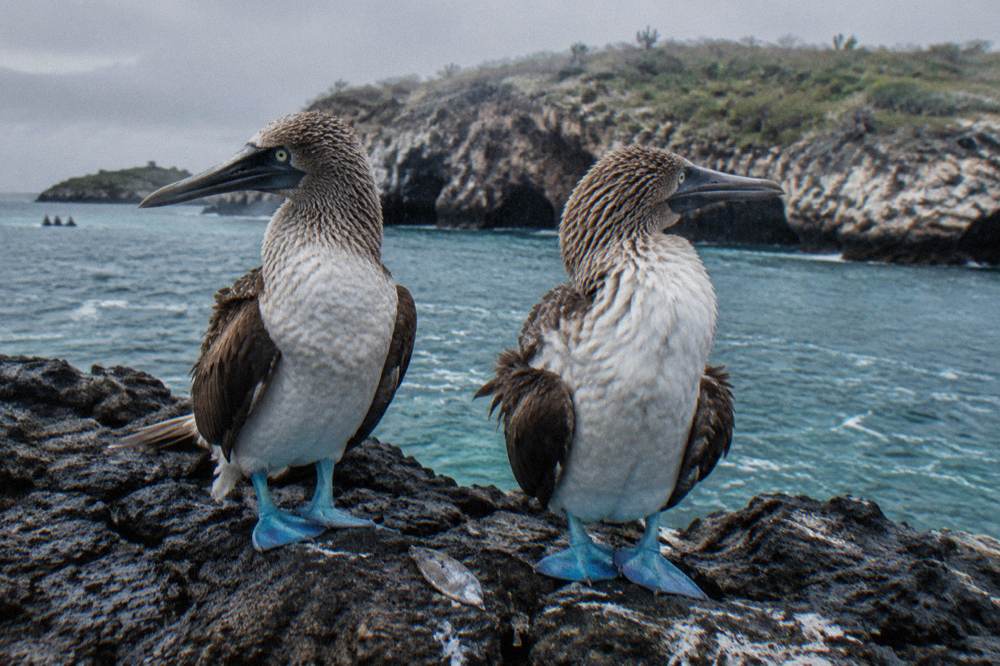
Rarity cuts the other way for your expectations: because the birds are resident and listed, you do not need a specialist charter to have a chance at them. The budget collective boat from Punta de Mita from $67 per person passes the same ledges as the private safari from $369 per group. What the private options add is time, flexibility and a guide's attention, not access to a different island.
What Rules Protect The Birds On A Marietas Islands Tour?
The park's eight official visitor rules protect the birds' habitat directly: follow guides and rangers, wear a life jacket in the water, no alcohol, no littering, no removing or introducing animals, no single-use plastics, reef-friendly sunscreen applied 30 minutes before entering the water, and payment of the MXN 125 per person per day rights fee. CONANP also recommends light beach clothing and swimwear, and does not allow footwear for water or beach activities.
Beyond those, the drone prohibitions are the most bird-specific rules you will meet. Multiple tours on this site state in their own notes that drones are prohibited due to federal regulations and in an effort to protect the flight path of endemic birds, so leave the drone at the hotel regardless of which tour you book. One Punta de Mita listing also prohibits bringing bags, backpacks or food onto the beaches, which reduces litter pressure on the nesting island's shoreline.
The 2016 reopening rules CONANP set for Playa del Amor, which operators still describe, also shape the bird-viewing day indirectly. Under those 2016 rules the beach admitted at most 116 visitors a day, in supervised groups of at most 15, for 30 minutes per group from leaving the boat, with helmets and flotation vests compulsory and no fins, mask or snorkel at the beach entrance, and boats carrying more than 15 passengers could not enter. The practical consequence for a birder: the crater beach is a short, tightly managed episode, while the boat time around the cliffs, which is where the boobies actually are, is the larger and freer part of your day. Those details are covered in depth in our guide to Hidden Beach rules, closure days and visitor limits.
Fees are per-listing facts and worth checking before you book. The featured Eco Explorer Vallarta tour includes the CONANP bracelet and park permits in its ticket and lists a US$6 per person government fee as not included. The Grimar Adventures collective boat does not state how fees are handled, so ask the operator. The Live & Travel Tours all-inclusive cruise lists a dock tax of MXN 35.00 and CONANP and SEMARNAT taxes of MXN 220.00 per person as not included, paid on the day. Our park fee and wristband guide walks through every case.
Do You Need To Swim To Hidden Beach To See The Boobies On The Marietas Islands?
No: the boobies nest on the outer cliff ledges of the islands, which every tour passes by boat, so non-swimmers and travelers who skip the Hidden Beach landing entirely still get the bird viewing. The crater beach and the birds are two different parts of the same trip.
That matters because the Hidden Beach landing is the most conditional element of any Marietas day. Entry depends on tide, sea state and the park's daily rules; the Ecotours Vallarta listing states plainly that operators cannot confirm entrance ahead of time and do their best on every visit. The swim through the rock passage is described by the sightseeing listing as about 60 meters, and by one Puerto Vallarta ecotours listing as about 250 meters from the boat, both attributed to their own listings, with swimming ability required. Age limits differ by listing: the featured Eco Explorer tour states 10 to 65 for the beach with ID, the Vallarta Adventures Hidden Beach tour states a minimum of 12, and the Grimar Adventures entry states 10 to 64.
If your party includes non-swimmers or younger children, the boat-based formats are the comfortable answer. Our guides on visiting with kids and non-swimmers and on the Puerto Vallarta departure options cover the choices listing by listing, and the Punta de Mita guide covers the short-ride side of the bay, where the islands are 9 km offshore.
Common Questions About Blue-Footed Boobies
When Do Blue-footed Boobies Breed On The Marietas Islands?
A secondary academic study of Isla Larga put breeding roughly February to July, peaking March to May, so nesting activity is mostly a spring phenomenon. The birds are listed by the park year-round without any stated off-season, but we do not claim year-round sightings as fact.
Can You See Blue-footed Boobies From A Marietas Islands Tour Boat?
Yes, that is the standard way. No tour lands on the nesting cliffs, so all viewing is from the water as the boat circles the cliffs. Tours whose own listings name bird watching include the Punta de Mita private safari with a local guide, from $369 per group, and the Campos & Moras small-group tour.
Do You Have To Swim To Hidden Beach To See The Birds?
No. The boobies nest on the outer cliffs seen from the boat; Hidden Beach is a separate, tide-dependent crater beach landing. Non-swimmers who stay aboard still get the full bird viewing on any tour.
Are Drones Allowed On Marietas Islands Tours?
No. Several listings state drones are prohibited due to federal regulations and in an effort to protect the flight path of endemic birds, so leave drones behind regardless of operator.
The birds are the quiet constant of every Marietas Islands day: the cliffs pass by on the two and a half hour run from Punta de Mita and on the nine hour all-inclusive cruise alike, and the choice between those formats is really a choice about time, food and group size rather than about the boobies. Pick the duration and departure that fit your trip, and the nesting ledges come with it.