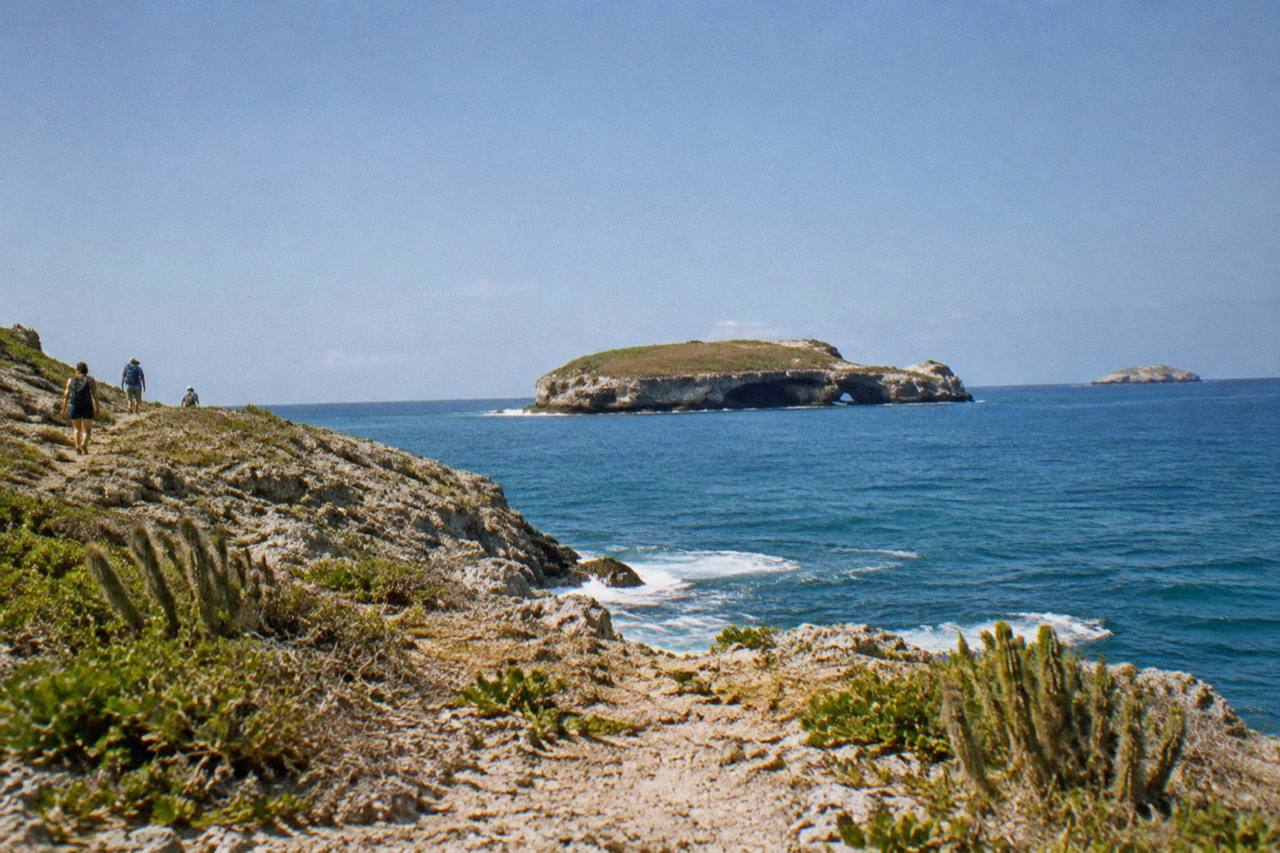
Can You See Whales On A Marietas Islands Tour?
Humpback whales visit Banderas Bay from December to March, and Marietas Islands tours describe sightings as a seasonal possibility on the crossing. Here is what the official season window and the listings actually say.
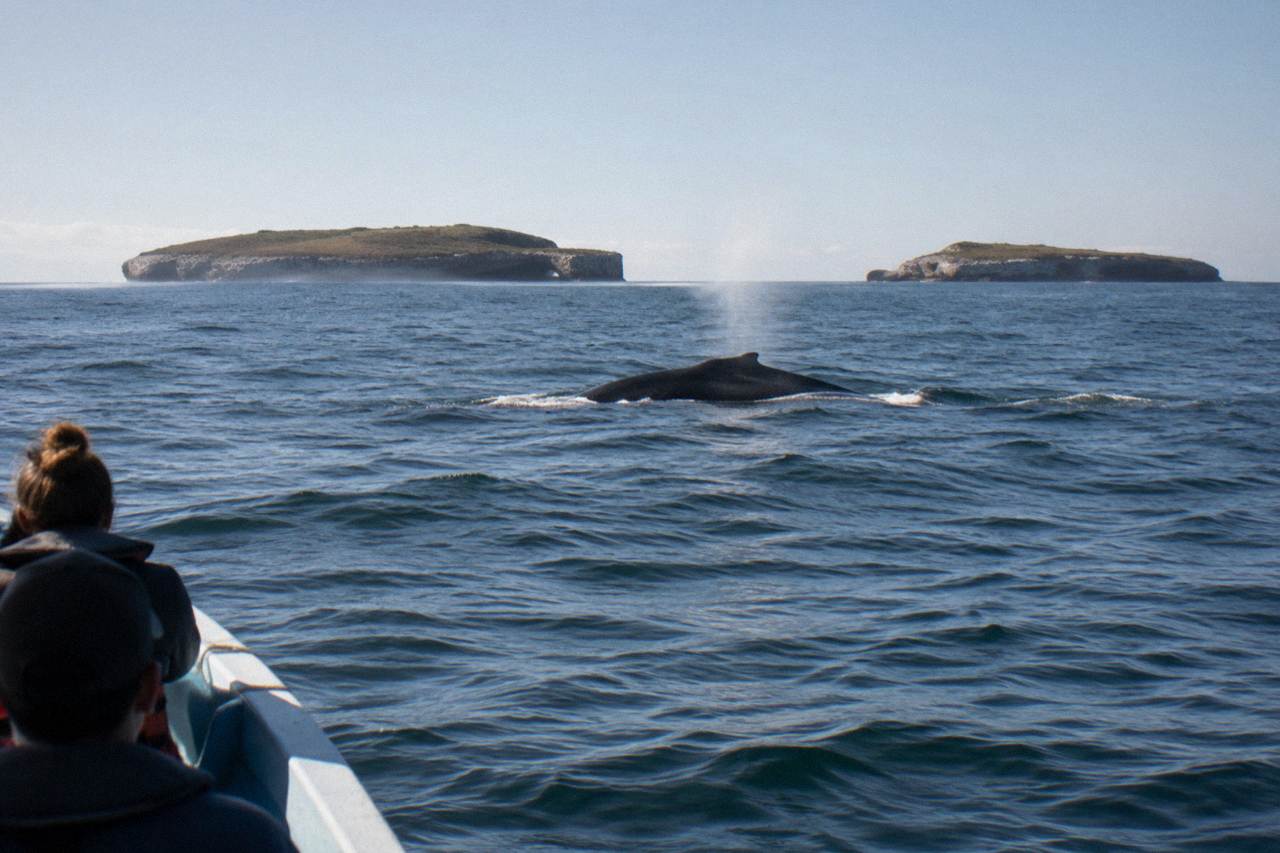
A Seasonal Possibility Rather Than A Promise
Yes, in season, as a possibility rather than a promise. Humpback whales migrate into Banderas Bay roughly December through March, and several Marietas Islands listings describe whale watching as a seasonal feature of the boat crossing. No tour on this site is a dedicated whale watching product, no operator can promise a sighting, and federal rules restrict whale watching activity within 1.5 km of the islands.
The answer has three parts, and each one matters if you are booking a winter trip. First, the whales are genuinely here in winter: the most recent official SEMARNAT whale watching window ran from 8 December 2025 to 23 March 2026, covering Banderas Bay and the waters around the Islas Marietas. Second, the product you would book is a Marietas Islands tour, a snorkel or beach day with a boat crossing, and the whales are something you may meet on the way rather than the purpose of the ticket. Third, the sighting itself is never assured: humpbacks are seasonal, guests report encounters often in winter, and no tour promises an animal. If you would rather build the day around the whales instead of hoping for them on the crossing, the guide to Marietas Islands and whale watching combo tours explains how those combined itineraries work.
That framing is not hedging for its own sake. Some reviewers describe the crossing turning into an unplanned whale watch more than once. But a party that books in July, or one that expects a whale-focused itinerary, will be disappointed by what the ticket actually covers. This page lays out the season, the rules, the tours whose listings mention whales, and what to expect the rest of the year.
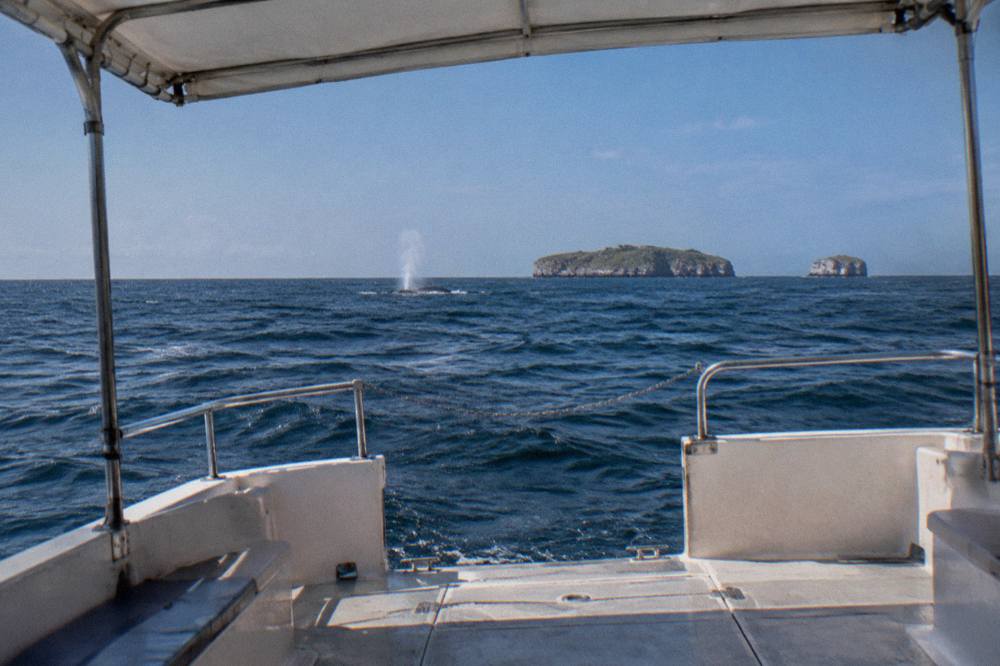
For readers who already know they want a winter boat day, three formats are worth a look: a six-hour snorkel and kayak boat day, a small-group Hidden Beach safari from Punta de Mita, and the Marina Vallarta snorkel tour with an optional Hidden Beach landing.
The rest of this article explains what each of those formats offers a winter reader, and where whales fit into the day.
When Is Whale Season In Banderas Bay?
The official SEMARNAT whale watching window for the 2025 to 2026 season ran from 8 December 2025 to 23 March 2026. No notice for the following season has been published yet, so no next-season dates can be stated as official. Operators describe humpbacks in the bay from December to April or December to March, depending on the operator.
The federal whale-watching notice that sets the season also draws the lines whale watching activity may not cross: a 1.5 km radius around the Islas Marietas archipelago, and a coastal strip from Punta de Mita to the mouth of the Rio Ameca. Inside those zones, whale watching activity is restricted, which is worth understanding before you picture a boat circling a whale directly off the islands. The encounter guests describe usually happens on the open crossing, in the wider bay, before the boat enters the restricted radius. The aviso is published through SEMARNAT in the Diario Oficial de la Federación, and the season summary is mirrored by Mexican whale watching trackers such as the aviso summary on ecoturismo.com.mx.
January and February sit at the peak of the season, which lines up neatly with the driest, coolest part of the year and the lowest monthly rainfall averages for the bay. That overlap is why a February boat day tends to be the classic Marietas combination: dry-season skies, whales reported on the crossing, and the park's full weekly schedule in effect, since the park is closed Mondays and the Playa del Amor site is closed Mondays and Tuesdays.
| Month | Sea temperature (C) | Rain (mm) | Humpbacks in the bay |
|---|---|---|---|
| December | 25.2 | 21 | Season starts |
| January | 24.5 | 37 | Peak |
| February | 23.9 | 12 | Peak |
| March | 23.9 | 4 | Late season |
| April | 24.9 | 4 | None in season |
| July | 29.6 | 362 | None in season |
| September | 30.2 | 429 | None in season |
The full monthly picture, including the hurricane-season months, is in the site's guide to the best time to visit the Marietas Islands. For whale questions specifically, the short version is that the official window and the peak listing descriptions agree: December through March is when the bay has humpbacks, and January and February are the heart of it.
Because a winter reader asking the whale question is usually shopping for one multi-purpose boat day, the box below points to the six-hour Chica Locca Tours boat day, whose listing carries an open bar, a fajita lunch and unlimited water equipment, with the crossing as the whale window.
What Happens When A Marietas Boat Meets A Whale?
Guests describe boats slowing or pausing during the crossing while humpbacks surface nearby, often with a crew member calling out the location. What happens next is bounded by federal rules: whale watching activity is restricted within 1.5 km of the islands, and swimming with whales is prohibited, so a Marietas tour watches from the boat and then continues to the islands.
The encounter, when it comes, is a boat-based one. Humpbacks migrate to Banderas Bay to breed and calve, and the bay's winter surface temperature, around 24 to 25 degrees Celsius in the peak months, is part of what draws them. A crossing from Marina Vallarta, the Puerto Mágico terminal or Punta de Mita passes through open bay water where the animals travel, and it is there, not at the islands themselves, that the listings place the possibility. The Playa del Amor guided snorkeling listing from Puerto Vallarta Net names whale watching as a seasonal inclusion; the small-group safari from Campos & Moras names it too, alongside bird watching and a marine geyser experience.
Two rules keep the experience from becoming a chase. The federal whale-watching notice restricts whale watching activity inside the 1.5 km radius around the archipelago, so the watching happens on the approach, outside that line. Swimming with whales is prohibited outright.
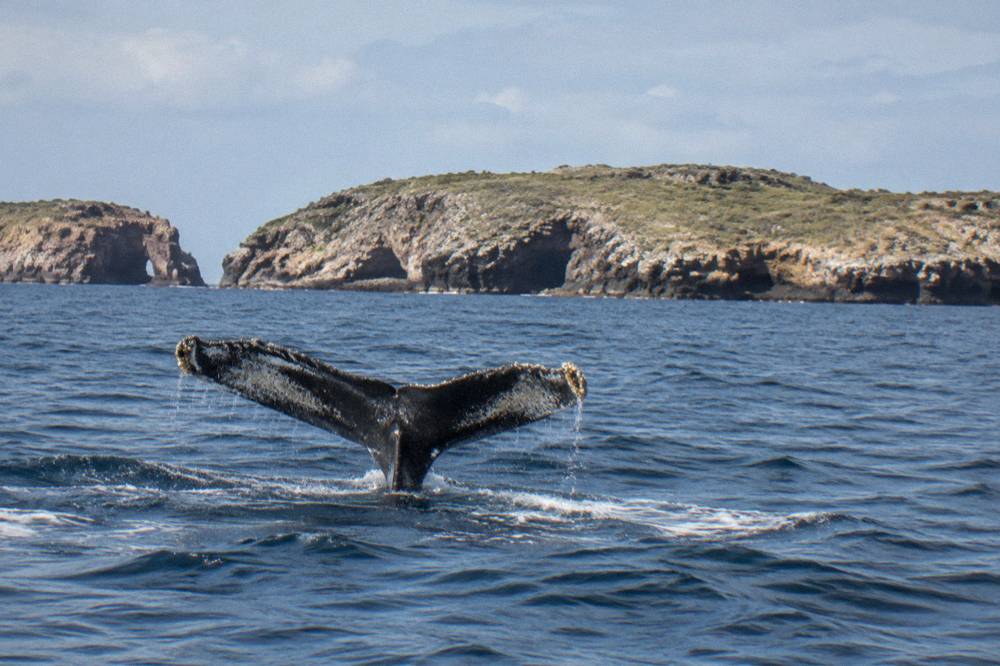
It helps to set expectations about timing within the day. The whale window is the crossing, which on a full-day tour from Puerto Vallarta or Nuevo Vallarta is a meaningful stretch of the itinerary. A Punta de Mita departure starts much closer to the islands, 9 km away by CONANP's own distance figures, so the crossing is shorter and the open-water whale window with it. Neither fact makes sightings more or less likely; it just changes how much of your day is spent in whale territory.
Which Boat Trips To The Marietas Islands Mention Whales?
**Only two listings put whale watching in their inclusions, and both state it as seasonal. The Playa del Amor guided snorkeling tour from Puerto Vallarta Net lists whale watching (seasonal), and the Campos & Moras small-group Hidden Beach safari lists whale watching (seasonal) among its inclusions. **
The table below lists the listings whose own text mentions whales, plus useful context for a winter buyer comparing formats. Inclusions and prices come only from each listing's own block, and a tour that does not name whales may still cross the same water; its listing just does not advertise the possibility.
| Tour | Operator | Listing says about whales | Firm price | Duration |
|---|---|---|---|---|
| Guided Snorkeling, 7.5 Hours, Meal | Puerto Vallarta Net | Whale Watching (seasonal) listed | check the listing for the current price | 7.5 hours |
| Small Group, 4 Hours, Meal | Campos & Moras | Whale watching (seasonal) listed | check the listing for the current price | 4 hours |
| Snorkel, Kayak, 6 Hours, Meal | Chica Locca Tours | Whale watching in the itinerary, humpbacks December to April per the listing | from $130 per person | 6 hours |
| Optional Hidden Beach, Snacks Included | Eco Explorer Vallarta | not named in the listing | from $99 per person | duration not stated |
Two notes on that table. A 5.0 from 2 reviews for the small-group safari is a rating from two people, not a verdict; the guided snorkeling tour has no rating shown at all. And the absence of a whale line on a listing is an absence of advertising, not an absence of whales: every boat crosses the same bay in the same season.
The small-group safari deserves a closer look for a winter reader, because its listing stacks several wildlife items together. Beyond the seasonal whale watching, it names bird watching, snorkeling at Skull Reef, a swim through a marine tunnel to Hidden Beach, a visit to Secret Beach and the Stone Bridge, a marine geyser experience, and an optional beginner surf session, all on a four-hour small-group format from Ancora Punta Mita. The listing notes the guide carries a life ring for the Hidden Beach swim and that phones travel in a floating container. Its price is not published here, so check the listing for the current price.
For a reader weighing that concentrated four-hour format against a longer day, the difference is mostly time and inclusivity. The six-hour Chica Locca Tours boat day lists an open bar, a breakfast of fresh fruit, muffins, juices and coffee, guacamole with blue corn chips, a fajita lunch, and unlimited use of snorkel, kayak and paddleboard equipment. You can check dates for Snorkel, Kayak, 6 Hours, Meal, or compare formats in the fuller guide to catamaran and sailing tours if that format fits your group.
How Close Do Boats Get To Whales Near The Islands?
Federal rules restrict whale watching activity within 1.5 km of the Islas Marietas, so watching happens outside that radius, on the approach across the bay. Inside the restricted zone the boats are heading for snorkeling and beach stops, not whales. No distance-to-whale figure is published.
The 1.5 km restriction is the practical geometry of a Marietas day. Picture the archipelago with a circle drawn around it: outside the circle, in open water, a captain who spots humpbacks can pause and watch; inside it, the itinerary takes over, because the boat is now working the reefs, Playa Nopalera or, for the tours whose listings include it, the Hidden Beach landing. The coastal strip restriction from Punta de Mita to the Rio Ameca mouth covers the rest of the bay's northern shoreline, which is where most departures originate.
This is also why the question of a "dedicated whale watch" and a Marietas tour are different products. A dedicated whale watching operator, which is not what this site sells, devotes the whole trip to finding animals within the federal rules. A Marietas tour devotes the day to the park and treats a whale encounter as a bonus of the crossing. Guests who report the best of both usually booked in January or February, when the peak of the season overlaps the dry season, and treated any sighting as a gift.
The other protected wildlife of the islands is worth the same framing. CONANP's official park page lists the wildlife of the archipelago: blue-footed and brown boobies, Heermann's gull, frigatebirds, bridled terns, king angelfish, giant mantas, spotted eagle rays, humpback whales and coral reefs. The birds and the reef fish are residents; they live at the islands and a boat day passes them every trip. The whales are migratory; they are in the bay for a window and gone. The site's guide to the blue-footed boobies of the Marietas Islands covers the residents, and for the broader question of pairing a Marietas day with a whale-focused trip there is a dedicated guide to Marietas whale watching combos.
Do You Need A Dedicated Whale Watching Tour?
No Marietas Islands ticket is a dedicated whale watching product, and this site does not sell one. If whales are the whole point of your day, a dedicated whale watching operator is the right buy. If whales are one of several things you want from a winter boat day, a Marietas tour that crosses open bay water in season covers the possibility while delivering the park itself.
The deciding question is what the day is for. A family that wants snorkeling, a beach stop, lunch and the chance of a fluke on the way is served by the big catamaran and full-day formats. A traveler with a whale photograph as the goal should book the specialists, because a Marietas crew's first obligation is the itinerary. Both can coexist in one trip: several readers pair a dedicated whale morning in the bay with a Marietas day later in the week.
Winter readers gravitate toward the formats with the longest crossings, since more open bay water means more whale window. From Puerto Vallarta the departure points include Marina Vallarta and the Puerto Mágico marine terminal; from Nuevo Vallarta, the Paradise Village pier; from the north, the piers of Punta de Mita and Corral del Risco. CONANP's distance figures frame the difference: Puerto Vallarta sits 34 km from the islands, Nuevo Nayarit 15.96 nautical miles, Punta de Mita 9 km.
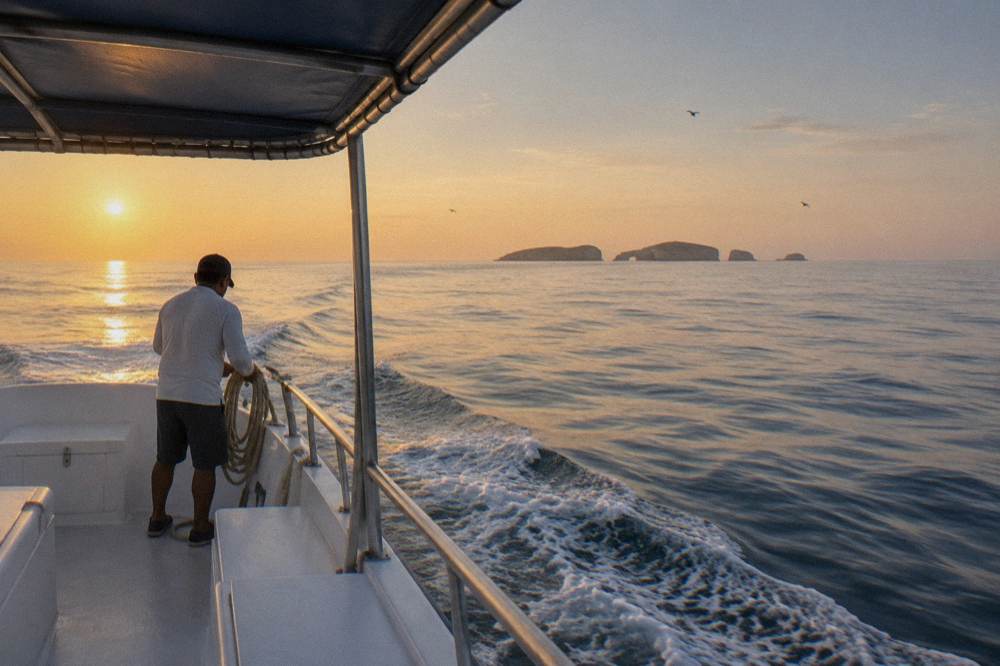
One more winter-specific point: the featured Marina Vallarta snorkel tour with an optional Hidden Beach landing is a compact, high-review-count option at 4.8 from 1,033 reviews, from $99 per person. Its listing includes the CONANP bracelet, park permits and a conservation donation, with light snacks of apples, bananas and a sandwich, and it caps groups at 16 travelers. Hidden Beach entry on that tour is an optional paid extra, listed at a cash entrance fee of MXN 600 per person, and entry always depends on tide, sea state and park rules on the day.
What If You Visit Outside Whale Season?
From roughly April through November the humpbacks are out of the bay, and only two listings stretch the whale months into April. The tours run all year, the park is open Tuesday to Sunday, and the summer trades whales for the warmest sea temperatures of the year, 28 to 30 degrees Celsius from June through September, alongside the rainy and hurricane season.
An off-season trip is a different product, marketed as one. What you keep: the reef snorkeling, the bird colonies, the rock formations and, for eligible tours, the Hidden Beach landing, all in warmer water. What changes: the rain. The monthly record shows June through September carrying 227 to 429 mm of rain and 15 to 21 rain days per month, against 4 to 37 mm and 1 to 2 rain days across the December-to-April dry season. CONANP itself recommends year-round visitation while noting that rainy-season days can bring poor sea conditions, and tours can be cancelled for sea conditions; the hurricane-risk months run June to November with higher probability from August to October. The site's guide to whether Marietas tours run in hurricane season covers that half of the calendar.
The compensations are real. CONANP also lists giant mantas and spotted eagle rays as park wildlife; the blue-footed and brown boobies are island residents, with a secondary academic study of Isla Larga placing booby breeding mostly in spring. Summer sea temperatures near 30 degrees Celsius make long snorkel sessions effortless. And the crowds thin out, though the difference is not quantified.
| Season window | Humpbacks | Sea temperature (C) | What defines the trip |
|---|---|---|---|
| December to March (dry, whale season) | In the bay, peak January and February | 23.9 to 25.2 | Whale possibility on the crossing, dry days, full park schedule |
| April to May (late dry) | None in season | 24.9 to 27.4 | Warm, dry, booby breeding mostly spring per a secondary study |
| June to October (wet, hurricane season) | None in season | 28.4 to 30.3 | Warmest water, highest rain, possible sea-condition cancellations |
| November (transition) | None in season | 27.7 | Rain drops to 24 mm, dry season approaching |
If your dates are fixed in the wet months and a whale sighting is the thing you will measure the trip by, the advice is to come back in winter. If the dates are flexible, aim for January or February: peak whale months, the driest air of the year, and the full Wednesday-to-Sunday Hidden Beach schedule in effect.
Common Questions About Whales On Marietas Boat Trips
When Is The Best Month To See Whales On The Crossing?
January and February are the peak of the season inside the official window, overlapping the driest months of the year. The most recent SEMARNAT window opened 8 December and closed 23 March; no notice for a following season has been published, so next season's dates cannot be stated as official.
Do Any Listings Include Whale Watching In The Ticket?
Two listings name it: the Playa del Amor guided snorkeling tour from Puerto Vallarta Net lists Whale Watching (seasonal), and the Campos & Moras small-group Hidden Beach safari lists whale watching (seasonal). Both frame it as seasonal, never as a sure thing.
Can You See Whales From Hidden Beach Itself?
Whale watching from the beach is not described, and the beach sits inside the restricted 1.5 km zone. Whale encounters guests describe happen from boats on the open crossing. The beach itself is a short, regulated visit under the reopening rules CONANP set in 2016, which operators still describe.
Do Marietas Tours Mention Dolphins Too?
Some guest reports mention dolphins on the crossing, and the waters of the bay are known for them, and a few listing descriptions mention dolphins, always as something you may see rather than a promised inclusion. Treat dolphins the way the listings treat whales: possible, reported, never promised.
The winter reader weighing all of this is really choosing one boat day that can do several jobs. If whales are the headline for your dates, book a January or February departure with a long crossing, keep your camera out on the way to the islands, and treat anything that surfaces as the bay's bonus to an already full day.