Can You Snorkel At The Marietas Islands?
Yes, snorkeling is a permitted activity in the Marietas Islands National Park, with gear listed on most boat tours. Here is where the boats stop, what the park rules say, and how Hidden Beach differs.
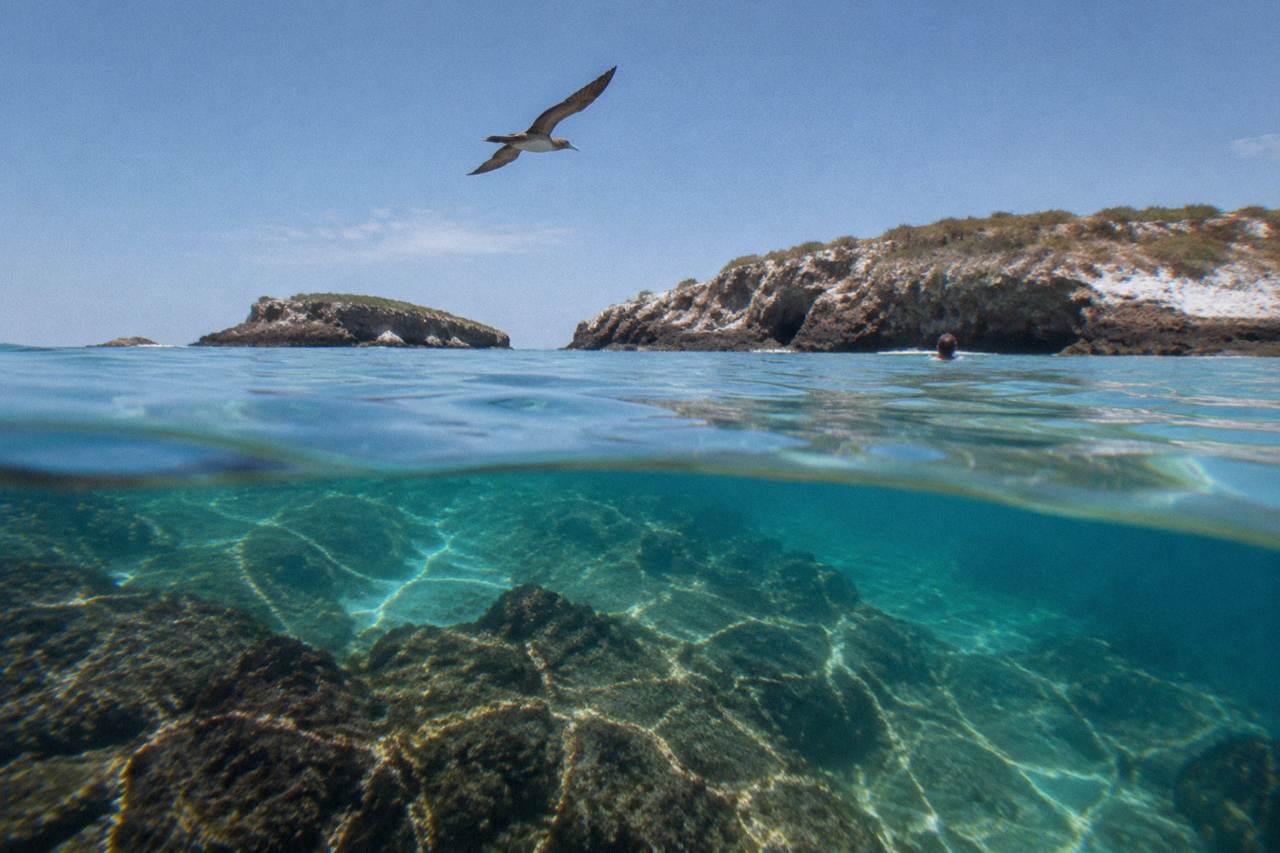
The Marietas Islands National Park permits snorkeling, swimming and beach access inside the protected area, and almost every boat tour lists snorkel gear among its inclusions. The reefs around Isla Redonda and Isla Larga are the reason many boats make the crossing at all. The one place you cannot put a mask on is the Hidden Beach entrance lane, where the 2016 reopening rules ban fins, masks and snorkels outright. Because every permitted activity on the islands starts with a boat ride, many snorkelers wonder whether visiting the Marietas Islands without a tour is even possible.
That split, open water yes, crater beach no, confuses a lot of first-time visitors, and it is worth understanding before you book anything. This page walks through where the boats actually stop, what gear the tours provide, what the park's rules ask of snorkelers, and which listings on this site fit a snorkeling-first day. The park's official CONANP page is the source for the permitted activities and the eight visitor rules summarized here.
Is Snorkeling Officially Permitted In The Park?
Yes. Snorkeling is one of the activities CONANP, the National Commission of Protected Natural Areas, expressly permits inside the Islas Marietas National Park, alongside swimming and beach access. Nearly every tour here includes snorkel equipment, and the reefs hold king angelfish and spotted eagle rays that the park itself lists. The single exception is the Hidden Beach entrance, where the 2016 rules prohibit fins, masks and snorkels. If you're wondering why the rules are so strict, this guide to what makes the Marietas Islands famous covers the birds, reefs and history the protections exist to preserve.
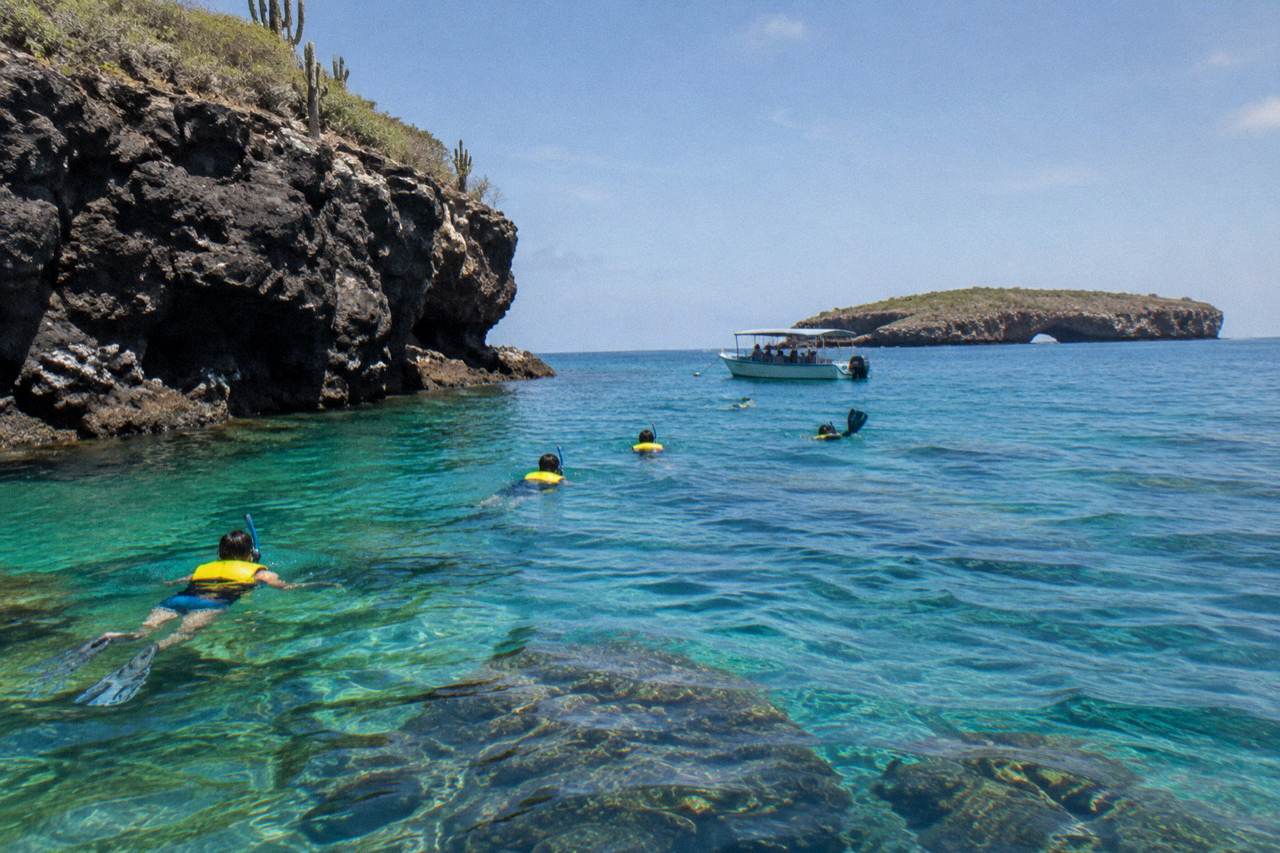
In practice the day looks like this: the boat crosses from Punta de Mita, Marina Vallarta, Puerto Mágico or the Nuevo Vallarta piers, drops anchor near a sheltered reef or cove, and guests snorkel in the open water in groups, usually with a guide in the water and a life jacket on. Several listings name their stops explicitly. Playa Nopalera, also written La Nopalera, appears on the Monkey Adventures México half-day listing, on the Puerto Vallarta Net reef snorkeling listing and on the Chica Locca boat tour, and it is a beach stop, not Hidden Beach. The Ecotours Vallarta 5-hour listing describes up to 3 hours in the national park spent snorkeling and observing marine life.
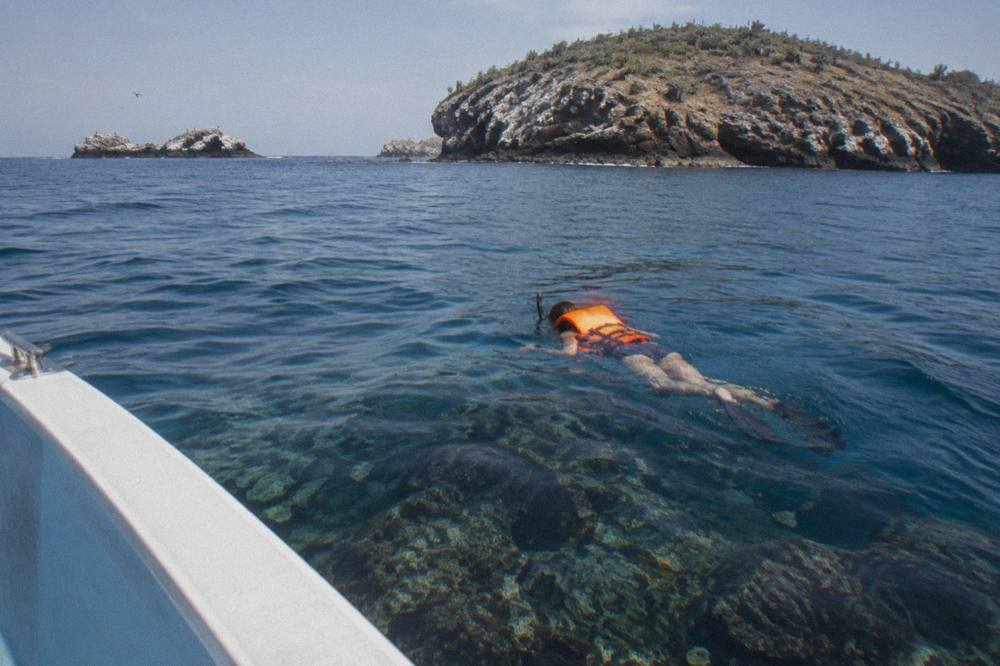
What varies between products is everything around the snorkel stop: boat size, group size, food, and whether the Hidden Beach landing is part of the ticket or a paid extra. The featured pick on this site, the Marina Vallarta snorkel tour with an optional Hidden Beach landing from Eco Explorer Vallarta, runs from $99 per person and carries a 4.8 rating from 1,033 reviews; its listing includes the CONANP bracelet, the park permits and light snacks, and lists the Hidden Beach entrance as an optional cash extra. If you want a quick way to compare it against two other snorkel-first options, the trio below covers the featured tour, the cheapest firm-priced boat and a short snorkel run from Punta de Mita.
For a deeper treatment of the sites themselves, the site's Marietas Islands snorkeling guide breaks down the reef stops, the gear and the season in more detail than this page needs to.
Where Do The Boats Stop You To Snorkel?
Boats stop at sheltered reefs and coves around the islands, most commonly the Playa Nopalera area and the reef stretches described in the listings, and since there is no dock at the islands you jump off the anchored boat and climb back aboard using small metal ladders. Snorkel time runs roughly 45 minutes on some listings and up to 3 hours in the park on others.
The stops differ by operator, and the listings are the only reliable source for what each one promises. The Puerto Vallarta Net reef snorkeling tour lists scenic reef snorkeling plus a visit to Playa La Nopalera. The Chica Locca snorkel, kayak and Playa Nopalera listing describes unlimited use of snorkel, kayak and paddleboard equipment. The GoPralia sailing trip includes paddleboards and sanitized snorkel gear with life vests. The Monkey Adventures México half-day listing combines a Nopalera beach visit with snorkeling, kayaking, paddle and a floating mat. None of these is a drift dive operation; these are anchored-boat snorkel stops in calm water, supervised from the boat.
Water clarity is the wildcard. Guest reports describe both exceptionally clear days and murky days on the same reefs, depending on swell and conditions, and no per-month visibility figures exist. What is sourced is the seasonal frame: the dry period runs December to April, and the rainy months from June to October bring both warmer water, up to 30.3 degrees Celsius in August on the monthly averages, and far more rain, 429 millimeters in September against 4 in March. The best time to visit guide carries the full month table.
One more stop deserves its own sentence: Hidden Beach, also called Playa del Amor or Playa Escondida, is a beach inside a collapsed crater reached by swimming through a rock passage. It is the most famous feature of the islands and the one place snorkeling does not happen, which is the next section.
Is Snorkeling Allowed At Hidden Beach Itself?
No. The 2016 CONANP reopening rules for Playa del Amor, which operators still describe, prohibit fins, masks and snorkels at the beach entrance entirely. Helmets and flotation vests are compulsory on that lane, entry and exit follow a buoy-marked route, and groups of at most 15 get 30 minutes from leaving the boat, under a maximum of 116 visitors a day at the site.
That is the full picture in one paragraph, and it is a firm one. The rules date from CONANP's reopening notice after the 2016 closure for coral restoration, published on the official gob.mx press release, and the current CONANP page confirms the site's Wednesday to Sunday hours without restating the caps. The practical consequence for a snorkeler is simple: your mask time happens at the reef stops before or after, and the Hidden Beach visit, when tide, sea state and the day's rules allow it, is a swim-through-and-stand-there experience, helmet on, no gear.
The listings reflect this. The Ecotours Vallarta naturalist tour states that helmet and life jacket are mandatory for the Hidden Beach portion and that the beach visit is limited to 10 minutes on its listing. The Grimar Adventures Hidden Beach entry listing from Punta de Mita states a minimum age of 10 and a maximum of 64. The sightseeing listing from Tours & Actividades says you must be able to swim roughly 60 meters to enter, and one Ecotours Vallarta listing states a 250-meter swim from the boat. These are per-listing facts, not park-wide numbers, and each belongs to its own listing. If the swim-through question is the one on your mind, the site's can you swim to the Hidden Beach page takes it in full.
What Gear And Help Do The Tours Provide?
Snorkel equipment is listed as included on every tour here, usually with a life vest, and the park makes the vest mandatory in the water regardless of what the boat supplies. Beyond the mask, several listings add kayaks, paddleboards and floating mats. What differs is whether fins are mentioned, whether sanitizing is stated, and whether a trained guide is in the water with you.
The vest rule comes straight from the park's eight visitor rules, so it applies at every stop, not just where a listing repeats it. The rest is per listing. Here is how the snorkel-relevant inclusions stack up across a representative spread of the tours, each line taken only from that listing's own inclusions:
| Tour | Operator | Snorkel gear | Vest | Extras the listing names |
|---|---|---|---|---|
| Optional Hidden Beach, Snacks Included | Eco Explorer Vallarta | Listed | Listed | CONANP bracelet, park permits, light snacks |
| Collective Boat, 2 Hours 30 Minutes | Grimar Adventures Punta Mita | Listed | Listed | Non-alcoholic drinks, waterproof phone container |
| Snorkel, Kayak, 6 Hours, Meal | Chica Locca Tours | Listed | Not stated | Unlimited kayak, paddleboard, water mattress, fajita lunch |
| Snorkeling From Puerto Vallarta, 5 Hours | Ecotours Vallarta | Listed | Mandatory, stated | Travel insurance, up to 3 hours in the park |
| Naturalist Guide, Snorkel, Box Lunch | Ecotours Vallarta | Mask, snorkel and fins stated | Mandatory for Hidden Beach | Marine biologist or naturalist guide, box lunch |
| Reef Snorkeling, 8 Hours, Meal | Puerto Vallarta Net | Listed with kayak and paddleboard | Not stated | Breakfast, lunch, premium open bar, travel insurance |
Two of those deserve a closer look for a snorkeling-first traveler. The Ecotours Vallarta 5-hour trip, from $136 per person, holds 4.9 from 18 reviews and describes a fast boat, a mandatory life jacket and up to three hours in the park; its listing excludes the boarding fee of 80 pesos and the 220-peso park and conservation fee, so budget those on top. The Ecotours Vallarta naturalist tour, from $133 per person with 4.7 from 192 reviews, is led by a marine biologist or naturalist and is capped at 10 travelers per its notes.
The listing notes for that trip set an age window of 10 to 65 and ask that visitors be comfortable swimming about 250 meters and climbing a ladder, so read the notes before booking it for a mixed group. For the naturalist-led alternative, check the card below.
What Marine Life Does The Park Actually List?
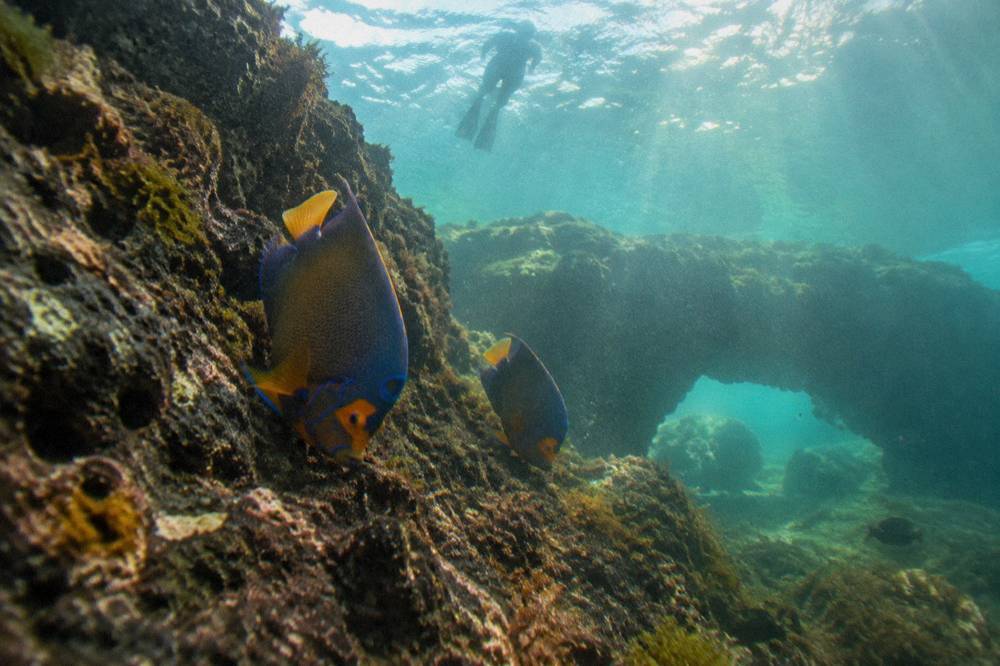
CONANP's own page for the park lists the king angelfish, the giant manta, the spotted eagle ray, coral reefs, humpback whales, blue-footed and brown boobies, Heermann's gull, frigatebirds and bridled terns. Sightings of any animal are always possible rather than promised, and the listings describe wildlife as seasonal: humpbacks appear in the bay in the official winter window, and the federal whale-watching notice restricts whale-watching activity within 1.5 kilometers of the islands.
That wildlife list is the park's, not a tour company's, and it is a good reality check on what a snorkel stop can hold. King angelfish are reef fish you can see from the surface on a clear day. Giant mantas and eagle rays are the sightings guests write home about, and they are sightings, not schedule items. Humpbacks are a boat-deck phenomenon: the last official SEMARNAT whale-watching window ran 8 December 2025 to 23 March 2026, no notice for the following season has been published, and listings describe whales as a seasonal possibility on the crossing, December to March or December to April depending on the listing. Swimming with whales is prohibited, and no tour offers or implies it.
The birds matter to snorkelers less directly but no less visibly: the islands' cliffs hold the boobies CONANP lists, and a 2013 academic study of Isla Larga put blue-footed booby breeding mostly in spring, peaking March to May, though that figure comes from a single secondary study. Drones are banned on several listings under federal rules protecting the birds' flight paths, a restriction the Vallarta Adventures and Monkey Adventures México listings both state.
Which Tour Fits A Snorkeling-First Day?
If snorkeling comes first, pick by what else you want: the $67-per-person collective trip from Punta de Mita packs gear into two and a half hours with no meal; the featured Marina Vallarta tour from $99 adds park permits and a 4.8 rating from 1,033 reviews; six-hour Chica Locca days from $130 add food, open bar and every water toy; and a $369-per-group safari with a local guide covers up to six people.
The format choice is really a departure-point and group-size choice. Punta de Mita boats are small, 8 travelers maximum on the Grimar listings, and short. Puerto Vallarta departures are longer days with bigger boats, up to 100 travelers on the Vallarta Adventures BBQ listing and 75 on the Altus catamaran. The site's small group versus large boat comparison works through the trade-offs; the table below keeps it to the snorkel-relevant facts.
| Format | Listings at a glance | From price | Group size per listing |
|---|---|---|---|
| Small boat from Punta de Mita | Grimar collective (from $67 per person), Shark's Tours private short snorkel (price on the listing) | from $67 per person for the collective | 8 maximum on the Grimar listing |
| Snorkel tour from Marina Vallarta | Featured Eco Explorer tour | from $99 per person | 16 maximum |
| Full-day catamaran from Puerto Vallarta | Chica Locca all-inclusive, Altus, Live & Travel Tours | from $87 per person | 40 to 75 maximum |
| Naturalist small-group from Marina Vallarta | the Ecotours Vallarta naturalist tour | from $133 per person | 10 maximum |
| Private charter from Punta de Mita | Marieta Tours local-guide safari | from $369 per group | Private boat, guide included |
A note on fees, since they shift the real cost of a cheap listing. The featured Eco Explorer listing includes the CONANP bracelet and park permits in its price. The Grimar collective listing states no fee either way. The Live & Travel Tours all-inclusive cruise excludes a 35-peso dock tax and a 220-peso CONANP and Semarnat tax; the GoPralia sailing trip excludes a 100-peso port tax and the 220-peso conservation fee; the Puerto Vallarta Net breakfast-lunch listing excludes the 220-peso marine park fee and a 33-peso marina fee. The park's own entry fee, MXN 125 per person per day, is explained in full, exemptions and discounts included, in the park fee and wristband guide.
Do You Need To Be A Strong Swimmer To Snorkel Here?
For the reef stops, no listing demands more than the park's own rules, a life jacket in the water and following your guide, and jackets plus supervision are standard. For Hidden Beach, yes: the listings that describe the entrance require swimming ability, set ages of roughly 10 to 65 on their own listings, and several exclude pregnant travelers or guests with back or heart conditions. Each limit belongs to the listing that states it.
The distinction matters because the two swims are different animals. At a reef stop you float on the surface over the boat's anchor line with a vest on and a guide watching. At the Hidden Beach passage you swim through a rock tunnel, and the sightseeing listing quantifies it at about 60 meters while one Ecotours listing states about 250 meters from the boat, both attributed to their own listings. The 2016 reopening rules require the helmet and vest on that lane and bar footwear for water and beach activities. Guests who cannot swim, or children under the listing's minimum, stay on the boat or at the surface stop; the sightseeing listing says plainly that you must know how to swim to enter Playa Escondida.
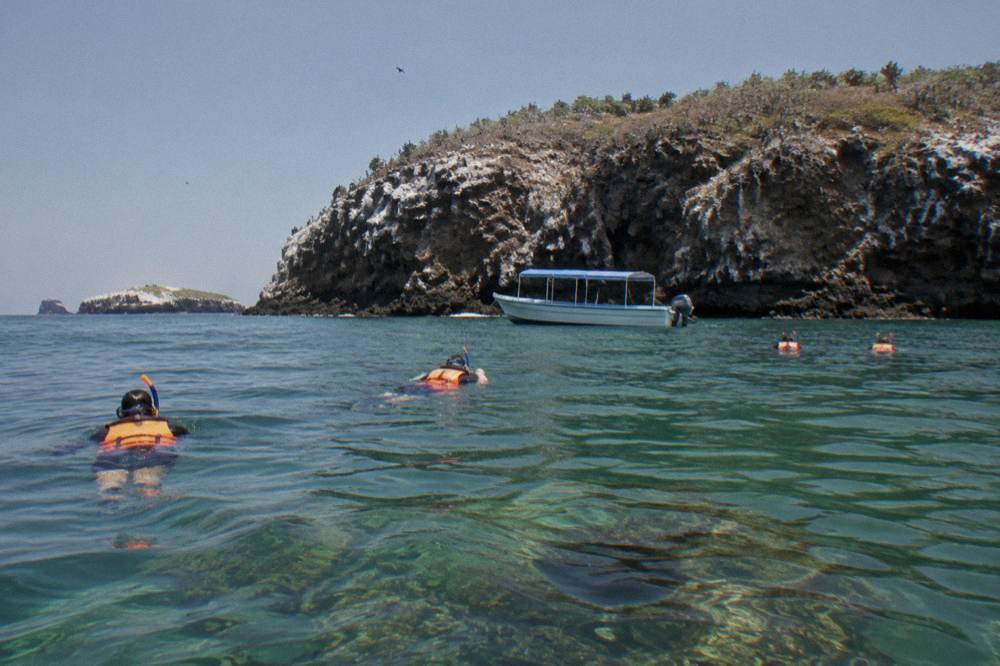
Families and hesitant swimmers have real options, and the Marietas Islands with kids and non-swimmers guide matches them tour by tour. The short version: the half-day and catamaran products with floating mats and beach stops are gentler days than the small-boat Hidden Beach runs, and the Playa Nopalera stop several listings name is a beach stop, not a tunnel swim. Before you commit, the cost-versus-payoff breakdown of Marietas Islands boat tours weighs what you pay against what the day actually delivers.
What Do The Park Rules Ask Of Snorkelers?
CONANP's eight published rules ask snorkelers to follow guides and rangers, wear a life jacket in the water, apply reef-friendly sunscreen at least 30 minutes before entering, pay the entry rights fee, and skip alcohol, littering, single-use plastics, and removing or introducing animals; the park also recommends light clothing and swimwear and does not allow footwear for water and beach activities.
The sunscreen rule is the one people actually trip over, and it is easy to honor: apply the reef-friendly product before you board or at the dock, half an hour ahead of the water, and reapply on the boat. The plastic rule bars single-use bottles on most boats, which is why several listings hand you cups and encourage reusable bottles, the featured Eco Explorer listing among them. Alcohol is banned in the park itself; the open bars on the big catamarans pour on board, and several listings state the bar opens only after water activities or after leaving the park area, the GoPralia listing being explicit about it.
None of this is onerous, and it is the reason the reefs are worth the crossing in the first place. Paid access through authorized providers, the wristband, the vest, the guide: the whole system exists so the king angelfish and the coral keep being there. If you are weighing whether the day justifies the price, the page on whether a Marietas Islands tour is worth it makes that case with the same numbers used here.
Which brings the choice back to the three listings this page keeps returning to: the featured snorkel tour from Marina Vallarta, the short collective boat from Punta de Mita, and the Shark's Tours' Private Snorkel from Corral del Risco. Pick by departure point and day length; the snorkeling itself is a constant.
Common Questions About Snorkeling At The Marietas Islands
Do The Tours Provide Snorkel Gear Or Do You Bring Your Own?
26 of the 30 tours here list snorkel equipment as included, several with life vests and some with kayaks and paddleboards on top. You can bring your own mask if you prefer, but the listings do not require it.
Is The Water Clear Enough To See Anything?
Guest reports range from exceptionally clear to murky on the same reefs, depending on the day's swell and conditions, and no per-month visibility figures are published. The dry season, December to April, brings less rain; sea temperature ranges from about 23.9 degrees Celsius in February and March to 30.3 in August.
What Fish And Animals Might You See While Snorkeling?
CONANP's park page lists king angelfish, giant manta, spotted eagle ray and coral reefs among the marine life, plus humpback whales in the bay in season, from 8 December 2025 to 23 March 2026 in the last official window. All sightings are possible rather than certain, and swimming with whales is prohibited.
Before you go, the pick for this guide:
Optional Hidden Beach, Snacks Included
★ 4.8 1,033 reviews · From $99
Check availability →