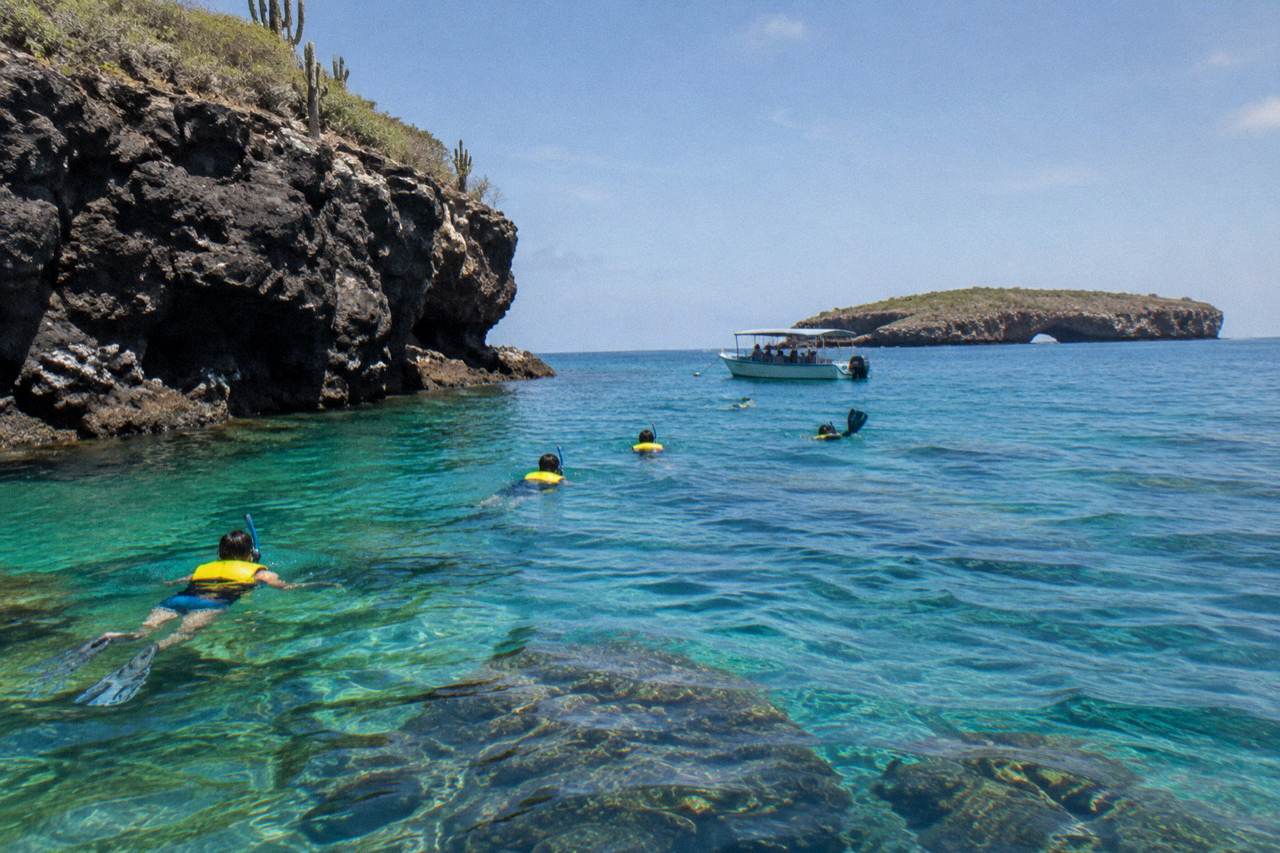
Where Is Playa del Amor, And Is It The Same As Hidden Beach?
Playa del Amor is the official CONANP name for the Hidden Beach inside the Marietas Islands National Park. Here is how the names differ, where each beach sits, and which tours list which landing.
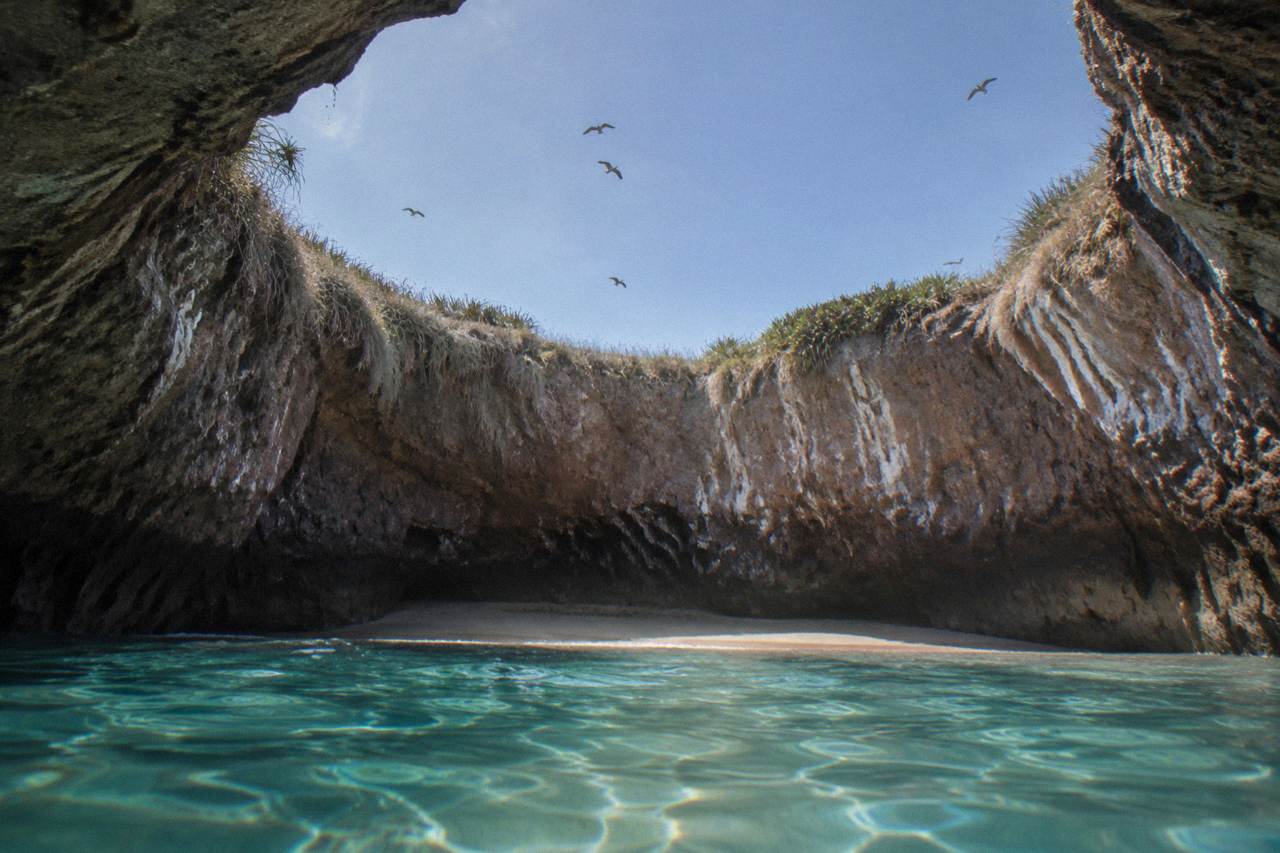
Yes, on the Marietas Islands the two names point to one place: Playa del Amor is the name the National Commission of Protected Natural Areas, CONANP, uses for the crater beach, and Hidden Beach is the English nickname the same site carries on tour listings. A third name, Playa Escondida, also refers to this beach in some listings. Playa Nopalera, by contrast, is a separate stop that several tours visit, and another beach elsewhere in Mexico shares the Playa del Amor name. With the naming sorted, the next question is usually what you can actually do in the water, and our guide to snorkeling rules and boat stops around the Marietas Islands answers that in plain terms.
The confusion is understandable, and it is not just a translation quirk. One beach, three names in circulation, plus a neighboring beach that shows up in several itineraries, is enough to make anyone book the wrong trip. A reader comparing two tours at the same price could easily assume both include the crater beach, when one lists a landing and the other lists only a stop at Playa Nopalera on the far side of the islands.
This page untangles the names using the park's official information and the actual tour listings on this site, so the comparison is grounded in what each listing states rather than in marketing shorthand. The short version: if a listing says Hidden Beach, Playa del Amor or Playa Escondida in the context of the Marietas Islands, it means the crater. If it says Playa Nopalera or La Nopalera, it means a different beach.
Where Exactly Does CONANP Place Playa del Amor?
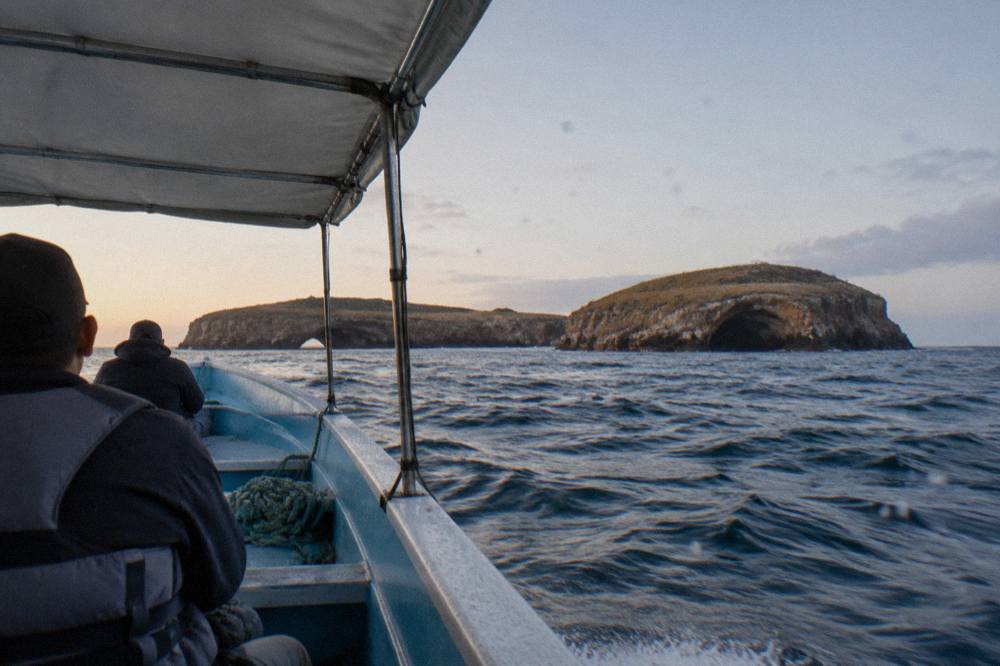
Playa del Amor sits inside Parque Nacional Islas Marietas, a protected area of two islands, Isla Redonda and Isla Larga, two islets and rocky and sandy shoals in Banderas Bay. CONANP's official page gives the distances: Punta de Mita lies 9 km away, Nuevo Nayarit 15.96 nautical miles, and Puerto Vallarta 34 km. Access is by boat only, through authorized providers.
The park sits at the mouth of Banderas Bay, served by authorized providers from both Nayarit and Jalisco, which is why tours depart from both coasts. Punta de Mita on the Nayarit side is the closest listed departure point at 9 km, which is 4.85 nautical miles, and that proximity shapes the whole Punta de Mita small-boat scene. La Cruz de Huanacaxtle sits 11.84 nautical miles out, Sayulita 12.68, and the crossing from Puerto Vallarta covers 34 km, or 18 nautical miles. The official distances come straight from CONANP's park page, which also lists the hours: the park Tuesday to Sunday 8:00 to 18:00, the Playa del Amor site Wednesday to Sunday 8:00 to 17:00.
That schedule matters more than most visitors expect. The beach site is closed Monday and Tuesday, and the park proper is closed Monday, so a Wednesday arrival is the earliest in the week that a landing is even on the table.
Here is how the departure points stack up by official distance:
| Departure point | Distance to the islands | Notes |
|---|---|---|
| Punta de Mita | 9 km / 4.85 nmi | Closest point; small-group boats run from here |
| La Cruz de Huanacaxtle | 11.84 nmi | No tour departs from here |
| Sayulita | 12.68 nmi | No tour departs from here |
| Nuevo Nayarit | 15.96 nmi | Paradise Village pier departures |
| Puerto Vallarta | 34 km / 18 nmi | Marina Vallarta and Puerto Mágico departures |
Because the islands sit closest to Punta de Mita, the shortest tours cluster there: the collective boat from Grimar Adventures Punta Mita runs 2 hours 30 minutes from $67 per person, while the longer catamaran days depart from Puerto Vallarta piers and run 7 to 9 hours. Which side of the bay you sleep on largely decides which of those formats makes sense, a comparison this site's guide to Marietas Islands trips from Punta de Mita covers in detail.
Planning around a name is risky when the name is doing double duty, and that is exactly the situation here. Asking one question before paying settles it, and the answer costs nothing.
Why Do Some Listings Call It Playa Escondida?
Playa Escondida, Spanish for hidden beach, is simply the Spanish descriptive name some tour operators print instead of the English nickname or the official Playa del Amor. All three names refer to the same crater beach inside the park. CONANP's own materials use Playa del Amor, so treat that as the official label and the others as common aliases.
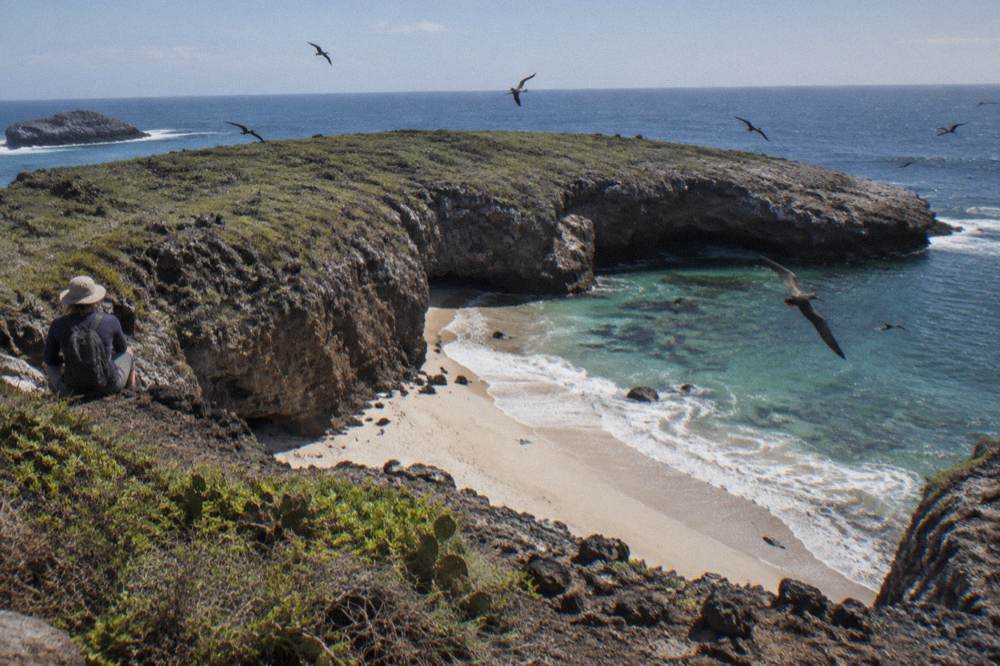
The beach itself is a geological oddity: a sand floor enclosed by the walls of a collapsed volcanic crater, open to the sky, reached from the sea by swimming through a natural rock passage. Listings describe the passage rather than a dock, because there is no dock at the beach. One sightseeing listing states a swim of about 60 meters to enter, and one Puerto Vallarta snorkeling listing states about 250 meters from the boat; those figures belong to those listings, and no official tunnel length is stated.
The naming pattern is easy to map once you see it side by side:
| Name | Who uses it | What it refers to |
|---|---|---|
| Playa del Amor | CONANP official materials | The crater beach, the park's official label |
| Hidden Beach | English-language listings | The same crater beach |
| Playa Escondida | Some operator listings | The same crater beach, Spanish descriptive name |
| Playa Nopalera / La Nopalera | Several itinerary listings | A separate beach stop, not the crater |
| Love Beach | Occasional listing shorthand | The same crater beach, translated |
A concrete example of the aliasing: the featured Eco Explorer Vallarta snorkel tour from Marina Vallarta, from $99 per person and rated 4.8 from 1,033 reviews, lists the Hidden Beach landing as an optional paid extra, with a cash entrance fee of MXN 600 per person on the listing. The same operator's listing text for that extra refers to the hidden beach and the beach of love interchangeably. Nothing changed about the beach between those phrases; only the label did.
One trap worth naming: a listing that mentions Hidden Beach only in its title, or only as an option, is not a listing that includes the landing. Compare prices with that difference in mind. Checking what the ticket actually contains takes a minute.
The featured snorkel tour is a good illustration of why the fine print matters more than the headline:
Is Playa Nopalera The Same Beach?
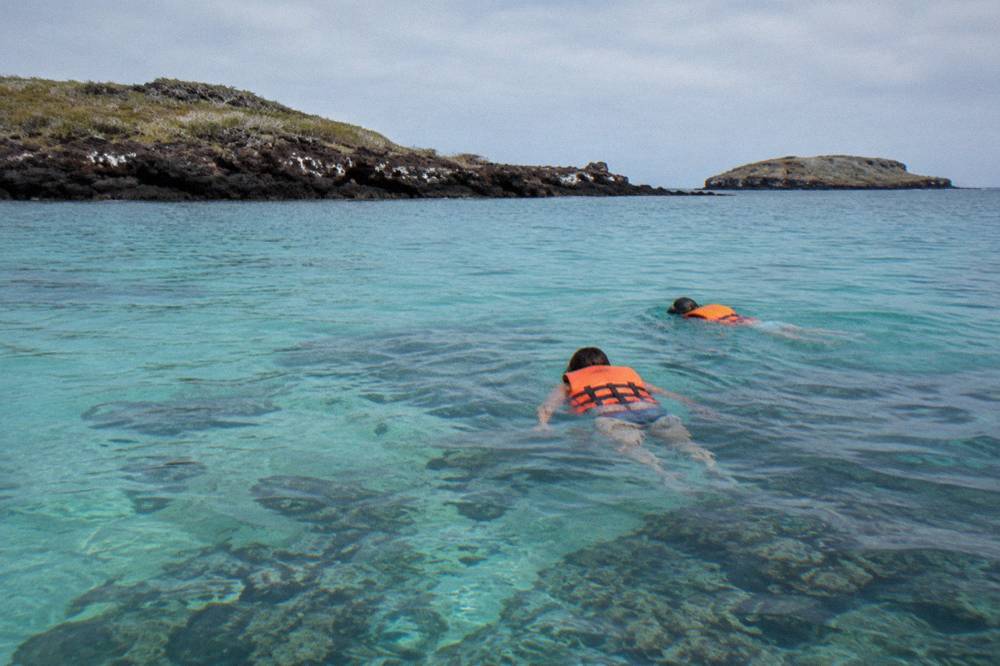
No. Playa Nopalera, also written La Nopalera, is a separate beach on the islands that several tours list as their swim and snorkel stop. It is not the crater beach, and a tour that lists Playa Nopalera without a Hidden Beach line is describing a different experience, usually a calmer one focused on snorkeling, kayaks and paddleboards.
The distinction shows up across the tours. The Monkey Adventures México half-day tour, from $81 per person, lists a Nopalera Beach visit with snorkeling, kayaking, paddle and a floating mat, and its exclusions state plainly that the activity does not include Hidden Beach. The Puerto Vallarta Net reef snorkeling listing, from $119 per person for 8 hours, lists a visit to Playa La Nopalera among its inclusions. The Chica Locca listing named Snorkel, Kayak, 6 Hours, Meal, from $130 per person and rated 4.8 from 59 reviews, centers its water time on the same stretch of coast.
For many travelers, that is not a downgrade but a better fit. Playa Nopalera is where the listings put the floating mats, the fajita lunches and the paddleboards, the things a family with mixed swimming confidence can do together. The crater beach, by contrast, is a short, regulated visit that listings cap at around 10 minutes on the sand for the tours that state a figure, with helmets and vests required. Choosing between them is really choosing between a water-play day and a see-the-crater day, and some full-day tours do both in sequence. If swimming ability is the deciding factor for your group, our guide to water depth around the Marietas Islands covers what the park rules actually say before you pick a tour.
Reading an itinerary for the beach names, in order, usually tells you what kind of day it is. A morning crater attempt followed by a Nopalera afternoon is the classic full-day shape. A listing whose only beach mention is Nopalera is a snorkel-and-float trip, clear about what it is, and often cheaper: the collective Punta de Mita boat at $67 per person lists snorkeling and a beach stop and lists the Hidden Beach entrance among its exclusions.
How Do You Get Onto Playa del Amor?
Entry to Playa del Amor is by swimming through the rock passage from a boat, with a life jacket and, per listings, a helmet, and it depends on tide, sea state and the park's daily rules. The last primary text spelling out visitor caps is CONANP's 2016 reopening notice, which operators still describe; CONANP has published no newer figures.
The 2016 reopening rules CONANP set, which operators still describe, read as follows: groups of at most 15 people, supervised, at low tide; 30 minutes per group counted from leaving the boat; entry and exit only along a buoy-marked lane; helmets and flotation vests compulsory; no fins, mask or snorkel at the beach entrance; and at most 116 visitors a day at Playa del Amor, with boats carrying more than 15 passengers barred from entering the restricted areas. The Wednesday to Sunday hours and the MXN 125 entry fee are current, while the visitor caps come from the 2016 reopening rules.
The 2016 notice itself came after a closure for coral restoration; the press release is still online at gob.mx, and it is the document to read if you want the rules in the agency's own words. Practically, what all this means for a visitor is simple: no listing can promise the landing, because tide and swell decide on the day. Guests report that when the passage is not passable, tours redirect to snorkeling, and listings themselves state that entrance is not assured.
The per-listing rules layer on top of the park's. The Eco Explorer Vallarta listing sets a minimum age of 10 and a maximum of 65 for the landing and requires ID. The Grimar Adventures Punta Mita listing named Grimar Hidden Beach Entry, 3 Hours states a minimum age of 10 and a maximum of 64. The sightseeing listing requires the ability to swim about 60 meters and sets the Playa Escondida window at 12 to 65 years old. These are operator rules, not park-wide ones, and they differ from listing to listing, so check each tour's own listing.
Which Tours Actually List A Playa del Amor Landing?
The tours split three ways: listings that include the landing in the ticket, listings that sell it as an optional paid extra, and listings that do not state it or exclude it. The landing line for each tour comes from its own listing, and it is the single fact to check before paying, because prices overlap across all three groups.
On the included side sit the Punta de Mita small-group options: the Shark's Tours listing named Shark's Hidden Beach, 3 Hours, from $157 per person and rated 4.8 from 161 reviews, and the Grimar Adventures listing from $157 per person, rated 4.8 from 117 reviews, both list the entrance in the ticket. The Nuevo Vallarta tour from $168 per person lists the landing as included, though a MXN 220 government bracelet tax per guest is listed separately as not included.
On the optional-extra side sit the two Eco Explorer Vallarta products and the Vallarta Adventures 3.5-hour tour, which lists a US$20 access fee on top of its $89 starting price. On the not-stated or excluded side sit most of the big catamaran days, which is exactly why the beach-name question decides bookings.
| Tour | From price | Landing status per its listing |
|---|---|---|
| Optional Hidden Beach, Snacks Included (Eco Explorer) | $99 per person | Optional extra, MXN 600 cash |
| Shark's Hidden Beach, 3 Hours | $157 per person | Included in ticket |
| Grimar Hidden Beach Entry, 3 Hours | $157 per person | Included in ticket |
| Naturalist Guide, Snorkel, Box Lunch (Ecotours Vallarta) | $133 per person | Not stated; listing says entrance not assured |
| BBQ Lunch At Majahuitas, 7 Hours (Vallarta Adventures) | $79 per person | Listing states not included |
| Half Day, Playa Nopalera, Food (Monkey Adventures México) | $81 per person | Listing states not included |
Notice the price overlap in that table. A $79 tour and a $157 tour are both genuine listings; one never touches the crater and the other builds its day around it. The name on the ticket, not the number, is what separates them. Readers weighing that trade-off specifically for the crater visit will find the site's dedicated Hidden Beach guide breaks the decision down further.
Is There Another Playa del Amor In Mexico?
Yes, beaches named Playa del Amor exist elsewhere on Mexico's coasts, including a well-known one in Baja California Sur near Cabo San Lucas, so search results mix destinations freely. This page, and every tour on this site, is about the Playa del Amor inside the Marietas Islands National Park in Banderas Bay.
The shared name is a coincidence of Spanish, not a connection between places. Love Beach is a common enough label for a romantic-looking stretch of sand that several Mexican states use it. One clause is all that needs saying on the point: if a search result mentions a beach reachable by land from a Pacific resort town far to the northwest, it is a different beach in a different state, hours of coastline away.
The tell that keeps things straight is the park context. The Marietas version is reachable only by boat from Banderas Bay departure points, sits inside a national park with a MXN 125 daily entry fee, and is closed to visitors Monday and Tuesday along with the rest of the site schedule. None of that applies to any namesake beach. If a listing mentions CONANP, the islands, Punta de Mita or Marina Vallarta, it is this one. Because the boat-only access and park rules rule out a do-it-yourself trip, our explainer on visiting the Marietas Islands without a tour covers what your realistic options actually are.
What Should You Check Before Booking By Beach Name?
Read three lines on the listing before paying: the Hidden Beach landing line, the fees line, and the exclusions line. Together they tell you whether the crater is in the ticket, what it costs on the day, and what the listing deliberately leaves out. The name alone, whether Playa del Amor, Hidden Beach or Playa Escondida, tells you none of that.
The fees line deserves special attention because it varies more than the landing line. One listing includes park permits and the CONANP bracelet in the ticket; the next lists a MXN 220 conservation bracelet as excluded; a third quotes port taxes in pesos plus a separate access fee. Two tours at the same headline price can differ by twenty dollars or more in day-of cash costs once these lines are counted. The site's breakdown of the park fee and conservation wristband covers the official side of that arithmetic.
Age and swimming rules are the second quiet filter. The crater passage requires swimming ability, and several listings set their own age windows for it, commonly 10 or 12 at the bottom and 64 or 65 at the top, always attributed to that listing. A family with a nine-year-old can still take a Nopalera-centered tour happily; the same family booking a crater-focused product will hit the operator's limit at check-in. The sightseeing listing goes further and requires the ability to swim roughly 60 meters for the Playa Escondida option.
Cancellations round out the picture, and here the tours are consistent: nearly every listing offers a full refund when cancelled at least 24 hours before start time. That is the one forgiving term in an otherwise strict rule set, and it makes the pre-booking checklist low-risk to act on. Confirm the landing line, the fee lines, the age window and the meeting point, and the name confusion stops mattering, because the ticket itself now says what the day contains.
Common Questions About Playa del Amor And Hidden Beach
Where Is Playa del Amor?
Playa del Amor is the crater beach inside Parque Nacional Islas Marietas in Banderas Bay. CONANP gives the distances as 9 km from Punta de Mita and 34 km from Puerto Vallarta, and access is by authorized boat only.
Is Playa Escondida A Different Beach From Playa del Amor?
No. On the Marietas Islands, Playa Escondida is a Spanish name for the same crater beach. It is simply another label operators use on their listings.
Can Any Tour Promise Entry To Playa del Amor?
No. Entry depends on tide, sea state and the park's daily rules. Under the reopening rules CONANP set in 2016, which operators still describe, at most 116 visitors a day enter in supervised groups of 15, so listings describe the landing rather than promise it.
Is The Playa del Amor Near Cabo The Same Place?
No. Another beach in Mexico shares the name on a different coast. Every tour on this site visits the Playa del Amor inside the Marietas Islands National Park in Banderas Bay.